Sheet 02 · The person behind the perspective
The claim was paid; the financial work continued
I remember the first time a settled claim refused to disappear from my work. The policyholder had been paid, but the associated recovery from a reinsurer remained outstanding. To the claims team, an important obligation had been fulfilled. To the accountant, another part of the file was still unfinished. Neither view was wrong. The problem was that our internal conversation sometimes treated one completion as though it settled the whole economic sequence. That distinction has stayed with me through thirty-six years in insurance finance.
I entered Kanewara General Insurance in April 1990, after a business administration degree at Aotsumine Institute. My first six years were spent supporting claims accounts. I matched approved payments to records, prepared reconciliations and asked claims colleagues about items that could not be explained from the ledger alone. I worked under a supervisor and did not decide whether a policy covered a loss. The role taught me to respect the human work behind a number without making an accounting question an intrusion into a specialist's authority.
In April 1996, I moved into reinsurance accounting. The records became more contractual and the timing became less forgiving. A recovery could be recognised while the supporting package still required attention. I worked with claims, reinsurance and legal colleagues to understand the reason for a delay instead of repeatedly sending a request for payment with the same unanswered question attached. Eventually I supervised a small settlement team. I learnt that a relationship becomes more productive when each side can see exactly what remains unresolved.
My April 2003 move into underwriting planning took me closer to the decisions that created future obligations. I managed the financial view of commercial portfolios and prepared comparisons for underwriting leadership. Premium growth attracted immediate attention; the claims and service costs associated with it emerged less neatly. I began asking what the company would still need to do if it stopped writing a particular class. The answer often changed the apparent cost of a decision that had been presented as a choice about next year's sales alone.
I joined Yorihama Assurance as financial controller in July 2010. The move brought a larger reporting team and a privately held insurer whose owners expected a patient account of performance. At the end of that appointment, the company had 710 employees and wrote JPY43 billion of gross annual premium. I was responsible for financial control and the connection between underwriting accounts and the institution's reported position. I was not the chief actuary, and I learnt to ask better questions of an estimate rather than pretend that accounting experience made me its technical author.
The CFO appointment followed in June 2018. My current team has sixty-eight colleagues, with five direct reports covering reporting, planning, financial operations, treasury coordination and tax coordination. I report to the chief executive. When I joined the board as an executive director in June 2020, I gained a different responsibility: to consider the whole enterprise while remaining clear about the management account I had helped prepare. I do not describe that seat as independent, and I do not treat board membership as permission to bypass the actuary or the claims director.
One difficult decision was to retain resources for a specialist portfolio after we stopped renewing it. The former book had written JPY6.2 billion of annual premium, and colleagues understandably wanted the cost base to fall alongside the new business. I supported an eighteen-person service team with a JPY240 million first-year budget. The remaining policy and claims obligations still needed experienced people, systems and supervision. It was possible to reduce our appetite for new exposure without pretending that the old commitments had become someone else's work.
Another experience concerned overdue reinsurance recoveries. We followed a defined JPY4.6 billion cohort until JPY3.3 billion had been collected over fourteen months. The JPY1.3 billion remainder was still a matter for review, and the collections were not fresh earnings. I became more interested in each balance's age, documentation and expected payment route of each material item than in a single recovery total. The discipline helped finance discuss liquidity without confusing a recognised asset with money already available in the bank account.
I now want the people around me to become comfortable explaining an unfinished outcome. Insurance finance cannot eliminate uncertainty by choosing a precise number or giving a presentation a confident title. It can establish who has assessed the position, what changed, how much cash may be needed and when the view will be reconsidered. My next contribution beyond Yorihama would be to an enterprise that needs this patience: a board willing to examine obligations after the enthusiasm for the original transaction has passed, and willing to fund the work required to honour them.
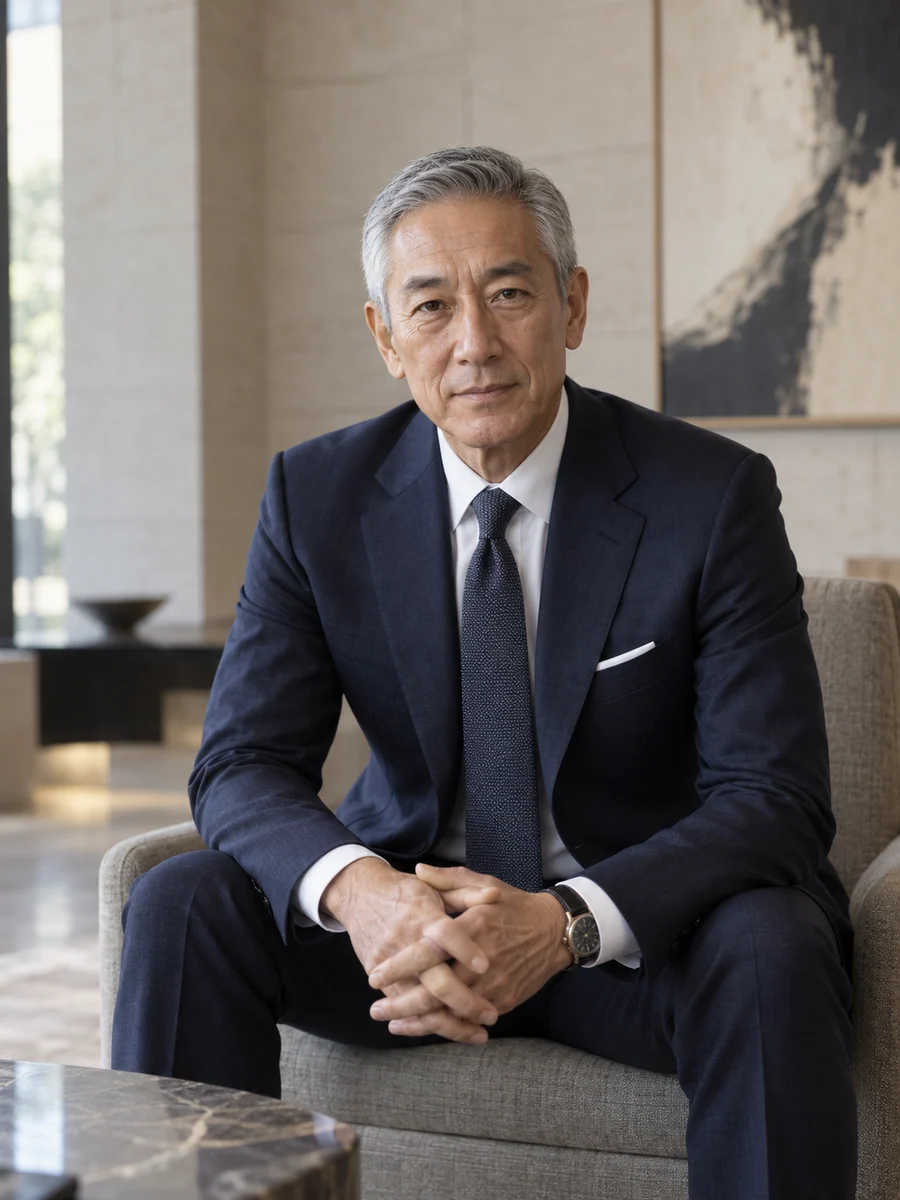
In my own words
I judge an insurance plan by the obligations it can still explain after the sales discussion has ended.
Yoshinori Asanobe
Education
Formation
- Degree in business administrationAotsumine Institute1990
Working languagesJapanese · English