The person behind the perspective
Learning what the next recipient needs to understand
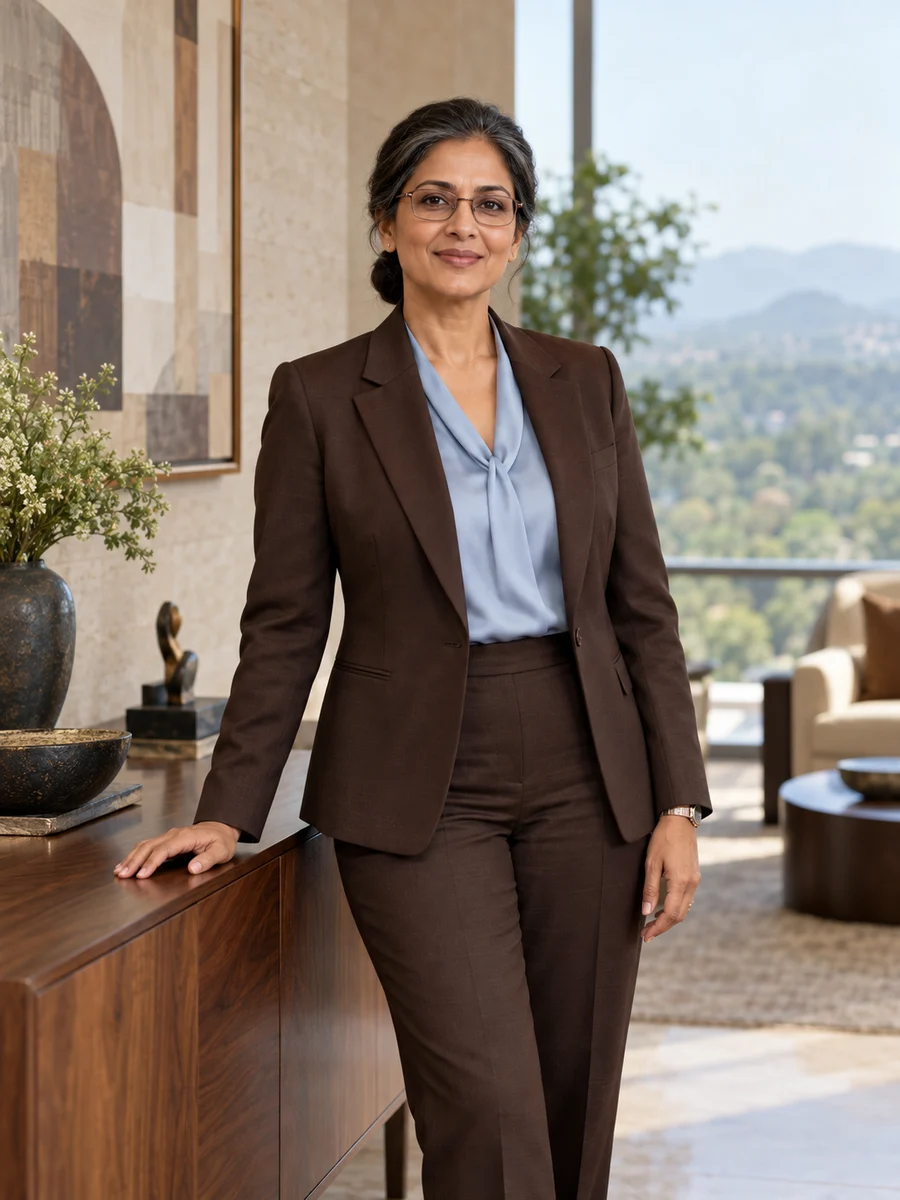
Amritsar was my childhood home, and Nashik is now the base for my working life. I completed a media-production degree at the fictional Qeravmi Institute of Media Technology in May 1997 and began work that July. The course gave me a practical introduction to production, not ownership of every creative or technical judgement involved in a finished programme. My first responsibilities were supervised delivery tasks. I learned that a file label, an instruction and a customer's intention could be related without being identical, and that an assistant should ask rather than quietly resolve an uncertainty beyond her authority.
At Zevmalri Post Services I worked as a delivery assistant in a twenty-nine-person enterprise with ₹7 crore FY1998 revenue. I reported to the delivery supervisor, had no direct reports and controlled no budget. Preparing records and checking that the requested materials were present exposed me to the different vocabularies used by editors, coordinators and recipients. I did not approve a programme for release. The useful habit from those six years was to preserve the question through the handover, including when the next person was busy and a convenient assumption might have made my own task look complete.
In June 2003 I moved into version coordination at the same enterprise. By FY2004 it employed sixty-one people and recorded ₹18 crore revenue. Five colleagues and ₹42 lakh annual coordination expense came within my remit under the operations manager. The work required more than arranging a queue. Different language versions could share elements while requiring separate instructions and review. I began to understand why a change to a common element needed an account of what depended on it. This was not a claim that every version should be rebuilt whenever anything changed; the responsibility was to identify the actual consequence before promising that nothing else was affected.
I joined Veqzatri in September 2009 as delivery manager. The business had 102 employees and ₹35 crore FY2010 revenue. I led twenty-seven colleagues within ₹4.6 crore annual operating expense, reporting to the operations director. Distributor preparation brought me closer to the requirements of recipients whose records and release conventions differed from those of the commissioning team. A deliverable could be well made and still fail to express the intended episode or release. I learned to keep the source identity visible while translating the instruction into the receiving organisation's format. That experience later shaped the combined-episode case rather than giving me editorial authority over the series itself.
From January 2015 I served as operations director. By FY2018 the enterprise employed 167 people and recorded ₹73 crore revenue; my team numbered seventy-six, with ₹15 crore annual operating expense. I reported to the COO. It was in this role that I approved the flawed midnight calendar. Eight of twelve planned releases had explicit timing and four did not. The team held the unresolved entries, obtained written clarification and incurred ₹27 lakh in coordination and rescheduling expense. I cannot use the correction to erase my part in designing the original process. Nor should a reader infer that an early public release occurred; the fictional record supports the ambiguity and the preventive intervention, not that additional event.
I became COO in April 2021, reporting to CEO Leela Qevramzi. Our March 2026 headcount is 218 and FY2026 revenue is ₹105 crore, split between ₹62 crore version preparation and ₹43 crore distributor preparation. I lead 117 operations colleagues through five leads, with ₹24 crore FY2026–27 operating expense and a separate ₹4.5 crore systems programme. Ashwin Telqazri leads quality, while editorial and rights decisions remain with their authorised owners. The later cases ask how that division works when picture changes, episode packaging, withdrawal or territorial instructions create pressure for an immediate operational answer.
My next development is toward a carefully assessed governance contribution, not an assertion that the executive title has already supplied statutory board experience. I have presented operations matters to directors but hold no directorship and have not yet registered in the IICA databank. Eighteen days is an initial annual estimate including preparation and exceptional demands, to be tested against an actual mandate. The experience I would offer is a willingness to examine the meaning carried between organisations, including the limits of our evidence. That perspective is strongest when it retains the decision I got wrong and the responsibilities that are not mine to assume.
In my own words
A programme can travel through a technically competent chain and still emerge as the wrong promise. Midnight needs a place in time; a revision needs its dependent work reconsidered; withdrawal needs evidence from those who control availability. I see operating responsibility in preserving those meanings between specialists, not simply counting how many packages left our building.
Jasleen Verqomri
Education
Formation
- Bachelor of Arts in Media ProductionQeravmi Institute of Media Technology1997
Working languagesPunjabi · Hindi · English · Marathi