The person behind the perspective
I learnt to follow the movement past our internal measures
A shipment could be on time in every internal report and still disappoint the customer. I first encountered that contradiction as a junior coordinator. A collection had met one team's schedule, the terminal had processed the unit within its own window and the onward movement had followed the records available to its planner. The customer nevertheless received the goods too late for the intended use. I learnt to ask how the separate commitments joined, rather than assume that several satisfactory departmental accounts added up to a satisfactory delivery.
I completed transport management at Lindervan Institute in June 1993 and joined Venswick Freight in August. My work involved shipment records, status enquiries and coordination under a senior operations supervisor. I did not direct drivers or rail operations independently. I learnt the importance of a precise reference, an agreed cut-off and a message that reached the person able to act on it. A vague assurance could postpone a difficult conversation without moving the shipment any closer to its destination.
In January 1998, I became customer claims manager. The role changed my view of service failure. The claim file contained more than a late arrival: it could include a missed receiving slot, a production interruption or a disagreement about what the original promise had meant. I worked with operations and appropriate specialists to establish the sequence and the company's response. I also began taking recurring causes back into planning discussions. Settling an individual case was necessary, but it did not explain why the same kind of handover kept producing another one.
I moved to Havercourt Logistics in April 2004 as a network planner. The company combined road movements with rail capacity purchased from operators. My task was to help design corridors that could be sold and delivered as a coherent service. That meant considering equipment, terminal windows and onward collection alongside the rail timetable. I became more interested in what happened when demand was uneven between directions. A full outward leg could look attractive while the equipment return consumed much of the apparent contribution.
In September 2009, I took responsibility for a corridor business connecting industrial customers across three neighbouring countries. I managed its operating account, customer commitments and partner relationships within group approval limits. The work exposed the tension between a sales promise designed to win a tender and the less convenient conditions needed to deliver it repeatedly. I learnt to involve planners before the final offer, and to explain to customers when a later booking deadline would require a different service or a different price.
I joined Ordelune Intermodal as chief operating officer in March 2015. The company had grown through several regional operations, and the same event description could mean different things in different teams. An arrival might refer to the train, the unit becoming available or the point at which an onward vehicle could collect it. I worked with our colleagues and partners to make those distinctions clearer. The aim was not to create a perfect central view of everything. It was to ensure that the next responsible person knew what had actually happened and what still needed to happen.
The board appointed me CEO in February 2020. Ordelune is owned by management and a long-term investor, with a separate chair. I hold one executive directorship and report to the board on the enterprise account. We coordinate freight through contracted terminals and rail operators; we do not own the railway infrastructure or acquire the operators' technical authority by purchasing capacity. Keeping that boundary clear is part of making our own responsibility credible rather than smaller.
Since becoming CEO, I have supported an earlier booking cut-off on a corridor where the previous promise left too little room for collection and terminal handling. We reduced empty running through a larger shared equipment pool while acknowledging the additional lease cost. We retained paid contingency capacity even though some of it was unused, and we slowed the expansion of automated notifications until the underlying events became more dependable. We also changed a pooled departure offer for smaller shippers, accepting a different commercial pattern instead of requiring every customer to behave like a large-volume account.
These choices have reinforced my interest in the practical terms of a service. A more reliable result may require the customer to book earlier. Better equipment balance may require more units, not fewer. A reserve can appear inefficient until the day it is needed, but that does not make every unused slot a wise purchase. I want the account to show those conditions so that the next decision can be challenged with better evidence.
After thirty-three years, I still find the customer enquiry a useful place to begin. It asks whether the promise worked at the point where the customer needed it, beyond the boundaries of our internal measures. My responsibility is to build an organisation that can answer that question without searching for a departmental definition under which the result looks better.
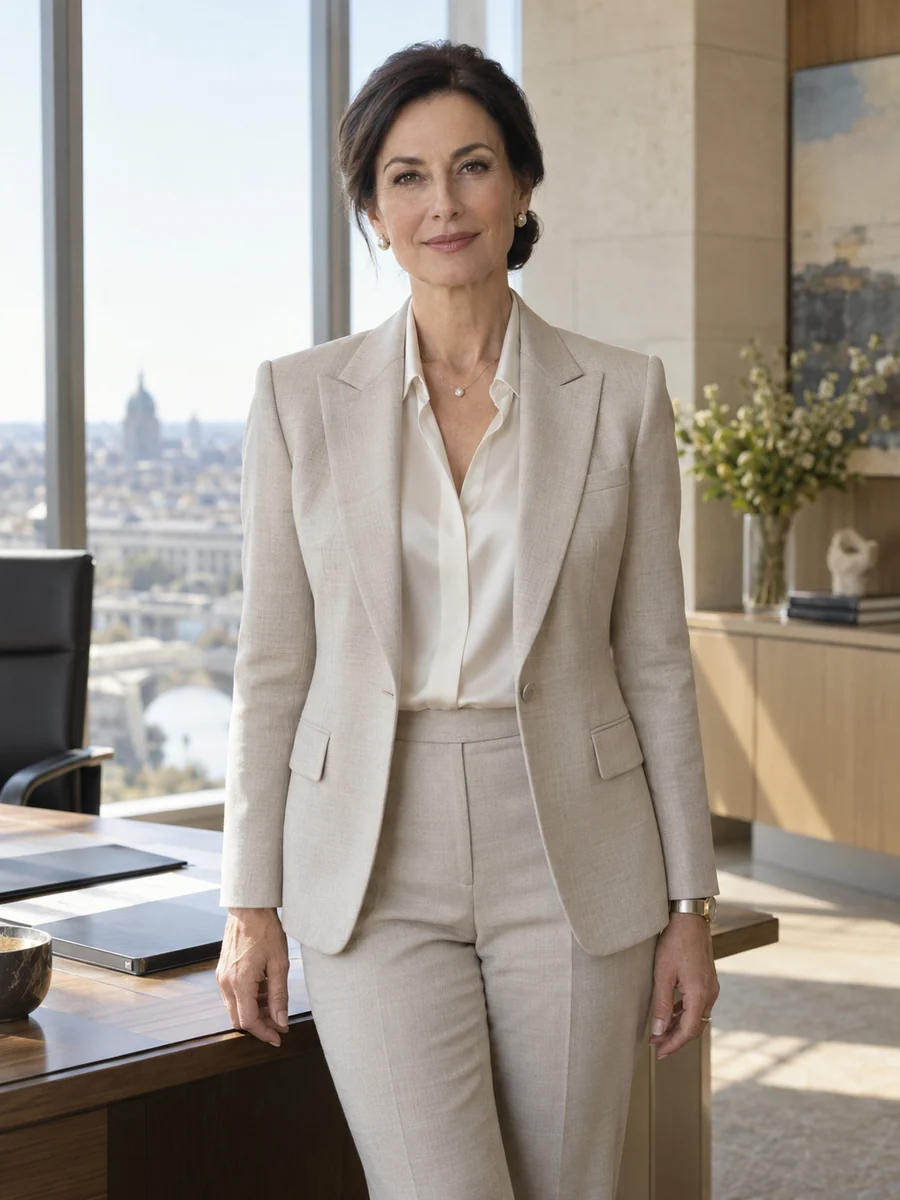
In my own words
The customer buys an arrival commitment; our organisation must understand every transfer of responsibility needed to keep it.
Margot Falk
Education
Formation
- Degree in transport managementLindervan Institute1993
Working languagesGerman · English · Dutch