The person behind the perspective
Learning to follow a commitment beyond its headline
I grew up in Cuttack and completed a Bachelor of Commerce at the fictional Qelzarti College of Commerce in May 1997. I joined Nevqormi Commercial Services that July as a lease analyst. Equipment contracts interested me because their consequences continued long after the initial agreement. A price and a signature did not explain every responsibility for maintenance, use, return or disposal. My early work was to make those details intelligible to the people deciding the transaction, not to claim the authority to settle each issue myself.
Nevqormi had thirty-two employees and ₹8 crore FY1999 revenue. I reported to the commercial-analysis supervisor, with no direct reports or delegated expenditure. I prepared comparisons, checked the relationship between contractual descriptions and the figures used in proposals, and carried unresolved questions to the responsible manager. The work taught me to distinguish a calculation that was correct on its own terms from an account that omitted an important obligation. I also learned that the person operating equipment might understand a term differently from the person who had negotiated it.
In September 2003 I became contracts manager. At FY2006 scale the company employed sixty-nine people and recorded ₹24 crore revenue. I led seven colleagues with ₹78 lakh annual expense under the commercial director. The remit brought me closer to disagreements about what a service included and what happened at return. I did not provide a substitute for legal or technical advice. I organised the commercial account, involved the relevant specialists and made sure a proposed resolution did not silently change the original basis on which another team had agreed to work.
I moved to Zevqarli in January 2010 as commercial head. The company supplied container chassis and workshop services from its Visakhapatnam base. At FY2013 scale it employed fifty-seven people and generated ₹16 crore revenue. I led eleven colleagues with ₹1.9 crore annual operating expense, reporting to the CEO. I learned the relationship between a hire proposition and the physical work needed to inspect, maintain and return the equipment. A commercially attractive promise could create a difficult obligation for the workshop if the proposal did not specify what the customer was actually buying.
The COO appointment began in April 2015. At FY2018 scale Zevqarli had eighty-one employees and ₹26 crore revenue. I led fifty-eight colleagues with ₹19 crore annual operating expense under the CEO. In 2018 I approved thirty-six specialised chassis costing ₹4.32 crore. Fourteen entered the anticipated work and twenty-two remained without an initial assignment. I had accepted seasonal interest as stronger evidence than it was. The 2019 response put twelve more units into supported deployments after ₹28 lakh inspection and repositioning, leaving ten unallocated. I kept that balance visible rather than allow a partial recovery to become a story of a fully justified purchase.
I became CEO in April 2020. Zevqarli now operates 420 chassis and employs 99 people, with ₹36 crore FY2026 revenue split between ₹21 crore hire and ₹15 crore workshop services. I have nine direct reports and responsibility for ₹28 crore FY2026–27 operating expense plus a separate ₹6 crore capital programme. Those figures describe my remit, not a calculation of company profit. An employee-controlled ownership vehicle holds 65%, a regional industrial investor 35%, and I have no personal equity. Dev Qelvazmi is non-executive chair; Rupa Tevqarsi leads asset engineering. The board and I have distinct responsibilities even when a difficult asset decision requires both commercial and operating discussion.
Recent decisions have involved unclear wear clauses, night-return facilities, disposal conditions and a workshop closure. I have tried to keep the unfinished part of each account visible. An agreed portion of a disputed invoice does not settle the remainder. A staffed return window does not create an overnight repair service. A larger bid may require a future discount elsewhere. A closure leaves people and customer commitments that need a deliberate response. These are different situations, but each benefits from looking beyond the attractive number at the front of the proposal.
I work in English, Odia and Hindi. I have presented to the board throughout my executive career and do not hold a statutory directorship. In this fictional account I registered in the IICA databank in May 2026; the proficiency assessment is still pending, with no exemption claimed. I am exploring an initial outside governance contribution with twenty days provisionally available. I would bring experience of equipment-service economics and employee-controlled ownership, while relying on complementary legal, financial and technical expertise. The work I value makes the company's continuing obligations understandable before a decision commits someone else to carrying them.
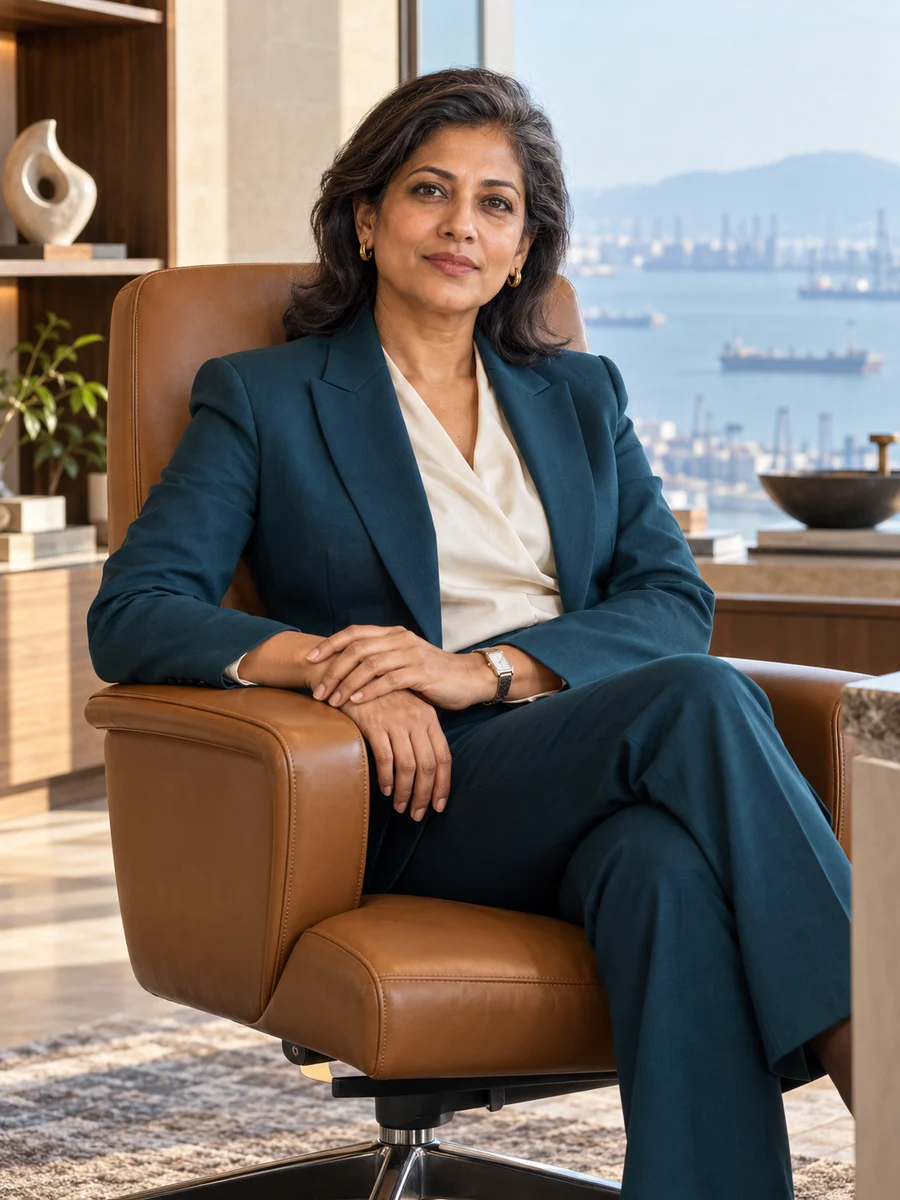
In my own words
An equipment order can outlast the enthusiasm that authorised it. I approved thirty-six specialised chassis on an expectation of seasonal demand, then had to account for twenty-two without an initial hire assignment. I want the business to describe the obligations it is accepting before it celebrates the asset count, and to retain those obligations when a contract, depot or customer relationship changes.
Nandita Qevzarti
Working languagesEnglish · Odia · Hindi