In my first insurance job, I spent a morning locating a photograph that had been filed under a supplier's reference instead of the policyholder's claim number. The photograph mattered because it showed machinery before temporary repairs began. The business owner had already sent it. We had already received it. Yet the file appeared incomplete, and the next decision was waiting. I was twenty-two and had little authority, but I could see how an insurer's internal organisation could become somebody else's financial delay.
I joined Fallowmere Claims Services in August 1993 after completing a business degree at North Alvren Institute. The firm handled commercial claims administration for insurers. My early work involved collecting documents, reconciling estimates and arranging visits by loss assessors. I learnt the vocabulary of cover through actual files rather than product brochures. I also learnt to distinguish a fact that had not been established from a fact that had simply become hard to find. That distinction still matters when a management report calls a claim incomplete.
In January 1998 I moved to Kestervane Underwriting as a commercial underwriting manager. The change was deliberate. I wanted to understand why policies had been written in ways that later created difficult claims discussions. I supervised a small team pricing property risks for workshops and light industrial businesses. Some applications lacked the detail we needed; others offered reassuring descriptions that did not survive a site visit. I became interested in the quality of an insurance question: whether it elicited an answer that could support a future decision, rather than merely complete a form.
Orleston General Insurance recruited me as head of commercial claims in July 2004. The portfolio was larger, and the organisation had more specialised functions. That brought expertise but also opportunities for responsibility to fragment. Claims staff could wait for legal clarification while members waited for funds that were not in dispute. I introduced a review of such cases, initially concentrating on machinery and stock losses. We had to separate an appropriate partial payment from a premature conclusion about the entire claim. That distinction required experienced judgement and a record of what remained unresolved.
I returned to Kestervane Underwriting in January 2010 to lead its eastern regional business. The appointment put distribution, underwriting and service results under one remit. It also exposed a limitation in my earlier thinking. I had assumed that better explanations would resolve most disagreements. Sometimes the economic choice itself was unacceptable to a customer, however clearly it was explained. We withdrew from a small segment where the proposed terms no longer represented a credible proposition. Losing volume was preferable to selling a product that needed continual exceptions to remain attractive.
In September 2015 I joined Brindleharbour Mutual as chief operating officer. Member ownership appealed to me, but I was cautious about the language surrounding it. A mutual still has to price risk, maintain capital and make unpopular decisions. Its distinctive question is how those decisions are justified to people who are both customers and owners. I worked on claims hand-offs, broker service and repairer capacity. We consolidated certain administrative activities while retaining specialist judgement close to the circumstances of a loss. The programme involved 410 colleagues and an A$86 million annual operating budget.
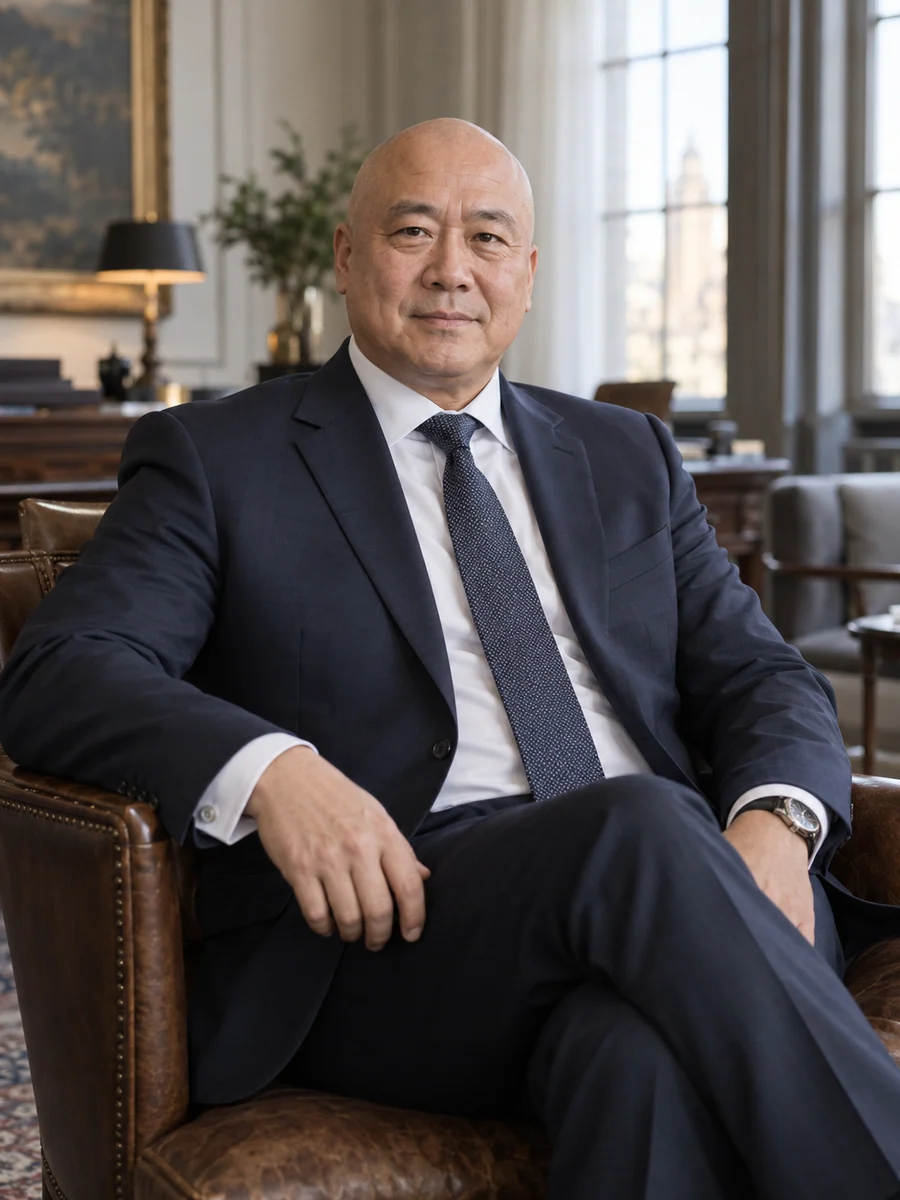
I became chief executive in July 2020. Today I report to the mutual's board and sit on it as an executive director. I lead an eleven-person executive team and remain accountable for 780 colleagues, an A$1.28 billion annual gross premium book and A$2.4 billion of investment assets at June 2026. I do not present investment assets as money freely available for operating choices. Their purpose and obligations require the finance and actuarial disciplines that support the insurer's wider balance sheet.
The decisions that have occupied me most concern competing forms of fairness. A claimant wants certainty and prompt cash. A member renewing after several claim-free years wants an intelligible price. Members who will suffer losses next year need the institution to remain capable of paying them. Those interests overlap but are not identical. I have learnt to state whose position is improving, who is paying for the change and what evidence would cause us to revise the decision.
I have also changed how I respond when an operating measure improves. After we accelerated first payments, I asked whether the change affected only straightforward claims. Our analysts separated eligible cohorts and tracked reopened issues. That made the result less convenient to describe but more useful to manage. I would rather qualify a number than let colleagues organise their work around a misleading one. My reputation inside the business rests less on a single programme than on returning to those awkward qualifications after the initial presentation has finished.
I now want to contribute selectively beyond my executive responsibilities. A member-owned enterprise or a company whose service promise is tested under stress would be a relevant setting. I would bring experience of claims, pricing decisions and the distribution of cost between customer groups. I would not present myself as the board's actuarial expert or make an independence claim before the relevant relationships had been examined. The first useful conversation is about the contribution needed, the time available and the limits of my experience.