The person behind the perspective
Following the signal until it becomes someone's experience
I entered broadcast engineering because I was interested in the relationship between a signal and the experience it made possible. A waveform could be measured precisely, but the practical question was whether the audience received the intended picture and sound. After completing an electronics-engineering degree at Orelven Institute in June 1990, I joined Tessarine Broadcast as a signal engineer the following month. My early work belonged to a four-person group; I had no direct reports or delegated budget.
At Tessarine I learned to investigate a fault through the chain rather than assume that the stage nearest the visible symptom had caused it. The company had 210 employees and CAD38 million revenue by December 1997. My responsibility remained an individual engineering contribution. I worked beside people who understood programme operations and learned that a technically neat intervention could create an awkward consequence for the next person in the sequence. That experience made collaboration with operating teams part of my engineering practice.
I joined Vensalith Media in January 1998 as video-processing lead. The move placed me closer to decisions about how programmes were prepared for distribution. By December 2005, I led sixteen employees through two direct reports and held CAD2.8 million annual authority. Vensalith then had 620 employees, CAD170 million revenue and three linear services in Canada. I reported to the head of engineering and became responsible for explaining why different material sometimes needed different treatment rather than one convenient setting.
This period changed my understanding of consistency. Consistent presentation did not mean applying an identical technical choice to every programme. Motion, texture and the detail carrying a scene's meaning could behave differently through processing. I wanted engineers to be able to explain those differences to programme colleagues without turning the discussion into a contest between creative preference and technical expertise. The better conversation began with the intended experience and then examined the choices available to preserve it.
From January 2006 to December 2012, I headed distribution engineering. By the end of that period I led forty-eight employees through three direct reports, with CAD12 million annual authority, reporting to the CTO. The business had grown to 1,250 employees, CAD390 million revenue and five linear services. Distribution made the diversity of receiving conditions harder to ignore. The engineering account had to consider what happened after the programme left the familiar production environment, including the behaviour of different receiving equipment and delivery routes.
I learned to be cautious about a result that improved the laboratory account while leaving the audience question unsettled. A device might accept a stream yet present it in an unintended way. A change that worked under a stable connection could behave differently when throughput varied. I developed managers who could define a useful trial and distinguish a selected observation from a service-wide conclusion. That discipline later shaped our streaming work, where a lower latency number could coexist with more interruptions.
I became vice president of programme engineering in January 2013. The role brought production, playout and distribution into a shared development programme while retaining specialist responsibilities. By December 2019 I led 112 employees through four direct reports, with CAD36 million authority. Vensalith had 2,250 employees, CAD760 million revenue, eight linear services and a streaming operation. The company had also changed ownership in 2015: the founding family retained sixty per cent, an institutional investor held twenty-five per cent and an employee investment vehicle held fifteen per cent.
That wider remit made me more attentive to the language used in investment papers. A successful transfer, an approved picture and a useful caption are related but different achievements. The organisation needed to know which one a programme had actually established. I worked with content and operating colleagues to make those distinctions part of the recommendation. I also learned that a technical exception should have a practical next step, rather than remain indefinitely as an unexplained item on a specialist list.
I was appointed CTO in January 2020 and report to chief executive Nadia Venswick. I now lead 186 employees through six direct reports, with thirty-four contractors separately. My 2026 authority is CAD74 million, split between CAD45 million programme-engineering operations and CAD29 million development. Colin Merrowby leads content, and the CIO retains enterprise applications. I do not decide the editorial position of a programme or control its commissioning budget. My responsibility is the engineering capability that prepares and carries it to viewers.
Recent decisions show why that boundary is useful. An encoding study retained ten exceptions instead of imposing a common recipe on all forty examined titles. A live-event trial supported a more buffered initial release despite the appeal of a shorter delay. A studio investigation distinguished two transport networks from a dependable clock-selection arrangement. Caption and format-conversion reviews brought the receiving experience back into discussions that could otherwise have ended with a successful technical output.
I have presented these matters to Vensalith's board as an executive, but I have not held a director appointment. For a first external seat, I would bring a media-engineering perspective and a willingness to learn the company's broader financial and governance responsibilities. I could propose twenty-two annual days, subject to consent and the actual calendar. My contribution would begin with a question I have carried through thirty-six years: what does the person at the end of the chain actually receive, and what evidence supports our answer?
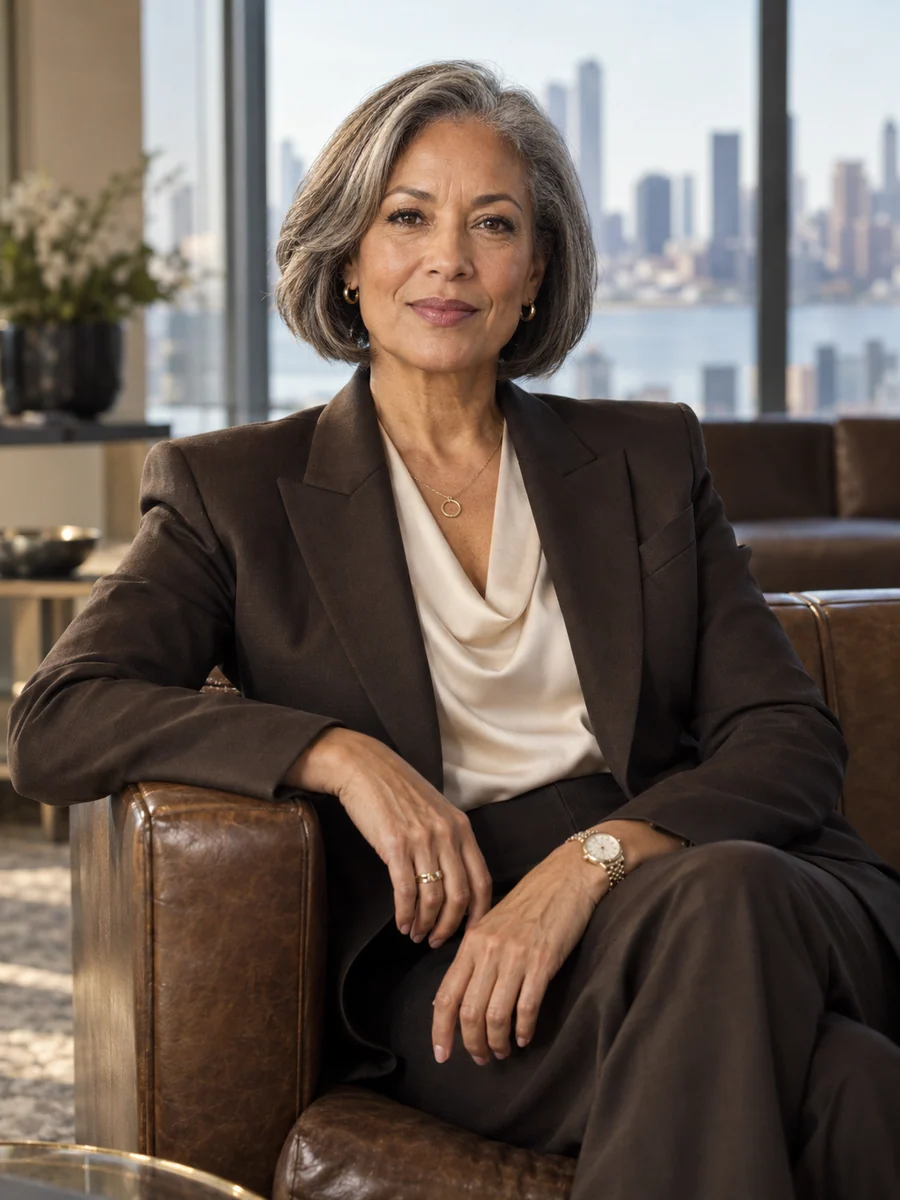
In my own words
I judge the technical chain by what a person can see, hear and understand at its end, while respecting the creative decisions that the chain exists to carry.
Amara Fraser
Education
Formation
- Degree in electronics engineeringOrelven Institute1990
Working languagesEnglish · French