The person behind the perspective
I had reconciled the total before examining the meaning
I grew up in Mangaluru and studied commerce because I wanted to understand how an ordinary business knew whether its activity was paying for the obligations behind it. At the fictional Nevqarthi Commerce College, where I graduated in May 1997, the statements were orderly. My first job introduced the less orderly records from which a rental business had to build them: equipment movements, customer acknowledgements, deposits, repair accounts and amounts that had arrived before their purpose was clear.
I joined Tezqermni Equipment Leasing in June 1997 as an accounts assistant. The invented firm had forty-four employees and ₹7.2 crore revenue for FY ending March 1998. I reported to the branch accountant, with no staff or spending delegation. I learned to follow a receipt back to the obligation it related to instead of treating the bank entry as a complete explanation. A customer might have paid for a period, provided a deposit or settled a separate charge. The distinction influenced what the company had earned and what it still needed to account for.
In March 2004 I became branch finance manager. Tezqermni then employed 110 people and recorded ₹26 crore revenue for FY ending March 2005. Seven colleagues worked within my ₹54 lakh annual function expense. The role gave me responsibility for connecting a branch's activity with its finance account. A machine could be reserved but not yet dispatched, returned but not yet inspected, or available operationally while the customer terms still required clarification. I wanted the record to preserve those differences before a convenient summary reached management.
I joined Nezqamvi in September 2011 as financial controller. At that stage the company supplied temporary-power equipment and project services; the present mobile-battery fleet was not already in place. It had seventy-five employees and ₹19 crore revenue for FY ending March 2012. Nine finance colleagues worked within a ₹1.1 crore annual function envelope. The move broadened my responsibility from a branch to company controls, while keeping me close to the practical evidence of equipment deployment. Finance needed to understand the service events without taking over technical decisions about what could be safely used.
The finance-director appointment followed in January 2018. It was a functional title and did not carry a statutory board seat. Nezqamvi had 184 employees and ₹51 crore revenue for FY ending March 2019. I led fifteen colleagues within ₹1.8 crore annual expense and reported to the chief executive. The business wanted faster management reporting as its activities expanded. I supported a concise collections dashboard because it appeared to give a timely view of performance. In 2020 I allowed that view to imply that all the money received had been earned.
Asha's reconciliation separated the ₹12.6 crore quarter into ₹9.4 crore earned amounts and ₹3.2 crore refundable deposits. I had approved the dashboard and needed to correct its interpretation. We revised the management account before statutory closing and spent ₹27 lakh on review and the supporting record. That did not recover cash or establish that money had been stolen. It restored the customer obligation to an account in which I had allowed receipt to imply income. The mistake mattered because a management number can shape decisions before it appears in a formal statement.
I became CFO in June 2022. Eighteen colleagues now work through three leads within ₹2.4 crore annual function expense. I report to CEO Leena Tevqarmi, and Asha is the financial controller. The current company has 230 employees and recorded ₹72 crore FY 2026 revenue, comprising ₹47 crore rentals and ₹25 crore project services. Founder shareholders own 44%, the growth investor 41% and the employee vehicle 15%. My 0.1% holding is within that vehicle. I present finance matters to the board through the CEO but have not become a statutory director.
The battery fleet has made some distinctions more important, not less. Its 120 units each have a 250 kWh nameplate rating, giving 30 MWh of storage energy. That is not a measure of annual customer delivery or a statement of power output. A scheduled unit-day is also not automatically a billable day. The fleet review separated movements, unpaid holds and service periods from the 24,400 days supporting the rental account. The resulting picture complicated a proposed expansion, but it was more useful than treating every occupied calendar cell as evidence of earning demand.
I also work on the assumptions behind asset values and contract contribution. A residual estimate should not be defended because the resulting expense is convenient, and a rental margin should include the movements and obligations the agreed service actually requires. Qualified accounting and technical owners retain their assessments. My responsibility is to make the financial recommendation clear about the evidence it uses and the questions it cannot settle. I work in English, Kannada and Hindi. A first outside board role would require preparation and a relationship review beyond this executive record, including my employee equity and a realistic provisional allowance of twenty-two days a year.
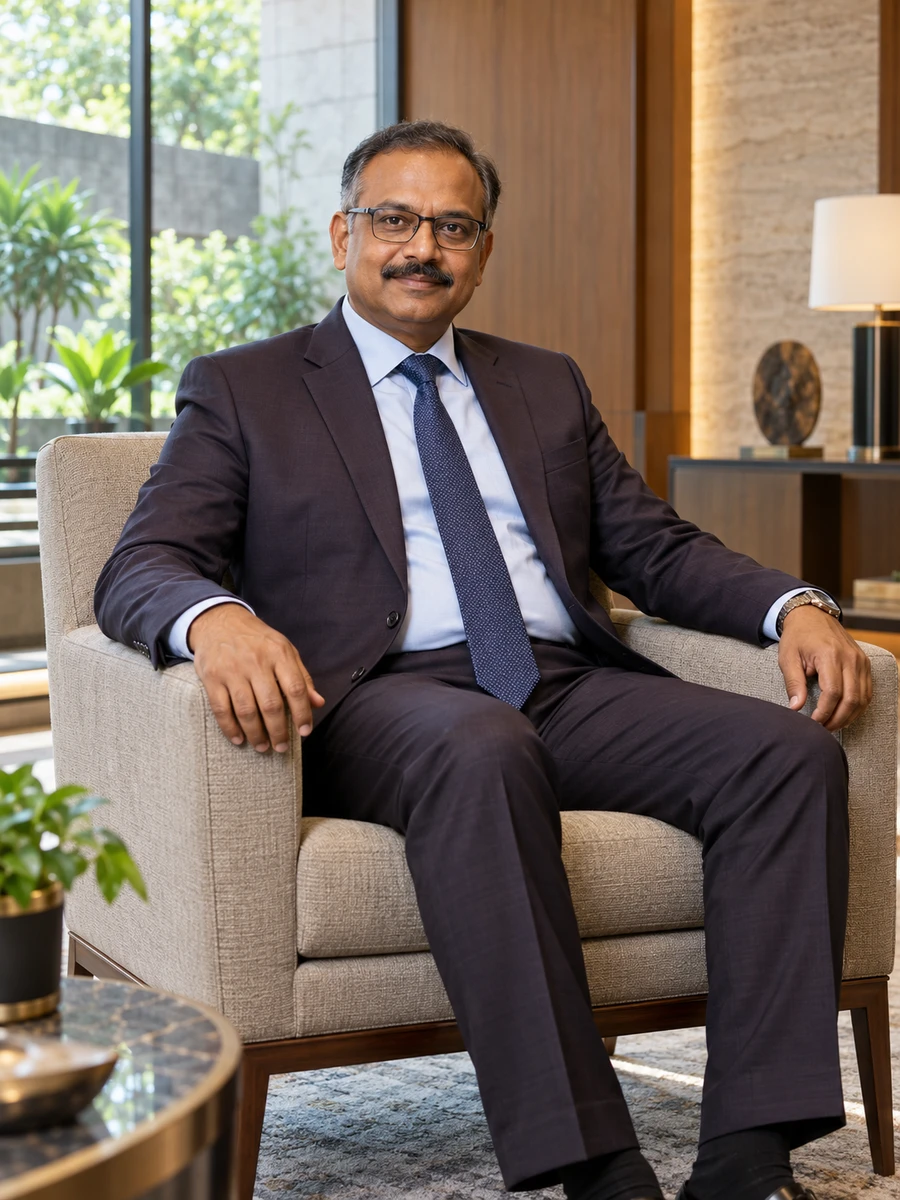
In my own words
I want finance to explain what the fleet has actually earned and what the business still owes. Scheduling, cash collection, income and asset value each describe part of that account. They become misleading when a convenient operating number is allowed to stand in for the rest.
Mathew Vezqavni
Education
Formation
- Bachelor of CommerceNevqarthi Commerce College1997
Working languagesEnglish · Kannada · Hindi