Haorun Xie

A retrospective

Haorun Xie

Chief Executive Officer

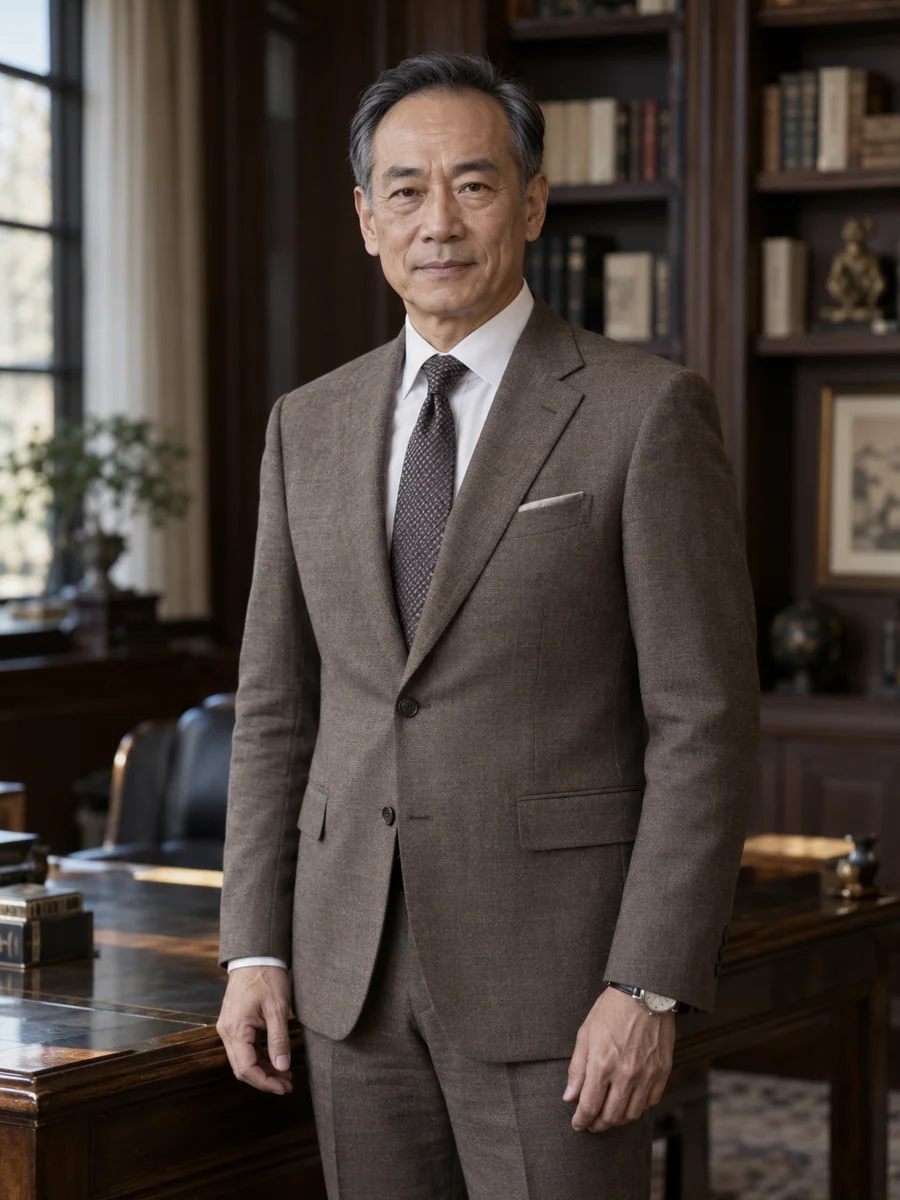
Portrait of Haorun Xie

I build an equipment company whose commercial model values keeping useful machines working as deliberately as selling new ones.

I founded Wensharo Thermal Systems in 2011 after fifteen years in commissioning, field service and industrial general management. We make furnaces and thermal-processing equipment for metal-component manufacturers. The business now employs 880 people across two Chinese assembly sites and a field-service organisation, with annual revenue of RMB 1.26 billion in 2025. Our domestic operations are complemented by service partners in Thailand and Vietnam. I remain the majority shareholder and lead the executive team under a separately chaired board.

My early career taught me to see an equipment sale as the start of a long operating relationship. Customers need competent diagnosis, sensible refurbishment choices and people who understand machines built by an earlier generation of engineers. Those obligations can be difficult to reconcile with incentives focused on current-year new sales. I have therefore made repair economics, practical skill development and the authority of our service managers explicit parts of how the company is run.

The other change has been personal. As a founder, I could become the quickest route around the very organisation I was trying to build. We introduced clearer decision remits, but the process only began to work when I stopped reopening ordinary choices through informal conversations. I still intervene where the issue belongs with the chief executive. I also expect managers to act within their authority, explain the result and learn from a decision that I might have made differently.

A repair recommendation with a visible sales consequence

In a reviewed customer cohort, we supported refurbishment work worth RMB 11 million instead of pursuing RMB 34 million in proposed replacement-equipment revenue. The comparison concerns different scopes of work; it is not a claim that the smaller order produced an equivalent financial result.

Authority beyond the founder's desk

For a defined group of engineering and spare-parts decisions, median approval time fell from nineteen to six working days after twelve managers received written remits. Two decisions were later reversed openly, without withdrawing the wider delegation.

Expert time committed to teaching

We funded forty-two apprentices through a two-year practical programme. Thirty-one completed the assessed stage, and twenty-seven remained after a further year. The RMB 8.4 million cost included experienced technicians' teaching time, not only the apprentices' pay.

Current focus

I am examining the evidence we need to support older installations when the original engineer is no longer available. The work joins service records, parts decisions and the judgement that experienced technicians need to make teachable.

Conversations I welcome

I am interested in selected industrial board and founder-development discussions, subject to commercial conflicts. I can consider one external appointment within twenty-two days annually. I remain committed to my CEO role and do not use a personal website to offer purchasing access, individual equipment advice or informal service escalation.

Room I

A statement of practice

I learnt the customer's business beside equipment that was already in use. That perspective still influences how I judge a new order, a repair recommendation and a training budget. A manufacturer cannot claim a long relationship with its installed base while organising every decision around the next machine sale. The way we pay, teach and delegate must support the service we say we intend to provide.

Haorun Xie

Room II

Areas of practice

The operating questions I know how to examine

  • 01Economics of the installed equipment base
  • 02Founder authority and managerial judgement
  • 03Industrial skill formation
  • 04Service information that supports a useful intervention

Room III

Selected works

Decisions with a cost as well as a result

Work 01

Allowing refurbishment to compete honestly with a new-machine proposal

Medium: judgement, people and capital

Our 2025 commercial review identified a cohort of customers considering replacement equipment with a combined proposed value of RMB 34 million. Service engineers believed that several existing installations could continue useful work after a defined refurbishment. The new-equipment team regarded those recommendations as a threat to its annual plan. The disagreement was not about whether the customer should receive advice; it was about which commercial outcome the organisation rewarded once the advice was given.

I required the two options to be assessed separately, with their scope, limitations and financial consequences stated. The service team had to explain what refurbishment could and could not address. The equipment team had to justify the additional capability of a replacement, rather than assume that a newer machine was automatically the better choice. I changed the internal review so a supported repair recommendation did not count as a salesperson's failure to close the larger order.

Customers in the reviewed cohort ultimately commissioned RMB 11 million of refurbishment work through us. We did not book the proposed RMB 34 million replacement orders. These were different scopes, and I did not describe the smaller amount as equivalent revenue or claim an unmeasured environmental benefit. We funded the engineering and parts work required for the repairs and followed the resulting service demand. The immediate company forecast reflected the lower sales value rather than hiding it inside an assumed future customer relationship.

The decision made our service proposition more credible internally: colleagues could recommend work consistent with the evidence even when another option generated a larger invoice. It also exposed the need for better refurbishment costing. I would establish that cost record earlier before extending the approach to a wider installed base. A sound customer recommendation still needs an economically workable delivery model, and the company should not confuse a smaller order with a simpler obligation.

Work 02

Removing the founder from a queue without creating a private second queue

Medium: judgement, people and capital

After the minority investment, our 2019 review examined engineering and spare-parts decisions that routinely reached my desk. The median elapsed approval time in the defined cohort was nineteen working days. Twelve managers were capable of deciding much of this work, but colleagues still sought my informal opinion when there was disagreement. A delegation document alone would have left the old route intact, with the formal manager responsible for a choice that could be changed elsewhere without notice.

I worked with the executive team and chair to define the managers' remits, the evidence required and the conditions for escalation. Urgent service matters retained their established response route; the review concerned ordinary engineering and parts approvals. We then recorded requests that bypassed the agreed route, including those I had encouraged by answering too quickly. This was uncomfortable because some colleagues interpreted a referral back to the responsible manager as a withdrawal of access to the founder.

Over the next nine months, median approval time fell from nineteen to six working days in the same category of decisions. Two decisions were subsequently reversed after new information emerged. We reviewed the reasoning and the consequences openly rather than use those reversals to reclaim the entire remit. I also stopped holding separate discussions about a manager's decision without ensuring that the accountable person was involved. The chair challenged me when my shareholder perspective began to intrude into an ordinary operating question.

The business became less dependent on my availability, and managers could see that authority included responsibility for learning rather than an obligation to guess my preference. I would spend more time explaining the changed route to long-serving colleagues at the outset. People who had helped build the company reasonably valued direct access; we needed to distinguish continued personal respect from a decision process that could no longer depend on private conversations.
Work 03

Paying experienced technicians to teach

Medium: judgement, people and capital

We recruited forty-two apprentices in 2022 for a two-year practical programme after identifying a growing dependence on a small group of experienced technicians. The first operating proposal treated apprentices as additional capacity relatively early and expected teaching to occur around existing assignments. Workshop leaders questioned that assumption. Demonstration, observation and correction required attention from precisely the people whose production and service time was already most heavily committed.

I approved an RMB 8.4 million programme that included protected teaching time and a lower planned output contribution from the participating experts. Finance asked how quickly the expenditure would become productive headcount. I proposed separate measures for recruitment, assessed task capability, programme completion and later retention. We would not count an apprentice as a substitute for an experienced technician merely because a budget period had ended. The relevant supervisors retained responsibility for the work each person could perform and the supervision still required.

Thirty-one participants completed the assessed stage after twenty-four months. Twenty-seven of those remained with the company after another year. The eleven who did not complete were not all unsuccessful for the same reason: some left, some changed roles and some needed a different development route. We reviewed those differences and retained them in the programme account. Experienced technicians also helped document recurring service situations so supervised practice could build on the company's prior knowledge rather than start from an empty file.

The enterprise gained a more explicit method for developing capability, alongside a realistic understanding of the cost and losses involved. It did not eliminate dependence on experienced people. My main correction would be to prepare the mentors more deliberately before the first intake. Being able to perform a difficult task does not automatically make someone comfortable explaining it, assessing another person's attempt or giving feedback that improves the next supervised assignment.

Work 04

Counting the intervention after the alert

Medium: judgement, people and capital

During 2024 and 2025, we piloted a remote-condition service across sixty-three customer installations. Early reporting emphasised the quantity of data collected and the number of notifications produced. Service managers were more interested in whether a notification justified an investigation and whether the customer could act on it appropriately. Several alerts arose from operating conditions the remote team did not understand well enough. More notifications were not necessarily making the service more useful.

I asked engineering and service colleagues to follow each escalated finding through its practical consequence. The customer retained control of equipment operation, and our remote service did not replace required on-site assessment. We changed the review to distinguish an observation, a finding worth pursuing and the resulting action. Commercial colleagues were concerned that this qualified account would be harder to sell than a broad promise of predictive support. I preferred a proposition we could explain through the work it actually helped a technician and customer perform.

During the reviewed pilot period, twenty-five escalations produced seventeen actionable findings and eight false escalations. We analysed the latter for configuration assumptions, incomplete history and interpretation errors, rather than remove them from the presentation. The development and service-readiness programme cost RMB 2.6 million. Annualised service revenue associated with the pilot cohort was RMB 1.9 million; that figure was not presented as profit or as recovery of the full programme investment. We continued the service with narrower claims and clearer customer responsibilities.

The change gave the company a more useful basis for judging the offering. It also reduced the temptation to interpret a growing stream of data as evidence of a better service. I would involve field technicians earlier in selecting the first installations. Their knowledge of older configurations would have helped us identify cases where a remote pattern needed more context before it could support a sensible recommendation.

Work 05

Keeping the field network during a new-order downturn

Medium: judgement, people and capital

In 2009, as general manager of Heshanrow's thermal-equipment division, I faced a decline in new orders while customers continued operating the installed machines we supported. A proposed response removed field-service positions alongside assembly capacity. It produced the largest immediate saving on paper, but it treated service workload as if it would decline in the same proportion as new-equipment demand. Our call history and scheduled work suggested otherwise.

I proposed retaining thirty-eight field engineers while reducing excess assembly overtime, consolidating rented space and revising the sequence of discretionary expenditure. Group finance challenged the smaller near-term saving. I accepted the need to reduce cost but argued that weakening service would create a different obligation later, through delayed work and a less capable response to existing customers. We examined actual service demand by region and equipment type rather than relying on the previous year's new-sales allocation to distribute the field team.

The agreed measures reduced expenditure by RMB 22 million over six months relative to the prior operating plan. We maintained the thirty-eight-person field network and changed scheduling to use it more effectively. The reviewed service cohort's overdue planned visits fell from 64 to 29 over the same period, although the result also reflected changes in customer availability. I did not attribute every improvement to the staffing decision or suggest that the retained capacity had no cost. The division accepted a smaller immediate reduction to preserve a defined capability.

This experience later influenced how I founded Wensharo. Service could not be a residual function funded only after new sales had met the plan. I would improve the original downturn response by separating installed-base obligations from new-project workload sooner. Waiting until a general cost proposal was prepared made the discussion adversarial and forced colleagues to defend a number before we had agreed what work the company still had to perform.

Room IV

In figures

RMB 1.26bn

Annual revenue

Financial year 2025

2

Assembly sites

Domestic operations in China

880

Employees

Wensharo Thermal Systems

Room V

Commissions

Where founder experience could help another board

  • Wensharo Thermal Systems

    Founder and executive director; CEO since January 2019 · Reports to people and capability review; presents service investment recommendations

    April 2011–present

Room VI

From the visitors' book

Haorun was willing to include his own informal interventions in the delegation review. That mattered more than another statement that managers should take responsibility. It allowed the board to discuss how the company actually reached decisions, including the habits he personally needed to change.
Nuochen PeiNon-executive chair, Wensharo Thermal Systems
He asked us to put teaching time into the operating plan before announcing the next apprentice intake. We could then discuss delivery pressure and assessment standards honestly. The programme still had departures, but the people doing the teaching were no longer expected to make its time appear from nowhere.
Jianluo WenSenior workshop mentor, Wensharo Thermal Systems

Room VII

The catalogue

Essays written alongside the work.

An invitation

Contact

I am interested in selected industrial board and founder-development discussions, subject to commercial conflicts. I can consider one external appointment within twenty-two days annually. I remain committed to my CEO role and do not use a personal website to offer purchasing access, individual equipment advice or informal service escalation.

Open to
  • Board appointments
  • Speaking invitations

office@haorunxie.example