Chief Information Officer Europe
From the shop counter in Brașov to six hundred supermarkets in Spain
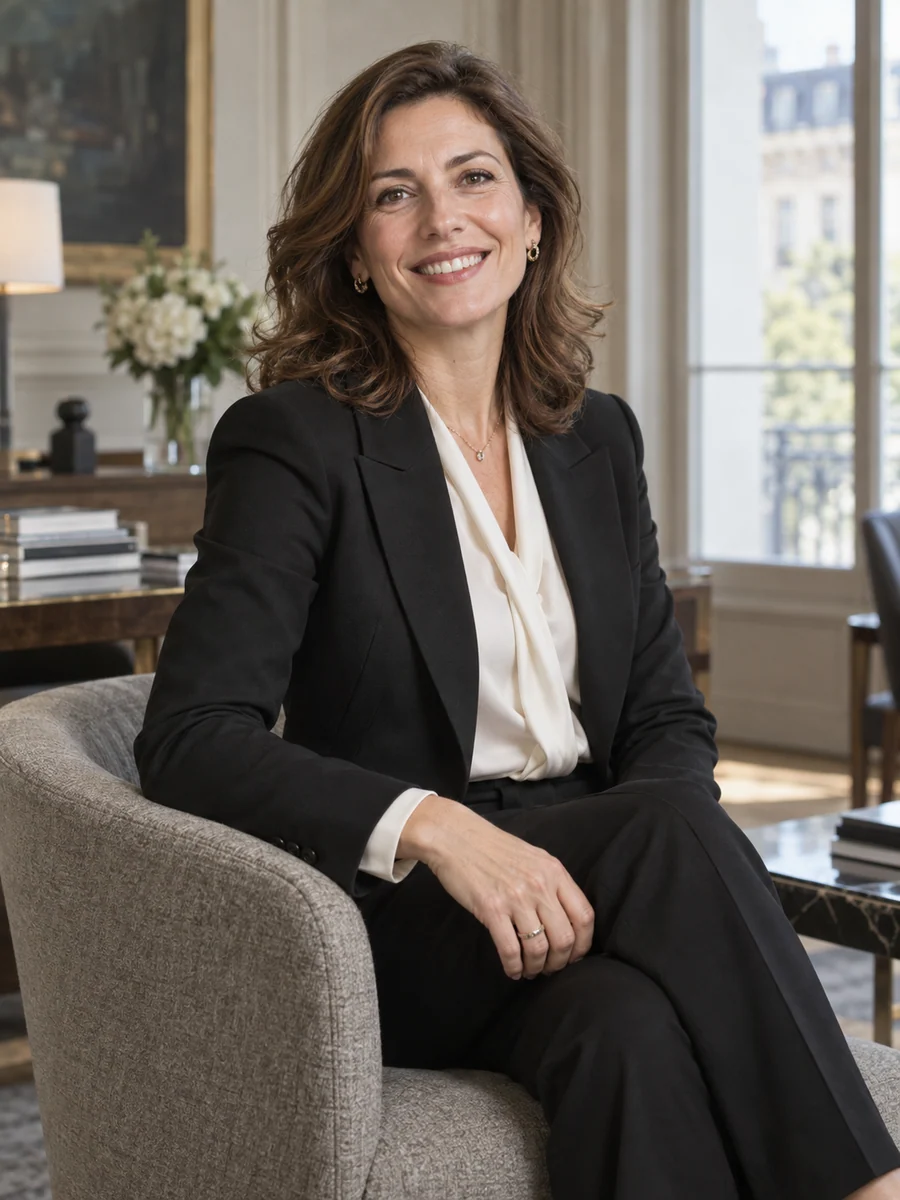
I learnt retail technology in Brașov in 1998, writing till software for small shops that had just been told to record every sale on a fiscal printer. The shopkeepers did not want technology. They wanted to open on Monday without a fine, and they rang me at home when the printer jammed. I have tried ever since to remember that a till is a promise to a person standing at a counter, not a line in a project plan.
I studied computer engineering at Institutul Politehnic Țara Bârsei in Brașov, graduating in 1998 after the five-year course. My first employer, Codrisoft, was a software house of about forty people that sold point-of-sale programs to Romanian retailers. A law passed in 1999 obliged most of them to record sales on electronic fiscal cash registers, and for three years I connected our software to printers from half a dozen manufacturers, each with its own way of failing. I learnt more about retail from those calls than from any course.
In April 2002 I joined one of our customers, the Romanian subsidiary of Grünauer Handel, a fictional family-owned Austrian grocery group. It had 22 supermarkets in Romania when I arrived and 118 when I left. I opened the technology of nearly a hundred stores, often in the week before they traded, and in July 2005 I converted every till for the redenomination of the leu, when ten thousand old lei became one new leu overnight. Romania joined the European Union in January 2007, and I rebuilt our import and tax systems for trade that was no longer crossing a customs border.
In 2008 the group asked me to move to Salzburg as head of store systems. Its 1,400 stores in five countries ran four different till platforms. My first assignment was Slovakia's adoption of the euro on 1 January 2009: 160 stores had to display prices in two currencies for months beforehand, accept both for just over two weeks afterwards and give change only in euros. We did it without a single store closing. The rest of my four years in Salzburg went on moving the whole group to one till standard, which taught me that standardisation is a negotiation with country managers, not a technical decision.
My husband is Spanish, and in 2012 we moved to Madrid. I became IT director of Droguerías Ambrela, a family-owned drugstore and perfumery chain with about 400 stores. There I made the mistake that shapes my work most. In January 2015 we moved our merchandising system to a new platform in the first week of the year, on a date that suited the financial calendar and the vendor. It did not suit perfumery, whose biggest gift day is the Epiphany, or the winter sales that begin the day after. Store replenishment failed for nine days. I had agreed to the date, and I have not agreed to a date like it since. I also completed an executive master's degree in supply chain management at Escuela de Negocios Albarda during those years, studying at weekends.
I joined Ravessa in September 2017 as director of store and supply-chain systems. I gave every store a second network connection, opened the systems of a new distribution centre at Guadalajara in 2019 and, in the spring of 2020, helped our online business handle nearly three times its usual orders within five weeks. When our CIO retired at the end of 2020, the board ran a search that included external candidates, and I was appointed in January 2021.
As CIO I lead 380 technology employees and about 240 contractor staff, with seven direct reports including our chief information security officer. Our data protection officer sits in the legal department rather than in mine, and I prefer it that way: the person who advises on whether we may use personal data should not report to the person who wants to use it. I report to our chief executive and present to the Audit and Control Committee every quarter. I try to bring that committee the risk it has not asked about yet, with a figure attached.
I am probably known in Spanish retail for three opinions: that a vendor's end-of-support date is a price to negotiate rather than a deadline to obey, that a store's ability to trade without its central systems should be designed and rehearsed, and that a forecasting model should be allowed to say when it does not know. I hold them because I have watched what happens without them. My next step is to sit on the other side of a board table as an independent director, where I hope those habits will be useful to people who did not grow up with tills.
Open to Board appointments · Speaking invitations
Languages / Romanian · Spanish · English · German
A leadership conviction
A supermarket has to be able to sell on its worst day, so I design for that day first and let the good days take care of themselves.
- Ravessa net sales, 2025
- €4.32bn
- 618 supermarkets in seven Spanish regions; fresh food 38 per cent of sales
- Checkouts moved to a new till platform
- 5,240
- Nine regional waves, January 2023 to November 2024, with no store losing a trading day
- Card payments completed during the September 2025 processor outage
- 97%
- After a second acquirer and limited offline acceptance were introduced
Board & advisory record
Current appointments
Ravessa Online, S.L.U.
Director of the wholly owned online grocery subsidiary, in an executive capacity
2021–present
Fundación Mesa Común Aragón
Trustee of a regional food-redistribution charity, unpaid
Finance subcommittee
2022–present
Education & credentials
- Diploma in computer engineering
- Institutul Politehnic Țara Bârsei · 1998
- Executive master's degree in supply chain management
- Escuela de Negocios Albarda · 2015
- Programme for prospective non-executive directors
- Instituto Arbeyal de Gobierno Corporativo · 2025
Perspectives from colleagues
Nadia brings the committee the risk we have not asked about, with a number attached and the uncomfortable part first. After the Guadalajara attack her paper told us what she had got wrong before it told us what she had got right. That is rarer in an executive than it should be.
At four in the morning she shut down my three healthy warehouses along with the infected one, and I told her she was wrong. Most of those hours did turn out to be unnecessary, and she said so in her report. She then gave me the segmentation that means next time she will not have to.
Slovakia's euro changeover could have closed stores on the first morning of 2009. Nadia had every till rehearsed in a live store weeks before, and on New Year's Day she was in a supermarket in Žilina watching the first customers pay.