Chief Marketing Officer China
Twenty-seven years of selling medicines from every side of the counter
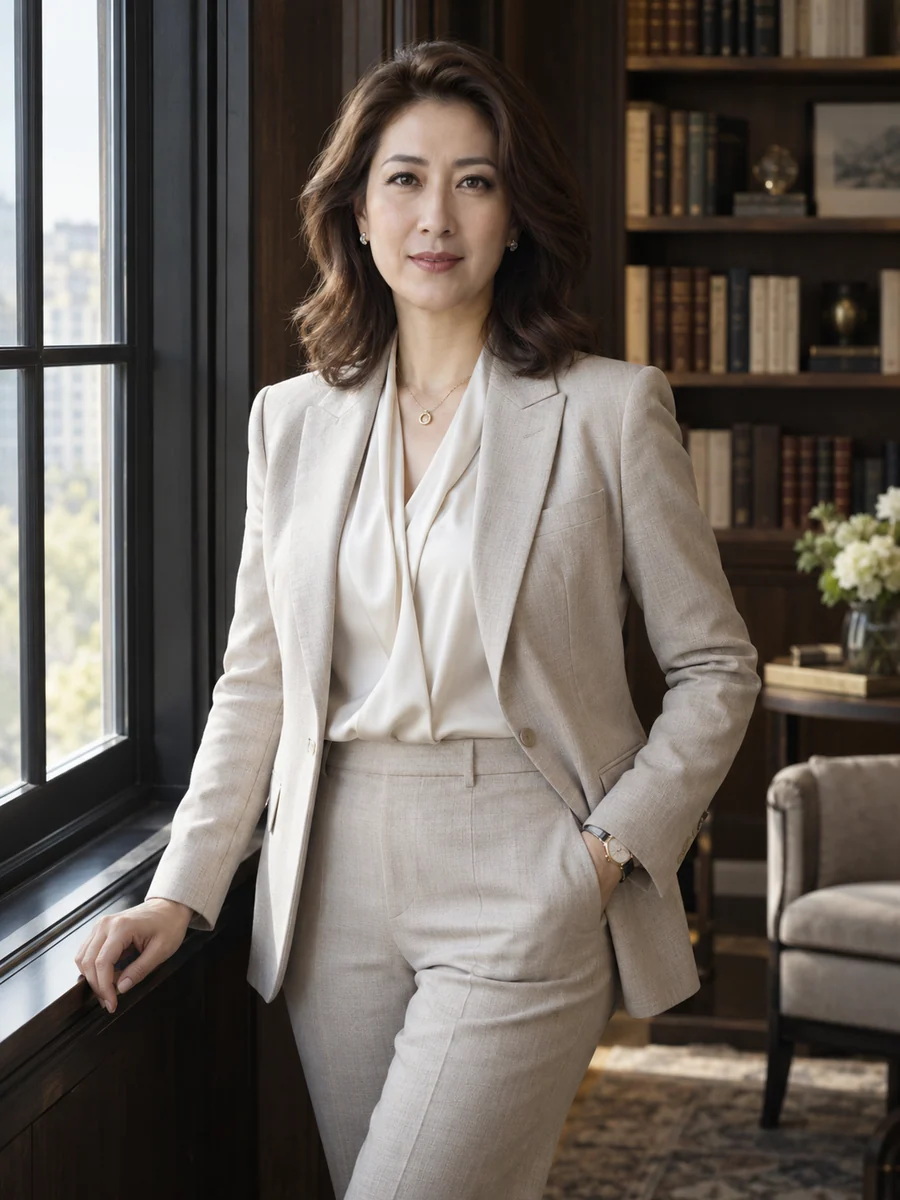
My mother was the pharmacist at a county hospital in Zhejiang, and I spent school holidays in her dispensary. She kept a notebook of the questions patients asked when they collected their medicines: how long, with or without food, what happens if I miss one. Very few of those questions were answered by the leaflets the manufacturers supplied. I have kept a version of her notebook in every job since, and it is still the first thing I ask a new brand team to build.
I studied pharmacy at Lanting College of Pharmacy and graduated in July 1999. A month later I joined Jianyu Pharmaceutical, a private Hangzhou maker of generic antibiotics, as a hospital representative covering fourteen hospitals. It was the industry as it then was: representatives were paid largely on what their hospitals bought, and the conversations expected of us were more about relationships than about pharmacology. I learnt how hospitals bought medicines, and how much of that process had nothing to do with patients. I left in 2003 because I did not want my income to depend on a doctor's prescribing.
At Cuiwei Tang Pharmaceutical in Suzhou I managed two traditional Chinese medicine brands sold without prescription: a granule for common colds and an herbal ointment for minor burns and insect bites. It was my first experience of the pharmacy counter, where the person recommending a medicine is an assistant with thirty seconds and a customer who feels unwell. I rewrote our pharmacy and television materials so that every claim matched the approved indications, and we trained counter staff in about 3,000 pharmacies across eastern China. Sales of the two brands rose by a third. I took away a lesson I still use: a modest, accurate claim that a trusted pharmacist will repeat sells more steadily than an ambitious one the pharmacist will not.
In 2008 I joined the China subsidiary of Ostervik Pharma, a fictional Swedish speciality group, as senior product manager for dermatology in Shanghai. I stayed ten years. I ran topical brands, and from 2013 the marketing of the immunology and dermatology business unit, which launched an imported anti-TNF biologic for psoriasis and rheumatoid arthritis in 2014. Biologics were then paid for almost entirely by patients, and many stopped after a few months because of cost or fear of injecting. We set up nurse-led injection training in 48 hospitals, and I watched persistence decide the value of a medicine more than any launch event. A European compliance culture also gave me habits I still rely on: fee bands for speakers, a documented need for every meeting, and a medical reviewer who could stop any material I had approved. I completed an executive MBA part-time at Yanlan School of Management in 2011.
By 2017 I believed that chronic-disease care in China would move partly online, and I wanted to see a prescription from the patient's side. Shuiyun Health Technology, a venture-backed online pharmacy and internet hospital in Shanghai, hired me in January 2018 to build its chronic-disease refill service. Patients with hypertension or diabetes could renew a prescription with a doctor online, have it reviewed by a licensed pharmacist and receive their medicines at home. Membership grew from 90,000 to 1.1 million in three years. I also argued, successfully in part, that the platform should not sell manufacturers prominent placement for prescription medicines. Our investors were not pleased, and I learnt how to make an unwelcome argument to a board.
Tanqiao approached me in early 2021. Its founder, Shen Guohua, had built a successful hospital generics business, and volume-based procurement had removed most of its pricing power within three years. The company had spent heavily on research, and its first antibody was in late-stage trials. Our chief executive, Gao Shiwen, wanted a marketing leader who had launched a biologic, understood channels outside the hospital and would not rebuild the old promotional model under a new name. I joined in April 2021.
My first two years were spent on the generics business as much as on the launch. Molecules we had won in procurement rounds no longer needed promotion, because the procurement itself had committed their volume, and I stopped promotional spending on seventeen of them. The harder change came in July 2023, when I ended the programme of sponsored department meetings. Then came the launch in October 2023, the reimbursement negotiation in late 2024, our patient support programme in 2025 and a second indication.
I lead 260 people across brand marketing, market access and pricing, patient services, and channel and digital work. The field force reports to our head of sales, Fang Zhiyuan, and scientific exchange to our head of medical affairs, Lu Yanting. I prefer that arrangement, because a marketing function that controls education, sales incentives and patient data at once has too much say over what doctors hear. I ask my teams for the evidence behind every claim and for the patient question it answers.
Within the industry I am known, sometimes uncomfortably, for three positions: that the end of hospitality revealed how little of it was education, that a reimbursed price is the start of access work rather than its end, and that a medicine's marketing should say plainly whom it does not help. I am now preparing for a board role outside Tanqiao, where those positions would be tested from the other side of the table.
Open to Board appointments · Speaking invitations
Languages / Mandarin Chinese · English
A leadership conviction
If a doctor would be embarrassed to see what we paid for printed beside the prescription, we should not have paid for it.
- Sales of Tanqiao's first innovative medicine, 2025
- RMB 860 million
- Its first year on China's national reimbursement drug list
- Hospitals stocking the antibody, June 2026
- 1,140
- Up from 110 specialist centres at the October 2023 launch
- Twelve-month persistence among patients in the support programme
- 63%
- 23,400 patients enrolled; an indication, not a controlled result
Education & credentials
- Bachelor of Science in Pharmacy
- Lanting College of Pharmacy · 1999
- Executive MBA (part-time)
- Yanlan School of Management · 2011
Perspectives from colleagues
Jing asked me to approve a smaller launch than our sales plan, in the year the whole company was waiting for its first innovative medicine to prove itself. She brought the numbers for both plans and told me exactly what hers would cost. It cost what she said, and it was the right decision.
Most commercial leaders tolerate medical review. Jing asked for it earlier, handed my team the budget for scientific exchange, and then defended our objection to her own agency's chart in front of the sales leadership.
When we launched our first biologic in China, Jing spent more of her budget on nurses teaching patients to inject than on the launch meeting. Our European colleagues questioned it until the persistence data arrived.