Chief Technology Officer India
Following the sound beyond the equipment list
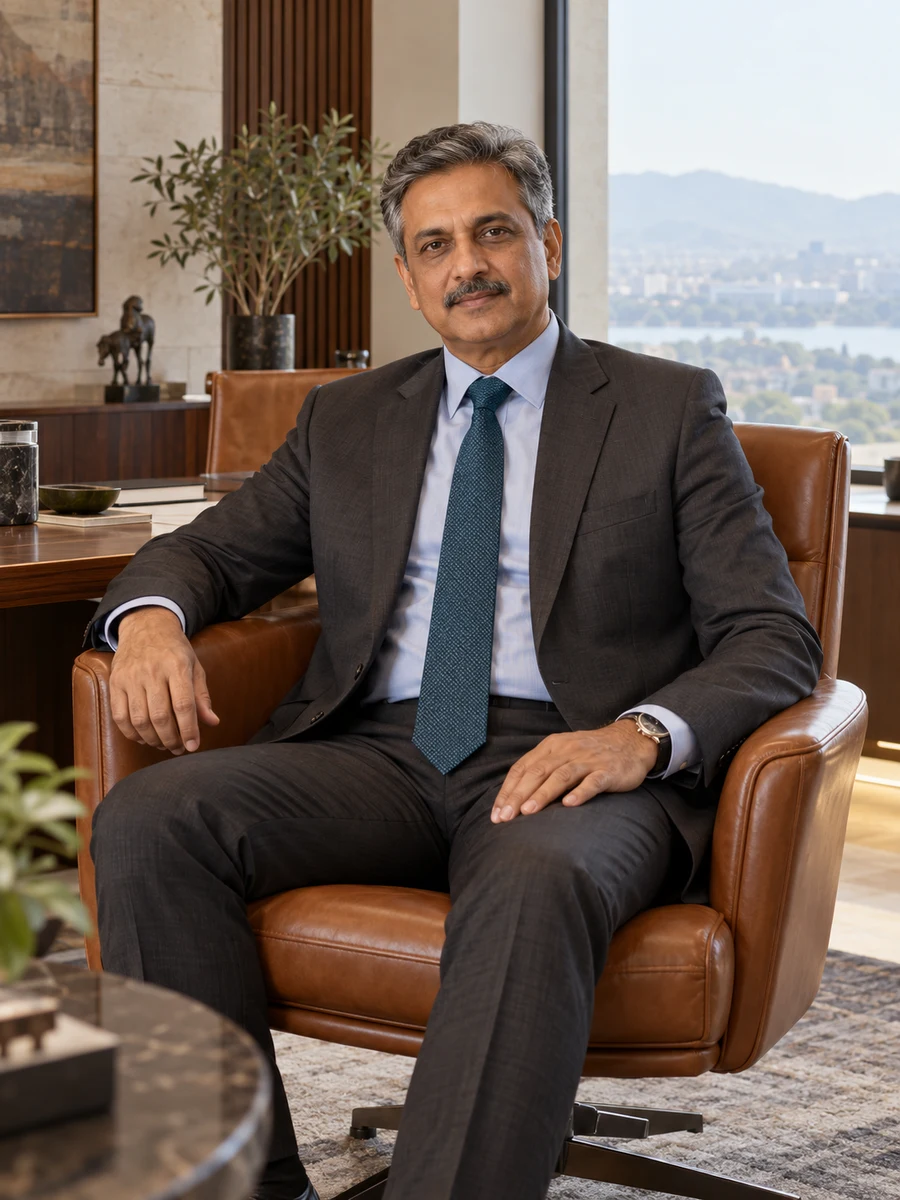
The stereo demonstration was persuasive enough that I approved it. When Sanjay Lemzani asked to hear the commissioned mix in mono, the voice weakened. Parts of the relationship between the channels cancelled when combined. The studio had produced an attractive presentation, but the presentation had not answered every listening condition we had agreed to support. I had allowed a favourable experience to become a broader technical conclusion. The correction belongs at the beginning of my professional account because it changed the way I examine a demonstration before lending it executive authority.
I grew up in Udaipur and completed a diploma in audio engineering at the fictional Qeznavi Institute of Audio Technology in June 1995. Tavqesi Sound Engineering employed me in July as a studio maintenance technician. The company had forty-eight employees and ₹5.8 crore revenue for FY ending March 1996. I worked in a six-person technical group with no reports or spending delegation. Experienced engineers taught me to follow the whole signal path, including the connections and settings that did not appear in an equipment catalogue. A component working correctly was useful evidence, but it did not settle how the commissioned system behaved.
In February 2001 I became installation engineering lead. Tavqesi had ninety-six employees and ₹17 crore revenue for FY ending March 2002. Eleven technicians and engineers worked through two supervisors within ₹64 lakh annual function expense. I was responsible for coordinating installation work with the people who would use the rooms. Listening to their objections often exposed assumptions that a completed equipment list could hide. I learned to distinguish a successful installation from acceptance for a particular working purpose, and to explain the work still needed without dismissing the investment already made.
I joined Drezqoli in August 2007 as postproduction systems manager. The Nashik company had seventy-four employees and ₹21 crore service revenue for FY ending March 2008. My seventeen engineering colleagues worked through two leads with ₹1.9 crore annual operating expense. The move placed me inside an enterprise that had to deliver repeatedly after a room's initial installation. Technical choices affected creative work, client commitments and the ability to reproduce a result. I became interested in what happened when a file moved between environments that interpreted its properties differently, or when processing improved one quality while damaging another.
Promotion to technical director followed in May 2014. The title described an executive function, not a statutory directorship. Drezqoli employed 146 people and recorded ₹49 crore service revenue for FY ending March 2015. Twenty-seven engineering colleagues worked through three leads within ₹4.4 crore annual expense. I coordinated development of the working rooms and their technical methods, while the audio practice retained judgement about the commissioned sound. The work required stronger explanations of trade-offs. A technically ambitious treatment could be less useful than a restrained one, and a new purchase could leave a room's central acoustic problem unresolved.
I became CTO in January 2021. The current enterprise has 214 direct employees and ₹88 crore FY 26 service revenue. Thirty-six engineering colleagues report through four leads, with ₹7.2 crore FY 2026–27 expense and separate ₹3.1 crore approved capital. Working founders hold 58%, an employee vehicle 26% and a private investor 16%; I hold no interest in any of them. I report to Kavita Qevzomi. Sanjay leads the audio practice. Our respective responsibilities meet at the acceptance of a usable service, but neither my technical title nor an investment approval transfers the client's creative authority to me.
The mono review examined forty mixes. Thirty-one met the agreed criterion initially, six of the nine exceptions were subsequently remixed successfully, and three remained held. The ₹38 lakh programme corrected the acceptance process as well as the affected work. In another case, seventeen of twenty-four processed dialogue passages were accepted; seven retained the original material because the proposed noise treatment damaged speech detail. That ₹46 lakh programme did not report quieter audio as evidence that every word had survived intact.
A source-rate investigation covered thirty deliverables. Eighteen were already supported, nine of twelve questioned cases were resolved through verified source interpretation and new rendering, and three remained pending. The ₹43 lakh work did not treat changing a label as equivalent to resampling. Separately, ₹96 lakh of acoustic assessment and treatment brought four of six rooms within the practice's declared monitoring criteria, leaving two outside final-mix approval. These are bounded engineering outcomes, not assertions about all devices, recordings or rooms.
I speak Hindi, English and working Marathi. After thirty-one years, I am considering how this experience might help a board examine technical promises and investment decisions. I registered with the IICA databank in April 2026; the proficiency assessment remains unfinished and I claim no exemption. I have no statutory seat. Twenty-four days is a provisional allowance, subject to consent and the actual demands of an appointment. I would bring experience of correcting my own approval, alongside a willingness to learn the wider economics and responsibilities that distinguish another enterprise from an audio-services business.
Open to Board appointments · Advisory roles
Languages / Hindi · English · Marathi — working proficiency
A leadership conviction
I want the version we approve to remain intelligible when it leaves the room that made us confident.
Education & credentials
- Diploma in Audio Engineering
- Qeznavi Institute of Audio Technology · 1995
Perspectives from colleagues
As his CEO, I saw Nikhil reopen an approval he had already supported. He brought the mono-review cost and the three held mixes into our decision, rather than allowing the successful stereo presentation to stand for the whole commission.
I lead the audio practice alongside Nikhil. During the dialogue review he supported retaining seven source passages when the proposed processing damaged speech detail, and left creative acceptance with the people responsible for the sound.