Chief Technology Officer India
Designing for the person on the night shift
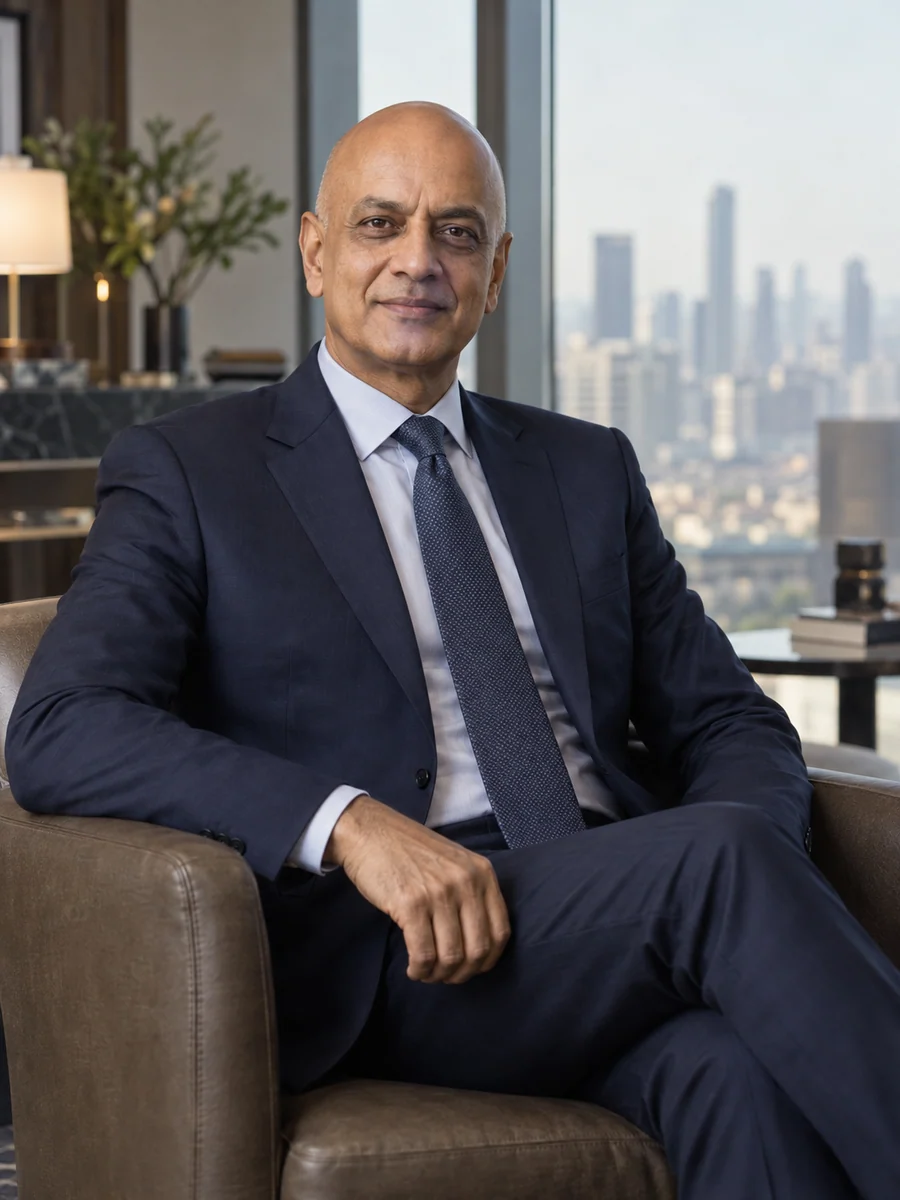
The night that shaped my working life came in November 1999. I was a young instrumentation engineer at Ushmavati Chemicals, a chlor-alkali complex near Bharuch, and a pressure upset in the chlorine header produced more than four hundred alarms on the control-room screens in about ten minutes. The panel operator, a man with twenty years in the plant, silenced them all, walked into the field and closed a valve he knew mattered. Nothing left the site and nobody was hurt. The following week I went through the alarm log and found that perhaps six of those alarms had been useful. A control system that told him everything had told him nothing, and he had been right to ignore it.
I grew up in Bharuch, where my father ran the maintenance workshop of a fertiliser plant, and I studied instrumentation and control at the Raivatak Institute of Engineering in Surat, graduating in 1998. At Ushmavati I maintained transmitters and analysers, then the plant's distributed control system, and in 2004 I led the move of the membrane cell house from relay panels to that system during a nineteen-day shutdown. The alarm review I began after 1999 took three years and cut standing alarms from about 1,100 to 180. It taught me that the hard part of automation is deciding what not to show.
In January 2006 I joined Kiyosaka Controls India, the Indian subsidiary of a fictional Japanese automation group, at its project centre in Vadodara. Over five years I engineered and commissioned control and batch-automation systems at seventeen plants, eleven of them API units. Pharmaceutical customers asked for something chemical plants never had: evidence that the system did what we claimed, written so that an inspector could follow it. I wrote our first validation templates for them, and I learnt how easily qualification documents grow thicker without becoming more convincing. I completed a part-time master's degree in computer science at the Vishwaroop Institute of Technology in Vadodara in 2010, mostly at weekends.
What I missed at a vendor was the third year. We commissioned a system, handed it over and left, and I rarely discovered whether the plant still used it as designed. In June 2011 I joined Saptadhara Organics, a listed API manufacturer in Vadodara, to lead manufacturing systems at its two USFDA-inspected plants. We introduced the company's first manufacturing execution system at Ankleshwar and a single laboratory information system across three quality-control laboratories. In 2015 I presented our data-integrity programme to Saptadhara's Audit Committee. It was my first time explaining a technical programme to directors, and I found that they wanted to know what could go wrong, not how the software worked.
I moved to Pune in September 2016, a few weeks after Corvanta Capital Partners, a fictional private-equity firm, bought control of Trivikaya Life Sciences from its founding family. The company then had ₹690 crore of revenue, one plant at Kurkumbh and twenty-three standalone applications that did not talk to each other. As head of IT and manufacturing systems I consolidated them, moved every site onto one ERP and separated the plant networks from the office network, a project several colleagues regarded as an expensive inconvenience until the day it mattered. When we designed Dahej in 2019, its control and execution networks were segmented from the first drawing.
The board made me chief technology officer in April 2021, combining IT, plant systems, laboratory platforms and information security under one executive as the company prepared to list. The listing in November 2023 changed the audience for my work. I now sit as an executive member of the Risk Management Committee, report each year to an Audit Committee that reviews our IT general controls, and answer to customers who send auditors through our plants more often than any regulator does. In February 2025 ransomware encrypted our corporate servers. The plants kept running because of decisions taken in 2017, and the eleven days it took to rebuild cleanly were the most instructive of my career.
I lead 212 people across Pune, Kurkumbh and Dahej through seven direct reports, and I ask three things of them. Design for the person who has to use the system at the end of a twelve-hour shift. Write down why each control exists, so that the next team can remove it if the reason has gone. And bring me the incident report while it is still embarrassing. Our head of quality owns the decisions on data integrity and batch release; my job is to give her systems that make the right decision the easy one.
Inside the industry I am known for a few opinions that cost money in the short run: that a digitised paper record is still a paper record, that the useful cyber measure for a plant is how fast it can restart, and that validation effort should follow risk rather than page counts. I have also learnt to keep each customer's process data walled off from every other customer's, because in a contract manufacturer the next bay may hold a competitor's molecule. I am now preparing for a role on the other side of the table: one independent directorship, outside pharmaceuticals, where a board wants someone who has run plant technology through an incident.
Open to Board appointments · Speaking invitations
Languages / English · Gujarati · Hindi · Marathi
A leadership conviction
A control the shift team has learnt to work around is no longer a control; it is a record of what we hoped would happen.
- Trivikaya revenue, year to March 2026
- ₹2,140 Cr
- About two-thirds from development and manufacturing for innovator customers
- Technology colleagues led
- 212
- IT, plant systems, laboratory platforms and security across Pune, Kurkumbh and Dahej
- ERP restored from clean backups, November 2025 drill
- 58 hours
- Against eleven days during the February 2025 ransomware recovery
Education & credentials
- Bachelor of Engineering, Instrumentation and Control
- Raivatak Institute of Engineering · 1998
- Master of Technology, Computer Science (part-time)
- Vishwaroop Institute of Technology · 2010
Perspectives from colleagues
In the week of the ransomware attack Pranav sent the committee a paper every evening, and each one began with what we did not yet know. He also told us, unprompted, that the weakness the attackers used had waited on his own register for fourteen months. A committee can work with an executive like that.
When we changed our validation method I was its hardest critic, so Pranav made me the person who signs off every risk assessment. He has never treated a quality decision as a technology decision, even when the system in question was his.
I wanted every Dahej product on tablets in eighteen months and said so at the executive committee. His plan was slower, and my supervisors grumbled about running two systems for two years. Today my reviewers release batches in under two days, and I would not go back.