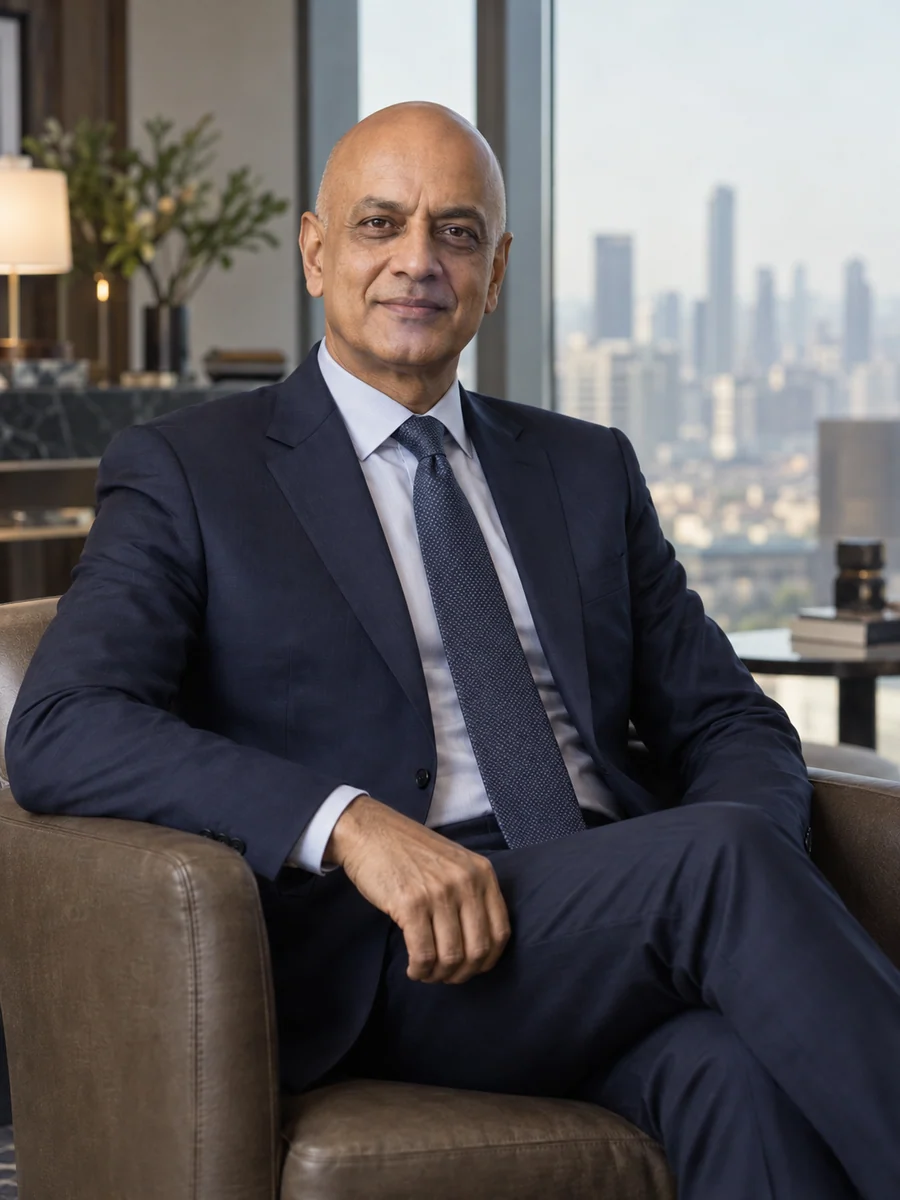
Pranav DesaiChief Technology Officer · Essays & perspective
Trivikaya revenue, year to March 2026
₹2,140 Cr
About two-thirds from development and manufacturing for innovator customers
Technology colleagues led
212
IT, plant systems, laboratory platforms and security across Pune, Kurkumbh and Dahej
ERP restored from clean backups, November 2025 drill
58 hours
Against eleven days during the February 2025 ransomware recovery

Plant software earns its validation only when the chemist on the night shift can rely on what it enforces.

I am the chief technology officer of Trivikaya Life Sciences Limited, a fictional Pune-based company that develops and manufactures active pharmaceutical ingredients for other pharmaceutical companies. About two-thirds of our ₹2,140 crore of revenue in the year to March 2026 came from contract work for innovator customers in the United States, Europe and Japan, and the rest from generic APIs and intermediates. Our chemistry is worked out at a research centre in Pune and scaled up at two plants, Kurkumbh in Maharashtra and Dahej in Gujarat, each inspected by regulators from several countries and audited by customers almost every month.

My remit covers everything with a processor in it: corporate IT and the ERP, the manufacturing execution system and process historians on the plant floor, laboratory platforms, the networks that connect them and the security that keeps them apart. I lead 212 people and an ₹88 crore budget, report to our managing director, and sit as an executive member of the board's Risk Management Committee. I started work in 1998 maintaining instruments in a chlor-alkali plant near Bharuch, and I still think of a computerised system first as something an operator has to use at three in the morning.

Most of my work is deciding what a system should refuse to let people do, and what it should leave to their judgement. In a contract manufacturer that question has three audiences at once: the regulator who will inspect the record, the customer whose process we are running while a competitor's may run in the next bay, and the chemist who has to finish the batch. I have learnt to design for the third and document for the first two, and to tell our board plainly how long it would take us to make medicine again if the systems went dark.

Batch records reviewed in days, not weeks

At Dahej, electronic batch records with enforced sequences and review by exception cut quality review from 6.5 days to 1.8 days for the products we digitised, and documentation errors fell from 31 to 4 per 100 batches. We chose depth on 14 products over a faster, shallower rollout across all 38.

Plants that ran through a ransomware attack

When attackers encrypted our corporate servers in February 2025, the segmented plant networks kept every batch in progress running. I argued for a clean rebuild over a fast restore, which moved ₹63 crore of shipments into the next quarter. Our November 2025 drill restored ERP in 58 hours.

IT controls ready before the listing

Ahead of our November 2023 listing I deferred a planned ERP upgrade by a year to close 11 IT general control deficiencies our auditors had raised. Their report on internal financial controls for 2022–23 was unmodified.

Customer data without a door into the plant

Instead of the live plant access one large customer requested, we built a segregated platform that delivers curated batch data within two days. It now serves 31 customers and has never needed a connection from outside into our control networks.

Current focus

I am extending enforced electronic batch records to Kurkumbh, where the high-potency suite and smaller, more varied campaigns make every recipe harder to author than at Dahej; the programme runs to late 2027. Alongside it I am moving the validation of our computerised systems to a risk-based method that our head of quality and I can both defend in front of an inspector.

Conversations I welcome

I am not looking to leave Trivikaya before the Kurkumbh programme is complete. I would consider one independent directorship at a listed company outside pharmaceuticals, joining its Risk Management Committee and, where the board has one, its technology committee. I can give about twenty-five days a year, with my board's consent. I also accept a few speaking invitations each year from plant leaders, quality heads and directors.

Beyond the page

The record behind the perspective.

Formation

  • Bachelor of Engineering, Instrumentation and ControlRaivatak Institute of Engineering · 1998
  • Master of Technology, Computer Science (part-time)Vishwaroop Institute of Technology · 2010
In the week of the ransomware attack Pranav sent the committee a paper every evening, and each one began with what we did not yet know. He also told us, unprompted, that the weakness the attackers used had waited on his own register for fourteen months. A committee can work with an executive like that.
Lalitha VenkatraghavanFictional independent director and chair of the Risk Management Committee, Trivikaya Life Sciences Limited
The full record ↗

Contact

I am not looking to leave Trivikaya before the Kurkumbh programme is complete. I would consider one independent directorship at a listed company outside pharmaceuticals, joining its Risk Management Committee and, where the board has one, its technology committee. I can give about twenty-five days a year, with my board's consent. I also accept a few speaking invitations each year from plant leaders, quality heads and directors.

  • Board appointments
  • Speaking invitations