Chief Data Officer India
What an empty box taught me about evidence
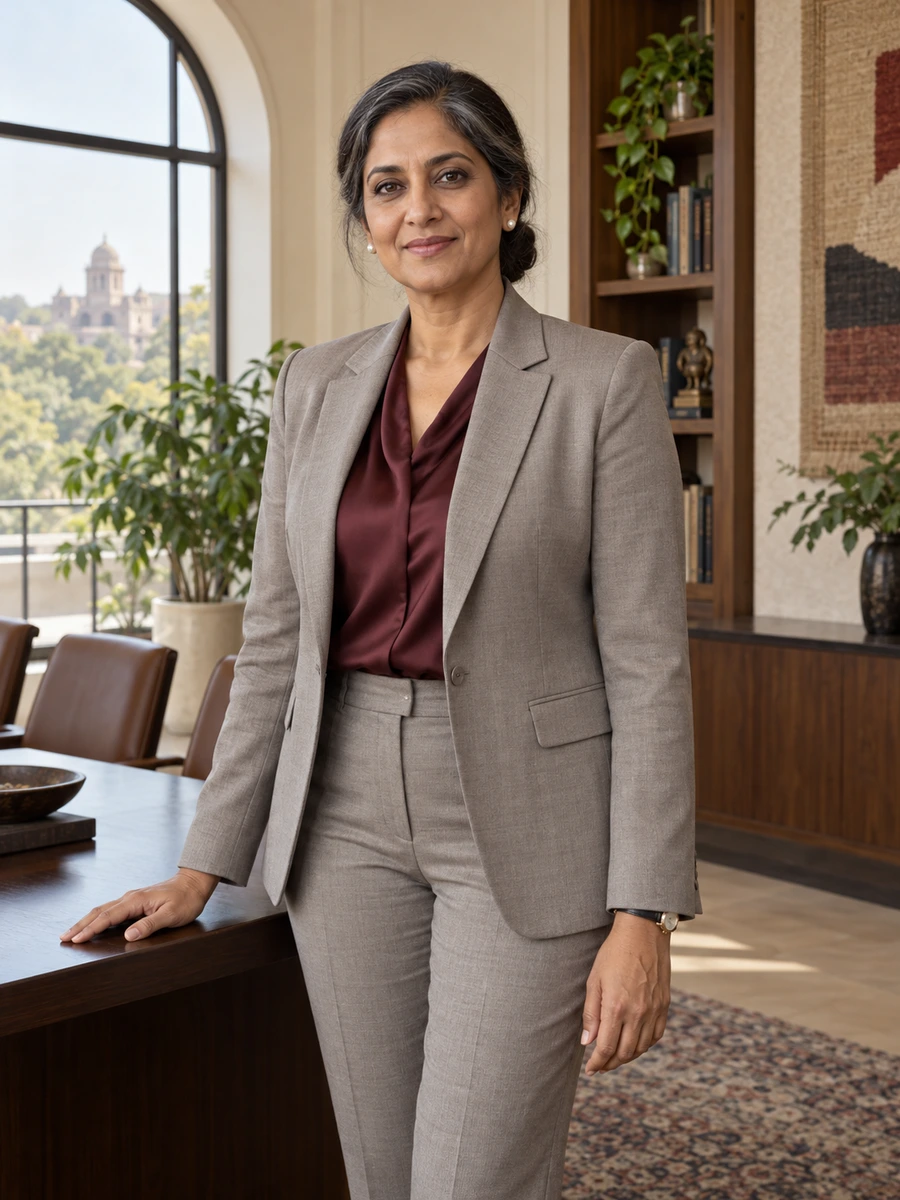
My introduction to data work was a paper questionnaire with an empty box. I joined Karnovel Survey Services in Bhopal in July 1997 after completing a statistics degree at Sarnethi Statistical College that May. A blank could mean the question had not been asked, the respondent had declined or the answer had not been recorded. Treating all three as zero would make the table easier to finish and the conclusion less trustworthy. I learnt to preserve the distinction before learning to make a presentation look polished.
The survey work involved checking field returns, clarifying coding questions and explaining the limits of a sample. I was an analyst, not the person who commissioned the research or decided the client's policy. That boundary helped me understand what an analytical contribution could and could not establish. I also learnt that a number can travel farther than its explanation. When a table left our office, the reader might not know which questions had changed or which groups were poorly represented. Clear definitions were part of the work, not an optional appendix.
In August 2002 I moved to Oshvera Agricultural Services, a regional provider of soil-testing coordination and farm-equipment service scheduling. I analysed activity across districts and seasons. A district comparison could change because the service territory moved, because the reporting period captured a different stage of the season or because the underlying activity genuinely changed. Colleagues wanted a single growth figure, but they also needed a figure they could use. I became interested in the practical arrangements that kept a measure connected to the population it was meant to describe.
I joined Varneli Cooperative Bank in April 2008 as a management-information analyst. Banking brought a more consequential set of records and a wider range of owners. A management view might use information assembled by operations, finance or credit, yet none of those functions could be replaced by an analyst's interpretation of the combined table. I worked on definitions and reconciliations, learning where a useful internal comparison differed from a formal financial or regulatory output. I wanted a reader to know which decision the analysis supported before treating it as a general account of the bank.
In October 2014 I became head of data stewardship. The role added people leadership and responsibility for the way definitions, historical coverage and source changes were recorded. My team worked with branch and central colleagues to identify who could explain an ambiguous field and who had authority to correct its source. We also examined how analytical copies could preserve context as systems changed. A successful migration could move every row while leaving a later analyst uncertain about what an absent value meant. I learnt to treat that uncertainty as a condition to manage, rather than a defect to conceal through a convenient default.
I became CDO in January 2021, reporting to the CEO. The bank now serves households and small enterprises through 86 branches across Madhya Pradesh, Maharashtra and Chhattisgarh. At March 2026 it held ₹6,800 crore of assets, ₹4,100 crore of loans and ₹5,500 crore of deposits, with 1,250 employees. FY 2026 income was ₹598 crore. My 32 colleagues work through four managers on an ₹8.4 crore annual function budget. Those figures describe the fictional institution and my function separately; the bank's assets are not a portfolio delegated to me.
The CDO role requires me to make analytical limitations intelligible without stopping useful work through an endless demand for perfect data. In one prototype, a high predictive score depended partly on fields that would not exist when the proposed decision was made. In another report, changed territories were being presented as growth. We also repaired missing-history treatment and restricted a dashboard that exposed small groups too readily. Each decision required an alternative, a responsible owner and a clear explanation of what the repair established. None gave the data office authority to decide credit or declare a system legally compliant.
I am considering how this experience could contribute to a first board appointment outside my executive role. I would bring questions about timing, population and the practical use of analytical evidence. I would also need to learn the company's commercial and operating risks beyond data. Presenting to directors has shown me that they need a decision they can understand, not a technical performance. Serving as one would require a further discipline: asking management to account for its evidence while leaving the responsibility for producing and acting on that evidence with the people appointed to do the work.
Open to Board appointments
Languages / Hindi · English · Marathi
A leadership conviction
Before asking what a number predicts, I ask when it became available, which population it describes and what absence means in its source. A polished result can be wrong for the decision even when every calculation is correct. My responsibility is to preserve those distinctions and make them understandable to the people who must act.
- Bank branches
- 86
- Three central Indian states
- Data colleagues
- 32
- Four managers; March 2026
- Annual function expense
- ₹8.4 Cr
- Data office; no credit or treasury delegation
Career chapters
2021–present 01
Chief Data Officer
Varneli Cooperative Bank
Lead data stewardship and analytical evidence with explicit boundaries around business and risk decisions.
2014–2020 02
Head of data stewardship
Varneli Cooperative Bank
Established ownership of definitions, historical coverage and source changes.
2008–2014 03
Management-information analyst
Varneli Cooperative Bank
Built comparable management views while learning banking records and functional accountabilities.
2002–2008 04
Reporting analyst
Oshvera Agricultural Services
Explained district and seasonal activity in agricultural-service operations.
1997–2002 05
Survey analyst
Karnovel Survey Services
Checked field returns and preserved the meaning of unanswered survey questions.
Education & credentials
- Bachelor of Science in Statistics
- Sarnethi Statistical College · 1997
Perspectives from colleagues
I have worked with Leela as CEO since 2021. She can explain why a result is not ready for the decision we want to make and still give us a practical next step. That is especially valuable when the original presentation was more reassuring than the evidence beneath it.
Since 2014, Leela and I have worked through changes in branch reporting and source ownership. She distinguishes the operational record from the analytical comparison, which helps us correct a misleading trend without pretending the underlying business event did not happen.