Chief Operating Officer Australia
From the on-call X-ray room to the operations chair
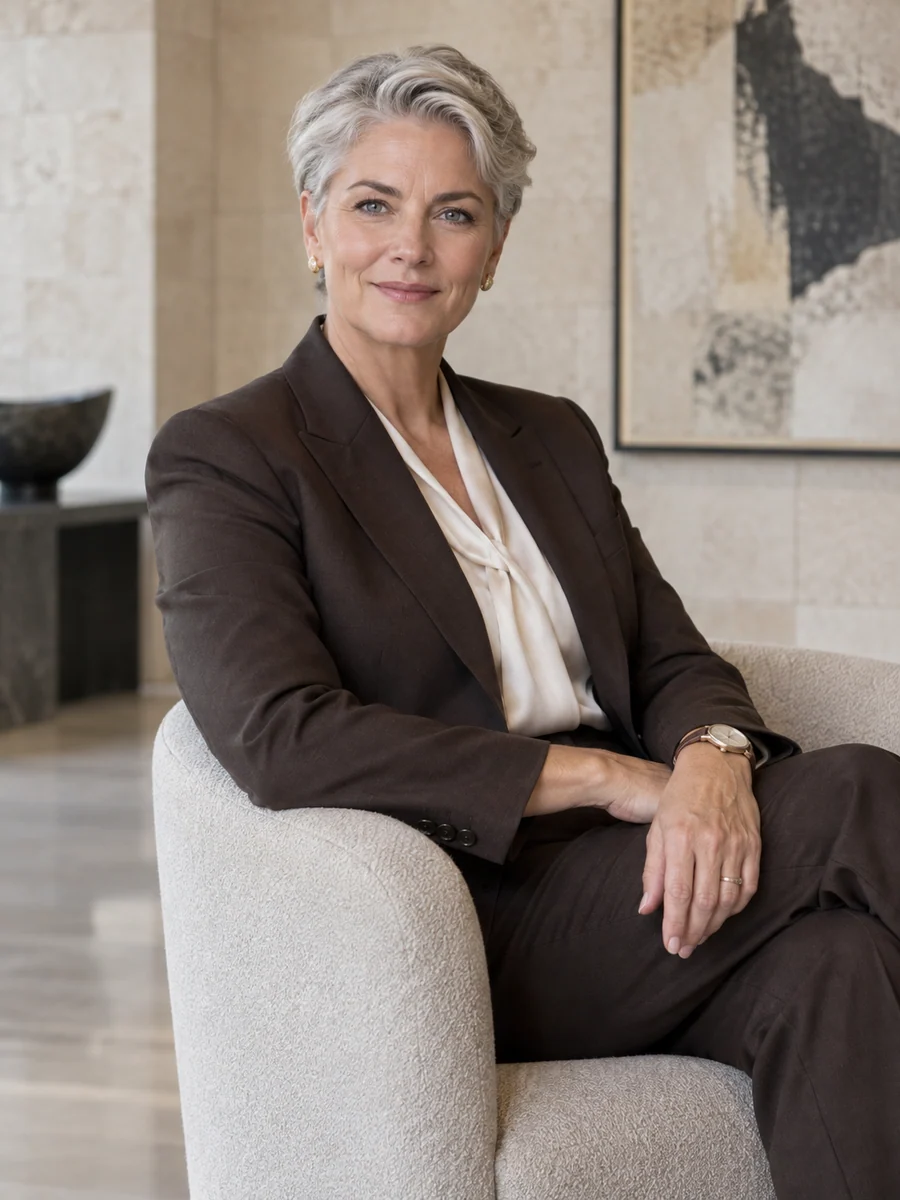
I learnt operations in a central Queensland X-ray department, where a film processor that failed at two in the morning meant a road-trauma patient waited for a diagnosis. I was twenty-two, eight months out of training and the only radiographer on call for a district larger than several European countries. A senior colleague talked me through the repair by telephone. What stayed with me was not the repair but the discovery that clinical quality rests on many unglamorous systems working at the worst possible hour.
I grew up in Emerald, where my mother ran the pharmacy and my father drove cattle trucks. I studied medical imaging at the Corbridge Hill Institute of Technology in Brisbane, graduated in 1993 and took my first job as a radiographer with Kinnabar District Health Service. In 1998 I went to London for two years as a senior radiographer with Fenmarsh Hospitals NHS Trust. The English system taught me about waiting lists: how they are counted, how they are managed for appearance, and how much of a patient's wait is spent not on clinical need but on handoffs between departments that never meet.
I came home in 2000 to manage medical imaging at Kinnabar's base hospital. In 2004 we installed one of the region's first digital image archives, so films from small towns no longer travelled by bus to be reported. I learnt to manage radiologists, which is different from managing radiographers, and to budget for equipment that cost more than the department earned in a year.
In 2006 Kinnabar asked me to run its eleven rural hospitals and multipurpose health services. That role made me. Each site had between eight and forty beds, an emergency department covered by a rural generalist or a visiting doctor, and nurses who did everything. My budget was A$118 million and my office was mostly a car. I learnt that a small hospital's safety depends on knowing precisely what it should not attempt, and on a dependable route to the place that can. We standardised emergency protocols across the sites, linked nine of them to the base hospital's specialists by video and reduced avoidable aeromedical transfers by about a fifth. I finished a part-time Master of Health Administration at Ellersby University in 2009, much of it written in motel rooms.
By 2011 I wanted to test whether private operators really worked as differently as my public colleagues believed. Vellacourt Imaging, a private-equity-backed network of community radiology clinics, hired me as general manager of operations and made me chief operating officer in 2014. We ran 38 clinics, many in regional towns, on Medicare rebates that had lagged our costs for years. I learnt how fast a thin-margin business feels a shortage of radiologists, and I built a reporting hub that cut CT turnaround in regional clinics from twenty-six hours to six. When the fund sold Vellacourt to a larger imaging group in 2017 my role was absorbed, and I chose hospitals.
Kelvarra Health appointed me general manager of Kelvarra Brisbane North, our largest hospital, in May 2017. It has 310 beds, 18 theatres and about 1,650 staff. In my third year the pandemic arrived. Non-urgent elective surgery was restricted, our capacity was made available to the public system under arrangements between governments and private operators, and theatre nurses were redeployed to intensive care and vaccination clinics. I learnt that a private hospital is part of a state's health system whatever its balance sheet says.
I became chief operating officer in March 2021. Eight directors report to me, covering perioperative services, the nursing workforce, hospital operations in the north and the south, patient access, procurement and supply, facilities, and clinical support services. About 6,300 of our 7,400 people work in my line. I attend every board meeting and every meeting of the board's quality and clinical governance committee and its audit and risk committee, without being a director.
How I work is easy to describe and harder to practise. I walk a theatre suite before seven most mornings, because start times tell me more about a hospital than any dashboard. I ask for bad news in writing and early. I treat the specialists who admit to our hospitals as partners with obligations rather than customers to be kept content; that has cost us surgeons, and it has kept us patients. I try to make every argument with the people who will disagree with it in the room.
Inside the sector I am probably known for three positions, each of which has cost Kelvarra money in the short run: that operators belong in insurer negotiations, that a theatre session belongs to the patients waiting for it rather than the surgeon who has held it longest, and that a regional private hospital is safer and more useful when it does fewer things beside its public neighbour. I am now preparing for a second responsibility alongside my executive one: a further non-executive seat, on a board that would benefit from someone who has run wards, theatres and rural hospitals.
Open to Board appointments · Speaking invitations
Languages / English
A leadership conviction
A hospital keeps three promises at once, to the patient on the list, the doctor who brought her and the fund that pays, and operations is the craft of keeping them in that order when they collide.
- Revenue, year to June 2026
- A$1.18bn
- Twelve private hospitals and four day-surgery centres
- Booked theatre time used, 2025
- 81%
- Up from 66 per cent in 2022 across 68 theatres
- Agency share of nursing hours, 2025–26
- 3.8%
- Down from 11.6 per cent in 2022
Board & advisory record
Current appointments
Tarrabool Community Transport Limited
Non-executive director; member of the finance, audit and risk committee
Finance, audit and risk
2019–present
Education & credentials
- Bachelor of Applied Science (Medical Imaging Technology)
- Corbridge Hill Institute of Technology · 1993
- Master of Health Administration, part-time
- Ellersby University · 2009
- Company directors' course
- Marwood Directors' Institute · 2022
Perspectives from colleagues
Imogen tells the board what a commercial decision will do on a ward before we make it. When the Wyralee offer came, her paper set out the nursing hours at stake, the patients she proposed to protect and what it would cost us. Several of us wanted to sign. She persuaded us with arithmetic, not volume.
I chaired the medical advisory committee that fought Imogen's session rules, and I still think she moved too fast. But she showed every surgeon their own numbers before anyone lost a list, and she came to our meetings herself. Most of us now accept that unused time belonged to somebody's patient.
When Kelvarra proposed handing its births to us, I expected a private operator offloading a loss. Imogen arrived with a workforce plan, transfer protocols and a promise of continuity for every booked mother, then stepped back from the money because she had once worked here. That is why we trusted the rest.