Chief Strategy Officer China
From counting flooded fields to planning forty-year promises
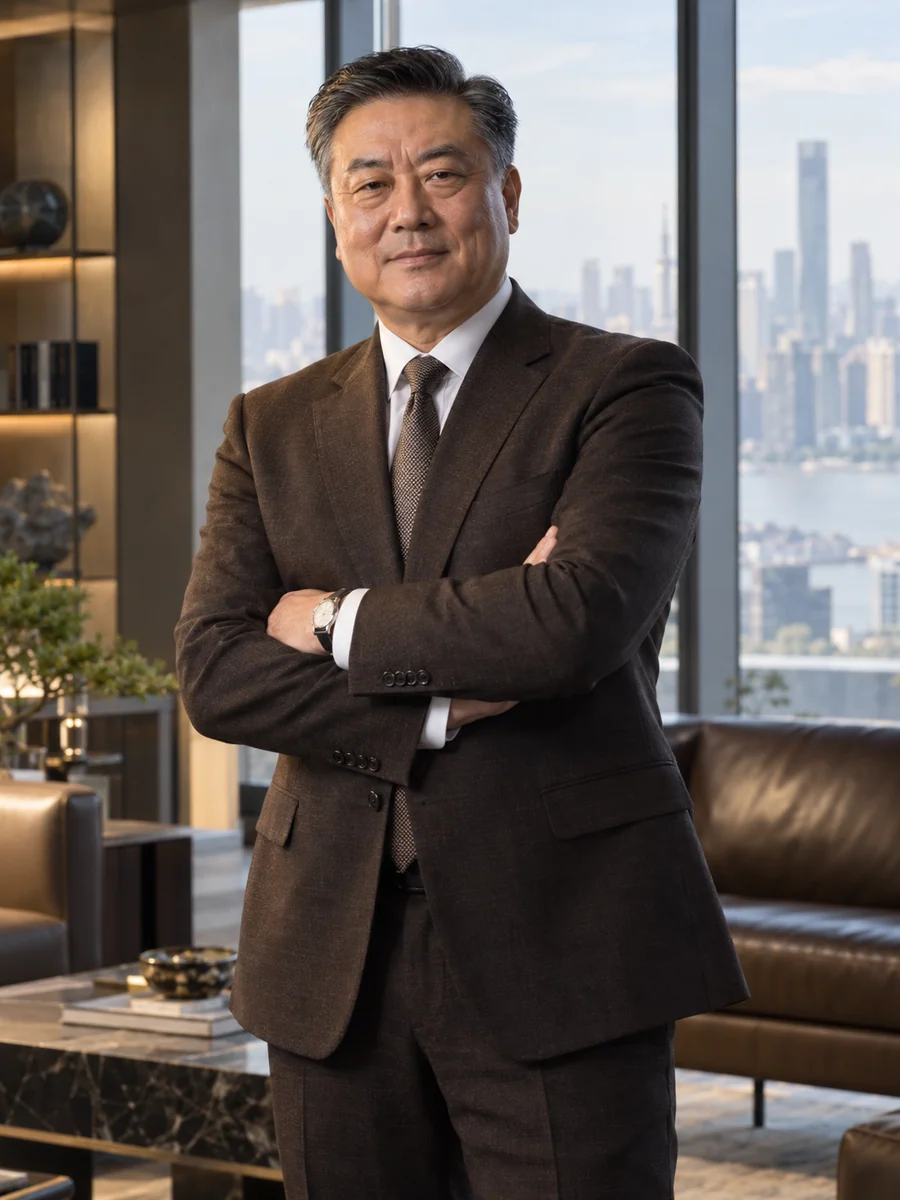
I grew up on a state farm on the Sanjiang plain in Heilongjiang, where my father kept the grain accounts. In a bad year his ledger told the whole story in one column: what had been sown, what had been harvested and what the farm still owed. The habit I took from him is to read first what a decision commits us to, and only afterwards what it earns.
I studied insurance at Liaozhou University of Finance and Economics and graduated in July 1997, when life insurance in China was still small and most graduates in my subject went to property insurers. I joined Lanbei Property and Casualty Insurance Company Limited, a regional insurer in Harbin founded two years earlier, as a statistician. A year later the Nen and Songhua rivers flooded. I spent that autumn in county offices reconciling claims with sown-area records, and I learnt how quickly a portfolio that looks diversified on paper becomes a single risk when the same water reaches every county.
From 2001 I priced crop insurance, first for the company's own policies and then for county programmes as government premium subsidies spread across the north-east. I built a yield database for sixty-four counties from township records, many of them handwritten, and prepared our first reinsurance treaty for the crop book. In 2006 I moved to head office as deputy general manager of planning and strategy, and from 2009 I ran the department. Lanbei, like most property insurers of its size, depended on motor business and argued every year about chasing motor volume in the big cities. I argued for growing crop and small commercial property business instead, protected by reinsurance we could afford in a bad year. When heavy flooding came in 2010, the stop-loss cover I had pressed for paid for most of the damage. It had also cost us a benign year of premium and some goodwill with the provincial agriculture department, which I describe on my impact page.
By 2011 I wanted to see more than one insurer. I joined the Shanghai office of Holloway Brandt & Co., a fictional international strategy consultancy, and over four years led or co-led fourteen engagements for life and property insurers. Many of our life clients were selling short-duration savings products with high crediting rates through bank branches, and several asked us to help them sell more. I learnt to write a scenario in which rates fell, and I learnt how rarely a client wanted to read one. I had completed a part-time executive MBA at Qiyuan Business School in 2007, but it was the consultancy that taught me how strategy is actually decided: by the person who must explain the result to shareholders three years later.
I wanted to be that person. In June 2015 I joined Jiangheng Life in Wuhan as general manager of its strategic planning department. The company had more than 50,000 agents, a large bank-channel savings business and no plan for a world of lower rates. My first recommendation, to stop selling short-duration high-crediting products, was overtaken within a year by the regulator's own restrictions. My second, to buy land for a retirement community in Wuhan, took three years to reach the board and became Songhe Court. I became chief strategy officer in November 2019.
Since then I have spent most of my time on four questions that face every mid-size life insurer in China. What should we promise savers when long-dated government bonds yield around 2 per cent? Which bank partners are worth what they cost? What is a residence right in a retirement community worth, and to whom? And what kind of insurer do we become when the agency force that built us has shrunk by almost two-thirds? I do not have final answers to any of them. I do have positions, and I have published three of them on my insights page.
I lead forty-six people in strategy and planning, economic research and the office that builds our health and elderly-care business. I present to the board's strategy and investment committee and its risk management committee, and I sit on the management asset-liability committee. I ask my team to bring me the scenario nobody has requested, and I ask our sales leaders to tell me when a strategy will cost them agents, because it usually does and they usually know first. I also ask the chief actuary to attack my models before the board sees them; several of my proposals have changed as a result.
People in the industry know me for preferring a smaller number I can defend. I have argued against premium-table ambitions, against selling more residence rights than we have apartments and against products priced at rates our investment team could not earn. Each argument cost Jiangheng premium it could have written. I would rather explain lost premium than a reserve shortfall, and so far our board has agreed. My next step is to serve one board outside insurance, where questions about weather, long-lived assets and patient capital would be familiar to me and the industry would not.
Open to Board appointments · Speaking invitations
Languages / Mandarin Chinese · English
A leadership conviction
Most of a life insurer's strategy lies in the premium it declines: the policy that cannot be honoured in 2050, the bank that costs more than its business earns, the residence promise with no apartment behind it.
- Gross written premium, 2025
- RMB 38.6 bn
- Life, health and annuity business across eleven provinces
- New business value from protection and care, 2025
- 33%
- Up from 14 per cent in 2020
- Comprehensive solvency ratio, end of 2025
- 192%
- Core solvency ratio of 121 per cent
Board & advisory record
Current appointments
Jiangheng Songhe Elderly Care Company Limited
Director of the wholly owned subsidiary that operates Songhe Court, in an executive capacity
2021–present
Education & credentials
- Bachelor of Economics in insurance
- Liaozhou University of Finance and Economics · 1997
- Executive MBA (part-time)
- Qiyuan Business School · 2007
Perspectives from colleagues
Jun's papers to our committee begin with the case in which his recommendation goes wrong. When he proposed ending the 3.5 per cent product early, he showed us the premium we would lose quarter by quarter and the agents likely to leave. We supported it knowing the cost, and that is why the board still trusts his numbers.
Strategists usually ask actuaries to make a product work. Jun asks us whether it should exist at the rate on offer. On the residence-right cap he built the move-in model with my team rather than around us, and he changed his first proposal when our mortality assumptions disagreed with his.
At Holloway Brandt, Jun was the consultant who insisted on writing the falling-rate scenario clients had not asked for, and several did not thank him at the time. He has since had the harder job of acting on that scenario from inside an insurer.