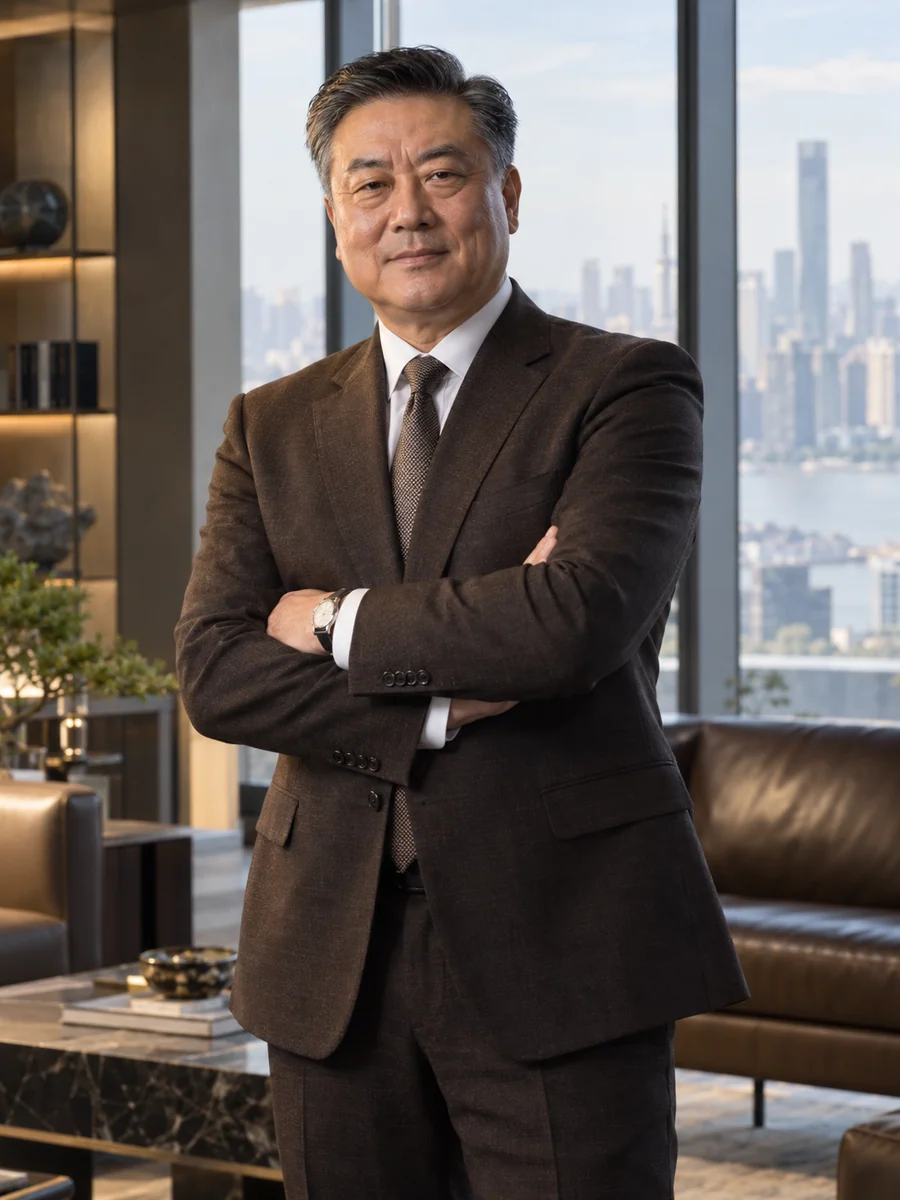
Jun LiuChief Strategy Officer · Essays & perspectiveJun Liu Chief Strategy Officer · China
A selected perspective
Pricing rates and savings products5 min read
Protecting the capital behind future pensions
When China's maximum pricing rate for life insurance is cut, insurers race to sell the old rate before it disappears. The rush looks like good business for a quarter. It is a decision to carry a liability for forty years, and boards should treat it as one.
Ending twenty-three bank partnerships to earn more from thirteen
At the end of 2023 Jiangheng sold through thirty-six banks: provincial branches of two large national banks, twelve city commercial banks and twenty-two rural commercial banks.
Most of a life insurer's strategy lies in the premium it declines: the policy that cannot be honoured in 2050, the bank that costs more than its business earns, the residence promise with no apartment behind it.
Chinese life insurers attach rights to live in their retirement communities to large savings policies. Issued without a count of the apartments behind them, those rights become promises that cannot be kept. They should be capped by capacity and reported to the board as commitments.
Chinese life insurers still compare themselves by premium income, and banks allocate shelf space partly by the same table. For a mid-size insurer, chasing rank through single-premium bank savings destroys more value than it creates. The scoreboard should be value per partner and capital consumed.
Gross written premium, 2025
RMB 38.6 bn
Life, health and annuity business across eleven provinces
New business value from protection and care, 2025
33%
Up from 14 per cent in 2020
Comprehensive solvency ratio, end of 2025
192%
Core solvency ratio of 121 per cent
A life insurer that keeps selling yesterday's interest rate is spending capital its future pensioners will need.
I am chief strategy officer of Jiangheng Life Insurance Company Limited, a fictional mid-size life insurer headquartered in Wuhan. We wrote RMB 38.6 billion of gross premium in 2025 through about 19,800 individual agents, thirteen partner banks and employer group schemes in eleven provinces, and we hold RMB 262 billion of assets for our policyholders. For most of its twenty years the company grew by selling savings policies at fixed pricing rates. My work since 2019 has been to move it towards medical and critical-illness cover, participating savings with a modest promised rate, and the care that older customers will need when those savings mature.
I did not start in life insurance. I spent thirteen years at a property and casualty insurer in Harbin, reconciling crop claims after the 1998 floods, pricing county crop cover and running its planning department, then four in a strategy consultancy's Shanghai insurance practice. I joined Jiangheng in 2015 and became chief strategy officer in 2019. The north-east taught me that weather always presents its bill; a life insurer's balance sheet does the same over forty years instead of one summer.
The decision that most shapes how I work came in April 2023. Long-dated government bonds yielded less than our 3.5 per cent pricing rate, the industry was preparing to withdraw products priced at that level, and our sales leaders had planned a last-chance campaign worth about RMB 5.8 billion of first-year premium. I recommended that we stop selling the product at the end of the month instead. We gave up most of that premium, fell seven places in the industry's premium table and lost agents who had counted on the commissions. I would make the same recommendation today, and I have tried to build planning rules that do not depend on a strategist being willing to make it.
Savings sold at a rate we can earn
After we withdrew the 3.5 per cent product early, the average pricing rate across our in-force traditional reserves fell from 3.62 per cent at the end of 2022 to 3.21 per cent at the end of 2025. Our net investment yield in 2025 was 3.6 per cent.
Thirteen banks instead of thirty-six
We ended twenty-three bank partnerships in 2024. Bank-channel first-year premium fell from RMB 12.1 billion to RMB 7.0 billion, while regular premium rose from 19 to 58 per cent of it and the channel's new business value from RMB 210 million to RMB 560 million.
Residence rights matched to apartments
We capped the residence-right letters for Songhe Court, our Wuhan retirement community, at 6,200, the number our move-in projections show we can honour, and forwent about RMB 3.1 billion of premium in 2024 and 2025. Occupancy reached 91 per cent in June 2026.
Protection and care as a third of value
Medical, critical-illness and care-linked products produced 33 per cent of our new business value in 2025, against 14 per cent in 2020. We also administer public long-term-care insurance for two pilot cities.
Current focus
I am preparing the board's decision, due in the first quarter of 2027, on whether to build a second owned community in Changsha for about RMB 2.6 billion or extend our partner network there. Alongside it, I am rewriting our product approval rules so that every new savings product is tested against the yields our investment team can buy that quarter, not against a portfolio bought when rates were higher.
Conversations I welcome
I intend to stay at Jiangheng while the move away from rate-driven savings is unfinished. With my board's consent I would consider one independent directorship at a listed company outside financial services, ideally in agribusiness, food processing or another business exposed to weather and long-lived assets, joining its strategy and risk committees. I can give about twenty-two days a year, and I accept a few invitations each year to speak to actuarial, risk and elderly-care audiences.
Beyond the page
The record behind the perspective.
In the boardroom
Jiangheng Songhe Elderly Care Company LimitedDirector of the wholly owned subsidiary that operates Songhe Court, in an executive capacity · 2021–present
Formation
Bachelor of Economics in insuranceLiaozhou University of Finance and Economics · 1997
Executive MBA (part-time)Qiyuan Business School · 2007
Jun's papers to our committee begin with the case in which his recommendation goes wrong. When he proposed ending the 3.5 per cent product early, he showed us the premium we would lose quarter by quarter and the agents likely to leave. We supported it knowing the cost, and that is why the board still trusts his numbers.
Peiran SongFictional independent director and chair of the strategy and investment committee, Jiangheng Life Insurance Company LimitedThe full record ↗
Contact
I intend to stay at Jiangheng while the move away from rate-driven savings is unfinished. With my board's consent I would consider one independent directorship at a listed company outside financial services, ideally in agribusiness, food processing or another business exposed to weather and long-lived assets, joining its strategy and risk committees. I can give about twenty-two days a year, and I accept a few invitations each year to speak to actuarial, risk and elderly-care audiences.