Chief Data Officer Europe
A data officer formed by one withdrawn table
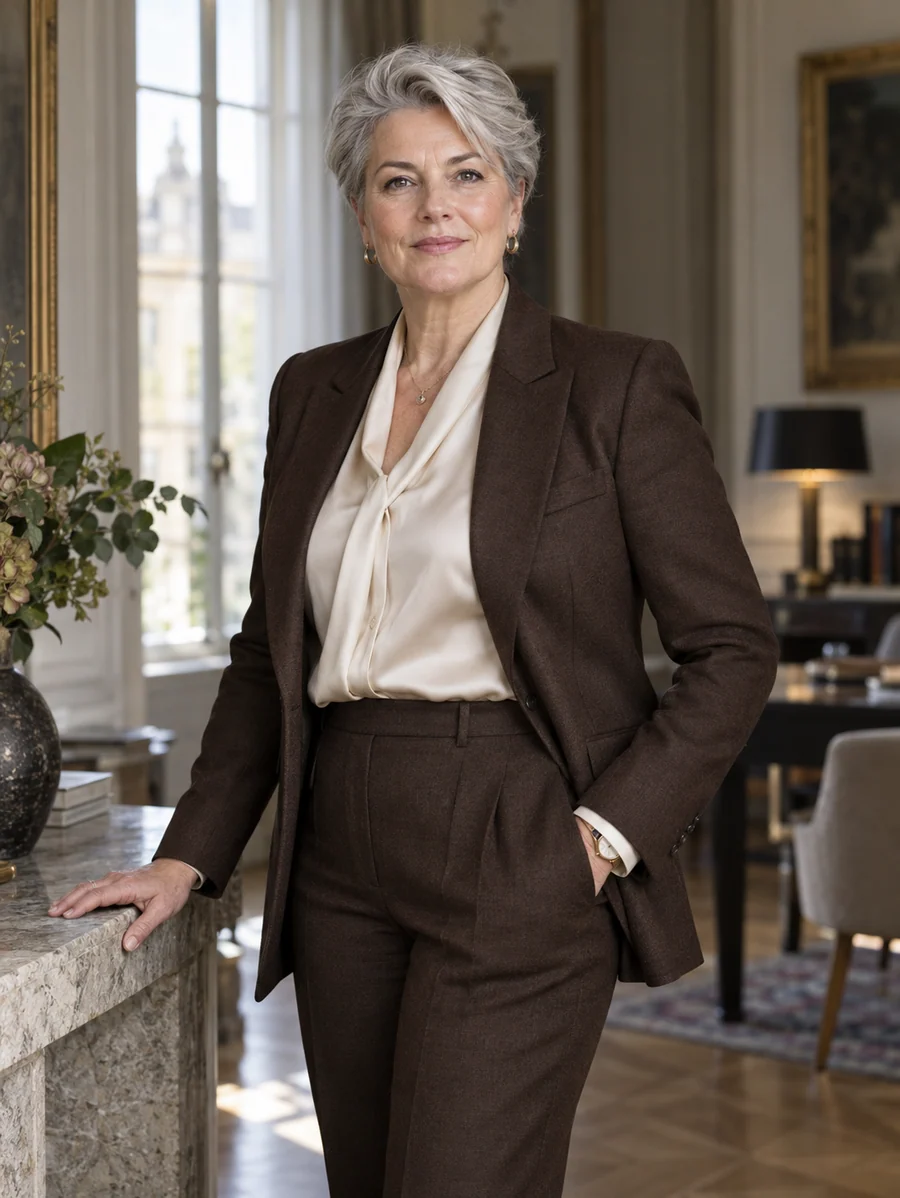
The first thing I published that hurt someone was a table. In 2001 I was a statistician at the Kallbacka Research Institute in Helsinki, an independent foundation that studied labour markets using linked administrative registers. I produced a table of long-term unemployment by occupation and municipality for a report on rural employment. Every cell was correctly computed and every name had been removed. One cell, for a small municipality in Ostrobothnia, contained two people. Within a week a municipal official had recognised one of them as a neighbour. The institute withdrew the table and apologised, and my head of unit spent an afternoon teaching me statistical disclosure control: minimum cell sizes, dominance rules and the difference between removing identifiers and preventing identification. I have applied that afternoon to almost every decision I have made since.
I grew up in Vaasa in a Swedish-speaking family and studied statistics at Merikallio University, finishing my master's degree in June 1999. Kallbacka hired me that autumn. For four years I worked on register-based research, linking employment, education and income records under strict confidentiality rules, and I learnt that the researchers who used data most carefully were the ones who had once been embarrassed by it.
In January 2004 I returned to Vaasa to join Rannikko Networks, a regional fixed and mobile operator owned by a telephone cooperative. I built its first data warehouse and then led customer analytics. Telecoms data taught me a second lesson. Traffic records are some of the most revealing data any company holds, and the confidentiality of communications is protected more strictly than most marketing teams expect. In 2006 our marketing director proposed segmenting customers by the numbers they called most often. I wrote a two-page note explaining why I would not build it, and the chief executive agreed. I learnt that a data leader's refusals need to be written down, with reasons, or they become a matter of personality.
In September 2008 I moved to Stockholm to join Vessling & Aro, a Nordic IT and management consultancy, as a manager in its data and analytics practice. I spent eight years building data warehouses and later data platforms for banks, retailers and government agencies in Sweden, Finland and Norway, and became a partner in 2013. Between 2011 and 2013 I studied information technology law part-time at Kronvik University, because I was tired of being the only person in a project meeting who could not read the contract. When the Court of Justice of the European Union invalidated the Safe Harbour arrangement in October 2015, I spent most of the following winter helping clients work out which of their systems sent personal data to the United States, and finding that very few of them knew.
That work made me want to run something rather than advise on it. In September 2016 I joined Brantmark Cloud, a private-equity-backed Swedish hosting and cloud company, as director of data platforms and client data. I arrived in time to prepare a processor for the General Data Protection Regulation, which applied from May 2018. We renegotiated about 1,100 client data processing agreements and built our first register of subprocessors. I discovered that the hardest questions in a hosting company are not about the data you analyse but about the data you merely hold: who can reach it, how long it stays and whether you can prove it has gone.
Lumivara acquired Brantmark in May 2019, and I became vice president for data and platform services in Sweden and Finland. My first serious problem was that the two companies deleted departing clients' data in different ways, and neither could prove it had done so. The deletion certificate we built in 2020 became a model for the rest of the group, and in February 2021 the chief executive asked me to become Lumivara's first chief data officer, with a remit covering client data across the group, our internal data, AI governance and our data products. I moved back to Helsinki.
Since then I have made decisions that cost Lumivara money in order to make its promises true. We separated our managed analytics service into one tenancy per client after finding an access group that reached them all. We moved night operations for our sovereign cloud tier inside the European Union. We declined to train an AI model on every client's tickets, and we limited our benchmark product to the clients who supply it.
I try to lead by writing. Every significant data decision at Lumivara has a short note setting out the terms on which we hold the data, the use proposed, the people who disagreed and what we gave up. Our data protection officer, Tuomas Lehtikari, deliberately does not report to me; he reports to the chief executive and can go directly to the audit and risk committee, and several of my better decisions began with his objections. Colleagues would say that I ask to see the access list before the architecture diagram, that I distrust any metric with no denominator and that I am slow to call a programme finished. I am also on the board of the Kallbacka Research Institute, where I chair its research data committee, which keeps me close to the people who taught me what a careless table can do.
Open to Board appointments · Advisory roles · Speaking invitations
Languages / Swedish · Finnish · English · Norwegian (reading)
A leadership conviction
An IT services company holds a great deal of data that is not its own: other organisations' records, logs, tickets and backups, entrusted to it so that their systems keep running. I treat that data as held on terms. Before we store it somewhere new, let a new person reach it, train a model on it or build a product from it, I ask whether the client would recognise the use from the contract they signed. If I would hesitate to explain it to their data protection officer, we do not do it.
- Clients whose data Lumivara holds
- 2,300
- Public sector, banks, utilities and manufacturers, 2026
- Capital to give 138 clients separate tenancies
- €9.4m
- Managed analytics service, 2021–2022
- Deletion certificates issued
- 312
- Every departing client since June 2020
Board & advisory record
Current appointments
Kallbacka Research Institute
Non-executive director; chair of the research data committee
Research data committee (chair from 2022)
March 2020–present
Education & credentials
- Master of Science in statistics
- Merikallio University · 1999
- Master of Laws in information technology law (part-time)
- Kronvik University · 2013
Books & papers
Disclosure rules for operational benchmarks built from client data
Kallbacka Research Institute working papers · 2025
Perspectives from colleagues
Helena told my committee that the measure we had been reading for a year flattered us, and replaced it with one that made us look worse. She then reported it every quarter until it improved. That is rarer in a management team than it should be.
I report to the chief executive, not to Helena, and she argued for that arrangement herself. Some of her best decisions started as my objections, and she has never once made me feel that raising one was a cost to my career.
Helena joined a hosting company that knew its clients well and could prove very little about how it treated their data. By the time we sold, she had listed every gap herself, which made the sale slower and the business more honest.