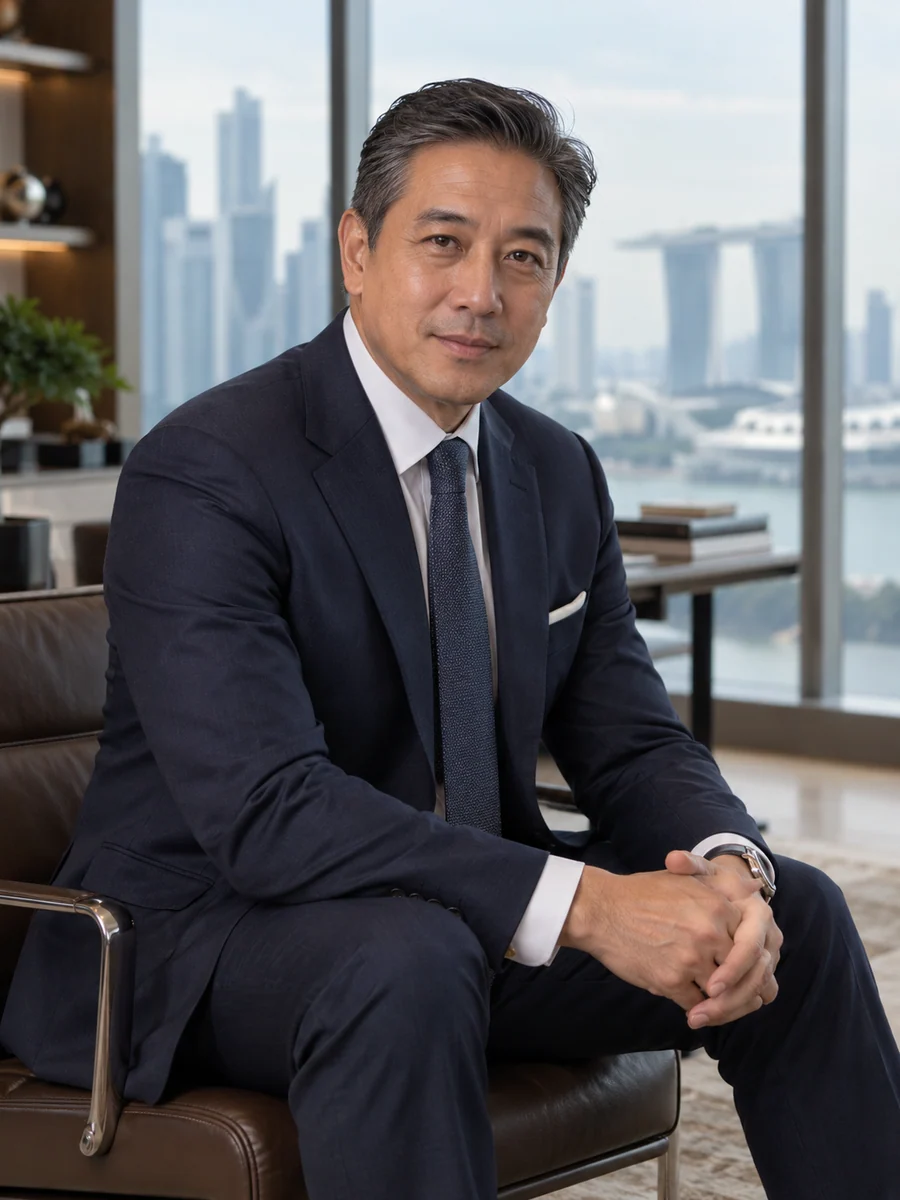
In Southeast Asian generics the tender price, the licence and the plant are one decision, and I try to take it once.
I am group chief executive of Lumaren Healthcare Holdings, a fictional Singapore-headquartered maker of generic and branded-generic medicines. We sell in eight Southeast Asian countries, earned revenue of S$812 million in 2025 and employ about 5,200 people. Three plants carry the business, at Pasir Gudang in Johor, Binh Duong in southern Vietnam and Cikarang in West Java, the last acquired with PT Sindhara Farmasi in 2022. Public tenders and hospitals account for about 37 per cent of revenue, private pharmacies and clinics for 55 per cent, and contract manufacturing for the rest.
Seah Kim Hock founded Lumaren in 1978 as an importer of medicines, and his family still owns 70 per cent of it; Calderwick Capital, a fictional growth investor, holds the other 30. I am the first chief executive who is not a member of the family, and I reached the role from the other side of the industry. I trained as a pharmacist, spent seven years in quality release and registration in Penang, then fifteen at a European multinational, running regional regulatory affairs, its Vietnam business and finally its established medicines across the region. In 2015 I negotiated the sale of sixty of that group's mature brands to Lumaren. A few months later Mr Seah asked me to join him.
What the job has taught me is that a regional generics company does not have one market but eight sets of rules. Each country registers medicines, buys them for public hospitals and inspects the plants that supply it in its own way. My decisions sit where those systems pull against each other: which tenders to walk away from, which plant makes which product, which acquisition is really a portfolio of licences. Beneath them runs a slower question: how a family company keeps its long horizon while being run by people the family did not raise.
Six tender lots lost by choice
In Vietnam's 2021 central procurement round we bid at a price covering Binh Duong's full cost and lost six of nine lots, about S$31 million of yearly revenue. Within a year two winning suppliers had fallen behind on deliveries; Vietnam revenue reached S$142 million by 2025.
An acquisition run around its licences
We bought 92 per cent of PT Sindhara Farmasi in November 2022 at an enterprise value of S$365 million, kept its management and its Indonesian registrations, and moved 22 of our own products into its plant. Its revenue has grown from S$188 million to S$236 million.
A plant network with one fewer site
Closing the founder's first factory in Jurong and moving 68 products to Pasir Gudang cost S$21 million, against S$48 million to rebuild in place. The unit cost of our liquids and creams fell by 19 per cent.
A family charter before a succession
In 2021 eleven members of the Seah family signed a charter separating their council from the board, applying one entry standard to family and outside managers, and giving my succession to a committee with an independent chair.
Current focus
I am preparing the board's decision on how Calderwick's 30 per cent stake should be realised from 2027: a listing in Singapore, or a sale to a long-term holder that keeps us private. Alongside it, Cikarang's oral-solid lines are going through halal certification, which Indonesia's halal product rules are extending to medicines in stages.
Conversations I welcome
I am not seeking to leave Lumaren while its ownership question is open. With my board's agreement I would accept one independent directorship at a listed healthcare-adjacent company outside medicines manufacturing and distribution, joining its nominating committee and later chairing it if asked. Twenty-five days a year is what I can honestly offer. I also take a few speaking invitations on registration, procurement and family-company governance.