Chief Strategy Officer India
From a referral notebook to a hospital network's map
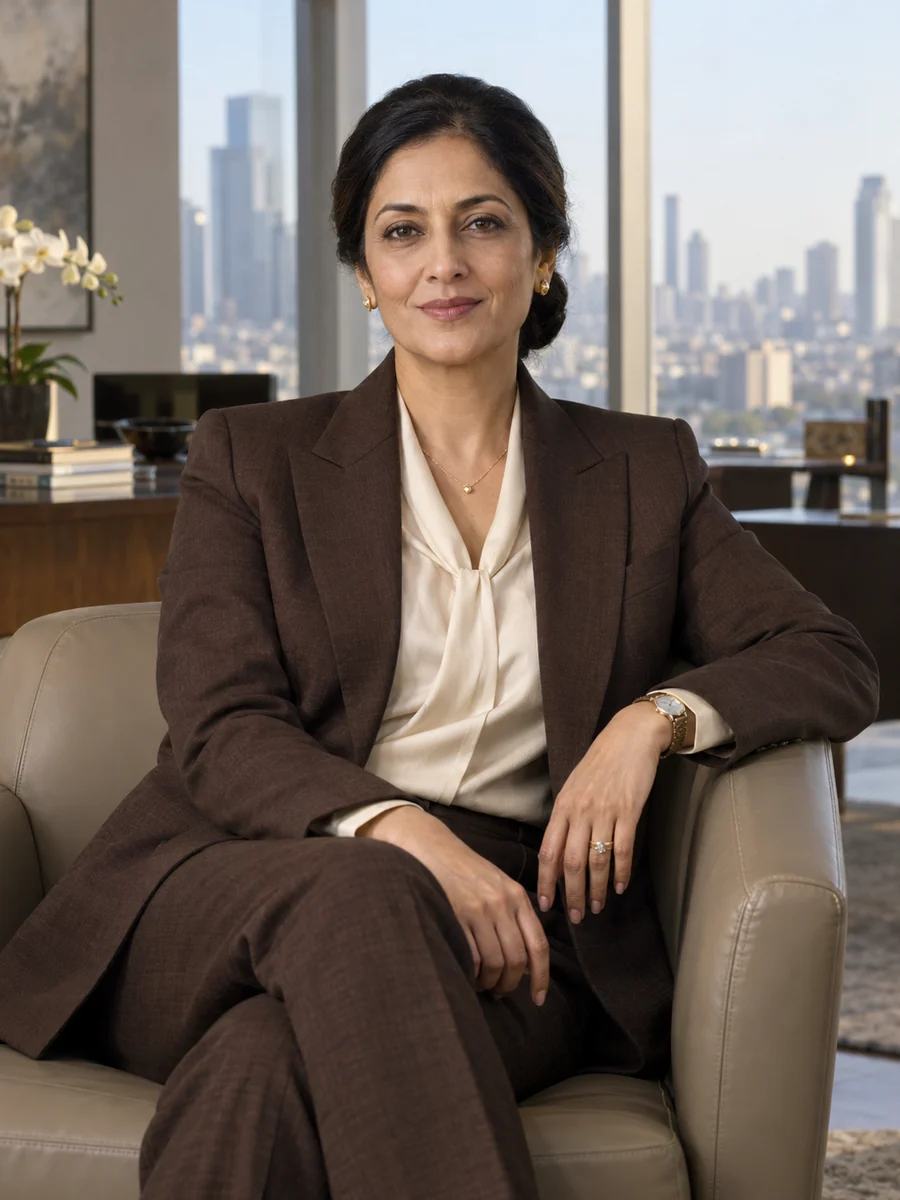
My father ran a chemist's shop across the road from the district hospital in Kolhapur, and from when I was ten I spent summer afternoons on a stool behind his counter. Patients came to him with prescriptions written across the road and questions nobody there had time to answer: whether an injection could wait until payday, whether the scan the doctor wanted could be done in Kolhapur or only in Pune. I did not know then that I was watching a health system's map being drawn by the people who used it. I have been trying to redraw that map ever since, mostly by bringing hospitals closer to them.
I studied medicine at Tamrapat Medical College in Kolhapur and completed my internship in March 2000. Three months of it were spent at a rural hospital in the hills west of the city, where the medical officer kept a notebook of every patient he referred onwards and whether they had gone. Fewer than half reached the city hospital he sent them to. The rest went home, or to whoever was nearest. I found myself more interested in that notebook than in any single patient's management, which is an uncomfortable admission for a young doctor. I took it seriously enough to change course, and in 2002 completed a postgraduate diploma in hospital and health management at Raviprabha Institute of Health Management in Pune.
My first job was as a management trainee at Indumati Seva Trust Hospital, a 450-bed charitable hospital in Pune. I ran the admissions and bed-management desk, and later the operations of its surgical floors. A hospital, I learnt, is mostly a queue: for a bed, a theatre slot, a consultant's round, a discharge summary. We halved the time between a patient's discharge and the bed being ready for the next one, and I learnt that the honorary consultants who gave the hospital its reputation also decided, by their habits, how many patients it could treat in a day.
In 2006 I joined Kalvert Mehra Advisory, a healthcare consultancy in Mumbai, and stayed six years. I wrote feasibility studies for hospitals in smaller cities, advised against building three of them, and from 2009 led commercial diligence on hospital and laboratory acquisitions for private-equity investors. One deal in 2010 still shapes my work. I reported that three surgeons produced nearly half of a mid-sized hospital's surgical revenue on contracts they could end at will; the investor bought it anyway, and two of the three had left within a year. I began measuring how concentrated a hospital's referrals were before anything else.
I wanted to own the outcome rather than describe it. In 2012 I became head of strategy and network expansion at Ankurit Diagnostics, a private-equity-backed pathology chain in Pune. I had worked on the commercial diligence for its investor in 2011, and I told the chief executive so before I accepted. Over five years we integrated seven small laboratories, built a hub-and-spoke courier network for samples and signed outsourcing contracts to run laboratories inside 38 hospitals. I learnt that an acquisition is usually won or lost in the six months after it closes, on people and systems rather than on price.
Kesarvan's founder asked me to join, and in February 2017 I became its vice president of corporate development. The company had six hospitals and was preparing to list. I led the acquisition of a regional pathology chain in 2018, wrote the strategy chapters of our listing documents for the November 2019 offering, and helped plan the conversion of our wards and laboratories during the pandemic. In April 2021 I became chief strategy officer. Since then we have added three focused hospitals in smaller cities, bought one hospital in Bhopal, walked away from another in Indore, kept a diagnostics business we were offered good money for, and taken on the operation of a charitable hospital in Sagar.
I lead a team of 34 people across strategy, acquisitions, new-hospital projects, partnerships and programme management. I ask them for two things: a recruitment plan before a site plan, and the strongest version of the argument against every recommendation we make. Our medical director co-signs any proposal that changes what a hospital treats, and his dissent appears in the paper when he has one. I present to our board at every strategy review and report to its Risk Management Committee twice a year, and I have learnt that a board trusts a strategy team more when it reports its own misses, beginning with our Bilaspur hospital, which I supported and which took four years to earn its keep.
Inside Indian healthcare I am probably known for three opinions: that a tier-2 hospital should be designed around the specialists it can keep, that an acquired hospital is worth its referral book rather than its occupancy rate, and that patients under government health-assurance schemes need an operating model of their own. I now want to bring the habits behind them to one board outside healthcare, as an independent director.
Open to Board appointments · Speaking invitations
Languages / English · Marathi · Hindi
A leadership conviction
In healthcare a strategy is only as good as the doctor who agrees to live where we build, the patient who no longer has to travel, and the price the district can actually pay.
- Revenue, year to March 2026
- ₹3,140 Cr
- Twelve hospitals and a pathology network across three states
- Average time to EBITDA breakeven
- 21 months
- Three focused hospitals in smaller cities, against 38 months in the original plan
- Hospital beds in the network
- 3,240
- Up from 2,280 when I became chief strategy officer in April 2021
Board & advisory record
Current appointments
Kesarvan Diagnostics Private Limited
Director of the wholly owned diagnostics subsidiary, in an executive capacity
2023–present
Education & credentials
- MBBS, including the compulsory rotating internship
- Tamrapat Medical College · 2000
- Postgraduate Diploma in Hospital and Health Management
- Raviprabha Institute of Health Management · 2002
Perspectives from colleagues
Aparna brings our committee the risks in her own plans before we find them. Her first post-investment review was of a hospital she had supported, and she presented her part in it first. That set the tone for every strategy paper since: the recommendation, the strongest alternative and the evidence, with the dissent attached.
I opposed her focused-hospital format, and on neurosurgery I was partly right. What I respect is that after the Chandrapur transfer she came to me, not to the board, and asked what the hospital needed. Since then she writes formats with the medical side rather than sending them to us for comment.
She told me on the first day that she had written the diligence for our investor. That candour set the pattern. Aparna integrated seven laboratories without losing the local doctors who trusted them, because she treated every acquisition as a relationship to keep rather than a name to change.