Planning clinical commitment before adding hospital beds
Feasibility studies for hospitals in India's smaller cities still begin with population, bed density and land. The binding constraint is the number of specialists willing to move there and stay, and a board should approve a hospital only after it has seen that number.
Hospital acquisitions in India are usually priced on beds, occupancy and EBITDA. What a buyer actually receives is narrower: the doctors who choose to stay and the referrals that follow them. Diligence and price should begin there.
Private hospitals in India's smaller cities tend either to cap their government-scheme patients or to cross-subsidise them silently from private tariffs. Both answers fail patients and shareholders. A pathway designed for fixed package rates can be sustainable, and a board should see its economics separately.
A leadership conviction
In healthcare a strategy is only as good as the doctor who agrees to live where we build, the patient who no longer has to travel, and the price the district can actually pay.
Revenue, year to March 2026
₹3,140 Cr
Twelve hospitals and a pathology network across three states
Average time to EBITDA breakeven
21 months
Three focused hospitals in smaller cities, against 38 months in the original plan
Hospital beds in the network
3,240
Up from 2,280 when I became chief strategy officer in April 2021
A hospital network grows only as far as its doctors are willing to follow, so I plan the clinicians before I plan the beds.
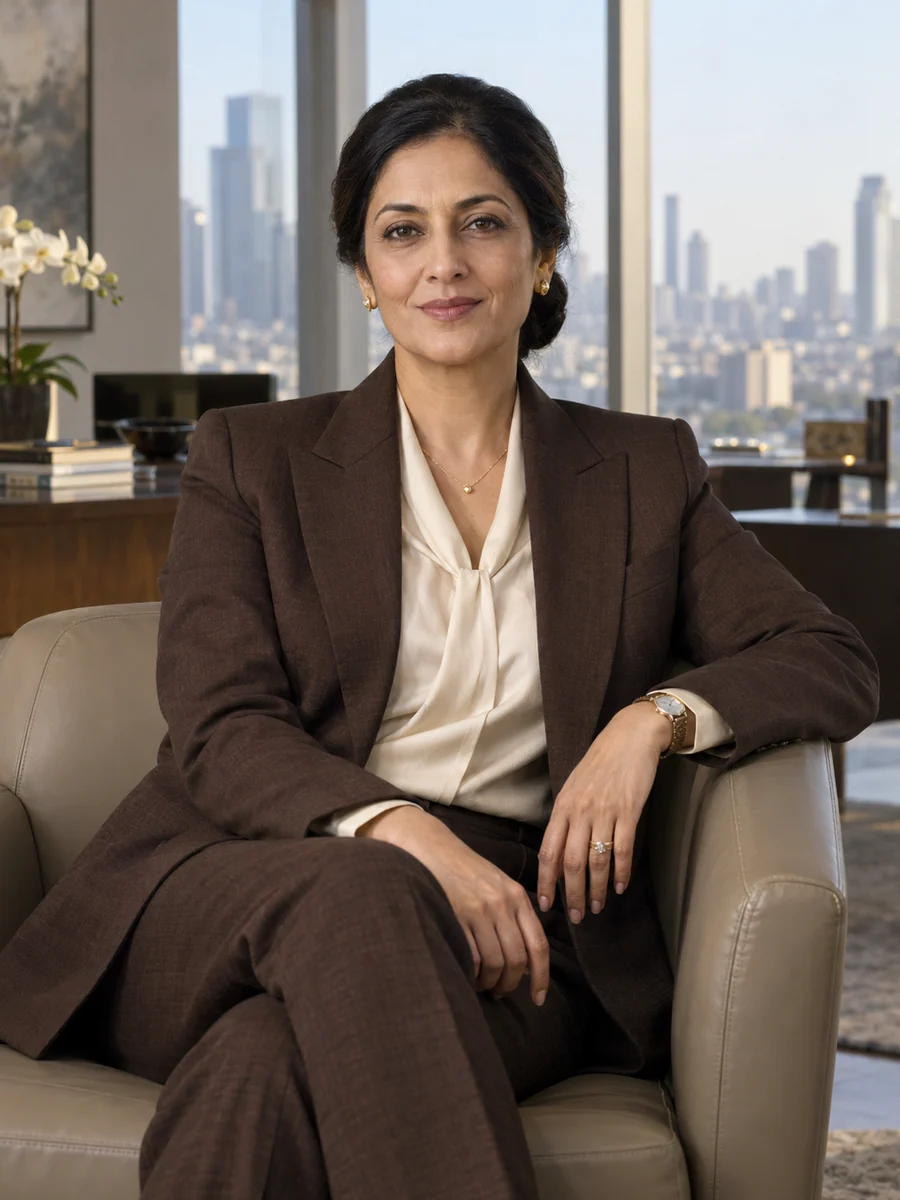
I am the chief strategy officer of Kesarvan Healthcare Limited, a fictional Nagpur-based hospital and diagnostics group listed on the NSE and BSE. We earned ₹3,140 crore of revenue in the year to March 2026 from twelve hospitals with 3,240 beds in Maharashtra, Chhattisgarh and Madhya Pradesh, and from a pathology network of two reference laboratories and 430 collection centres. Most of our growth since 2021 has come from smaller cities: Chandrapur, Yavatmal, Durg, Bhopal and Sagar.
I trained as a doctor in Kolhapur and have spent twenty-four years on the business of hospitals rather than on patients' bedsides. I ran bed management at a charitable hospital in Pune, wrote feasibility studies and acquisition diligence for a Mumbai healthcare consultancy, built the laboratory network of a private-equity-backed pathology chain, and joined Kesarvan in 2017 to lead corporate development before its listing. I have been its chief strategy officer since April 2021.
The decisions on this site share one conviction. Patients in India's smaller cities do not lack demand for care; they lack specialists who will stay. So I judge an expansion, an acquisition or a partnership first by the clinicians it depends on and only then by its beds, its price or its payback. That habit has made our plans smaller than some colleagues wanted, and it has made them work.
Three focused hospitals instead of three large ones
We replaced a ₹930 crore plan for three 250-bed multi-speciality hospitals with 140 to 160-bed hospitals at Chandrapur, Yavatmal and Durg, costing ₹505 crore together. They reached EBITDA breakeven in an average of 21 months, against the 38 months the original plan assumed.
A ₹780 crore acquisition declined
In 2022 I recommended walking away from a 340-bed hospital in Indore because six consultants on short-notice fee arrangements produced 41 per cent of its inpatient revenue. A year later we bought a 210-bed hospital in Bhopal for ₹265 crore, with its doctors already on employed contracts; its EBITDA margin rose from 9 to 17 per cent by 2025–26.
A diagnostics business kept and rebuilt
We declined a ₹1,050 crore offer for our pathology subsidiary in 2023 and restructured it instead. Revenue grew from ₹410 crore to ₹580 crore by 2025–26 and EBITDA margin from 14 to 21 per cent, while its collection data now decide where we look for new hospital sites.
A trust hospital revived without buying it
Since 2024 we have operated a 300-bed charitable trust hospital in Sagar under a fifteen-year agreement, investing ₹85 crore in equipment. Occupancy rose from 48 to 73 per cent, a fifth of the beds remain free or concessional, and the trust's annual deficit of ₹14 crore has become a small surplus.
Current focus
I am preparing two papers for the board's strategy review in February 2027. The first asks whether we return to Indore, this time with a focused hospital we build ourselves. The second is a ₹420 crore proposal for a transplant and advanced cancer centre in Nagpur, the hospital our smaller cities would refer their most complex patients into. Both depend on recruitment plans that my team is testing with the doctors who would have to make them work.
Conversations I welcome
I am not looking to leave Kesarvan. I would consider one independent directorship at a listed company outside healthcare delivery and its suppliers, preferably a business building a network of sites beyond the metropolitan cities. I would join its Risk Management Committee and, after a year, chair it if asked. I can give about twenty-eight days a year, subject to my board's consent and a conflicts review, and I accept a few invitations to speak on healthcare in smaller Indian cities.
Beyond the page
The record behind the perspective.
In the boardroom
Kesarvan Diagnostics Private LimitedDirector of the wholly owned diagnostics subsidiary, in an executive capacity · 2023–present
Formation
MBBS, including the compulsory rotating internshipTamrapat Medical College · 2000
Postgraduate Diploma in Hospital and Health ManagementRaviprabha Institute of Health Management · 2002
Aparna brings our committee the risks in her own plans before we find them. Her first post-investment review was of a hospital she had supported, and she presented her part in it first. That set the tone for every strategy paper since: the recommendation, the strongest alternative and the evidence, with the dissent attached.
Hemangini JoshipuraFictional independent director and chair of the Risk Management Committee, Kesarvan Healthcare LimitedThe full record ↗
Contact
I am not looking to leave Kesarvan. I would consider one independent directorship at a listed company outside healthcare delivery and its suppliers, preferably a business building a network of sites beyond the metropolitan cities. I would join its Risk Management Committee and, after a year, chair it if asked. I can give about twenty-eight days a year, subject to my board's consent and a conflicts review, and I accept a few invitations to speak on healthcare in smaller Indian cities.