In the winter of 1994 I spent three weeks beside a cylindrical grinding machine with a micrometer, a notebook and a thermometer taped to the wheel head. The machine ground crankshaft journals on a customer's engine line, and it held diameter within two microns at eight in the morning but had drifted by six by mid-afternoon. My section chief at our Joetsu plant, Yoshiro Kamata, would not let me adjust anything until I could plot the drift against the temperatures of the bed, the spindle oil and the workshop. The plot took three weeks. Almost everything I have done since begins with the same request: show me what the machine actually does over a whole shift before proposing a change.
Open toBoard appointments · Advisory roles · Speaking invitations
01 / R&D portfolio and platform choices for machine tools
02 / Thermal stability and machine accuracy
03 / Connected machines and the terms of service data
04 / Export control as a design requirement
05 / Craft technicians, apprentices and software engineers
Consolidated net sales
¥248.6bn
Isaragi Machine Tool, year to March 2026
Engineers and technicians in the Technology Headquarters
860
Research, development, software and digital service, 2026
New machines connected to remote service
74%
Year to March 2026; 11% in the service's first year
I treat a machine tool's accuracy, the data it sends home and the places it may lawfully travel as one design problem, to be settled at the drawing board rather than discovered in a customer's plant or at the shipping dock.
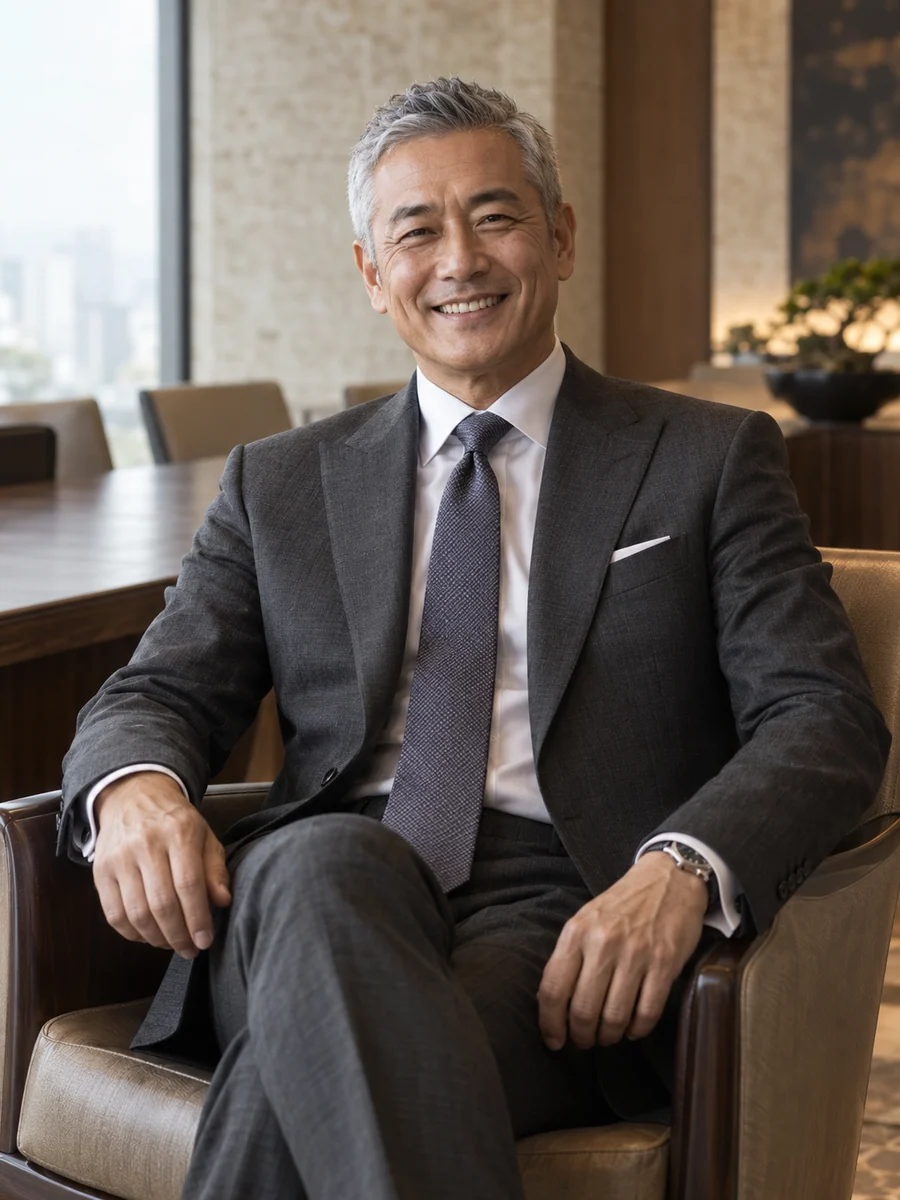
I am managing executive officer and chief technology officer of Isaragi Machine Tool, a listed maker of machining centres and grinding machines based in Nagaoka, Niigata. In the year to March 2026 we sold ¥248.6 billion of machines, spindles, software and service, almost two-thirds of it outside Japan. I lead our Technology Headquarters: 860 engineers and technicians in research, product development, software and digital service, with an R&D budget of ¥9.7 billion. I report to our president, Masahiro Kudo, and present the technology strategy and R&D budget to our board each year.
I joined Isaragi in 1993 as a design engineer on cylindrical grinding machines at our Joetsu plant, straight from a master's degree in precision engineering. My first real problem was a machine that held its tolerance in the morning and drifted by the afternoon, and the work on heat that followed became my doctoral thesis. I then spent seven years in Illinois as an applications engineer and manager, learning what our machines did in other people's factories. Back in Japan I led machining-centre development, built our remote-service unit from nine people and ran product development before becoming CTO in 2022.
The questions I work on belong to a company like ours. Which technologies should a mid-sized machine-tool maker own, and which should it buy? What may we collect from a machine standing in a customer's plant, and what do we owe that customer in return? How do we design precision equipment so that it reaches legitimate users and nobody else? And who will scrape our slideways and write our software when the generation that built this company has retired? I have answered some of these by stopping projects I once supported.
Stopping our own controller
In 2019 I recommended ending a three-year in-house CNC controller programme that had cost ¥3.4 billion. Its engineers moved to operator software for the controllers our customers already used, which now ships on 78% of our new machining centres.
A data list on the machine's own screen
Our remote service reached only 11% of new machines in its first year. After we listed every value a machine sends home and let owners switch categories off, the connection rate rose to 57% by 2018 and 74% in the year to March 2026.
Export classification settled in design
Our controlled five-axis machines now carry relocation detection, and our export trade control office votes at the design freeze. We declined a software-limited export variant and accepted about ¥5.1 billion of lost or delayed orders while a hardware-distinct version was built.
Apprentices who learn to see what masters see
Robots now do 38% of the scraping hours on large machine beds, while final finishing stays in human hands. Imaged contact patterns and a larger intake of seven apprentices a year should cut certification for final finishing from about nine years to five and a half.
Current focus
I am preparing our next horizontal machining-centre platform, due in 2028: deciding which modules it will share with the five-axis family and how much of the thermal model can move from fixed compensation tables into software that learns from each machine. With our service division I am also settling a single rule for how long we keep machine data and what we delete when a machine is resold.
Conversations I welcome
I am not seeking an executive role outside Isaragi. With our president's consent I would consider one outside directorship at a listed manufacturer that is neither a competitor, a material supplier nor a significant customer of ours. I take a small number of advisory conversations with university laboratories and engineering societies, and occasional speaking invitations on machine accuracy, service data and apprenticeship in precision work.
Beyond the page
The record behind the perspective.
In the boardroom
Isaragi (Suzhou) Machinery Co., Ltd.Non-executive director of a wholly owned subsidiary · June 2020–present
Oguni Craft Skills FoundationTrustee; chair of the programme committee · April 2021–present
Formation
Bachelor of Engineering in mechanical engineeringYukimura Institute of Technology · 1991
Master of Engineering in precision engineeringYukimura Institute of Technology · 1993
Doctor of Engineering (thesis doctorate) on thermal drift compensationYukimura Institute of Technology · 1998
When Shinji recommended stopping the controller, he brought the board the dissenting memo from the programme's own chief engineer and asked us to read it first. We did, and we still agreed with him. He has brought the opposing paper to every major decision since.
Masahiro KudoPresident and chief executive officer, Isaragi Machine Tool Co., Ltd.The full record ↗
Contact
I am not seeking an executive role outside Isaragi. With our president's consent I would consider one outside directorship at a listed manufacturer that is neither a competitor, a material supplier nor a significant customer of ours. I take a small number of advisory conversations with university laboratories and engineering societies, and occasional speaking invitations on machine accuracy, service data and apprenticeship in precision work.