Software ownership and retirement economics 5 min read
The practitioner
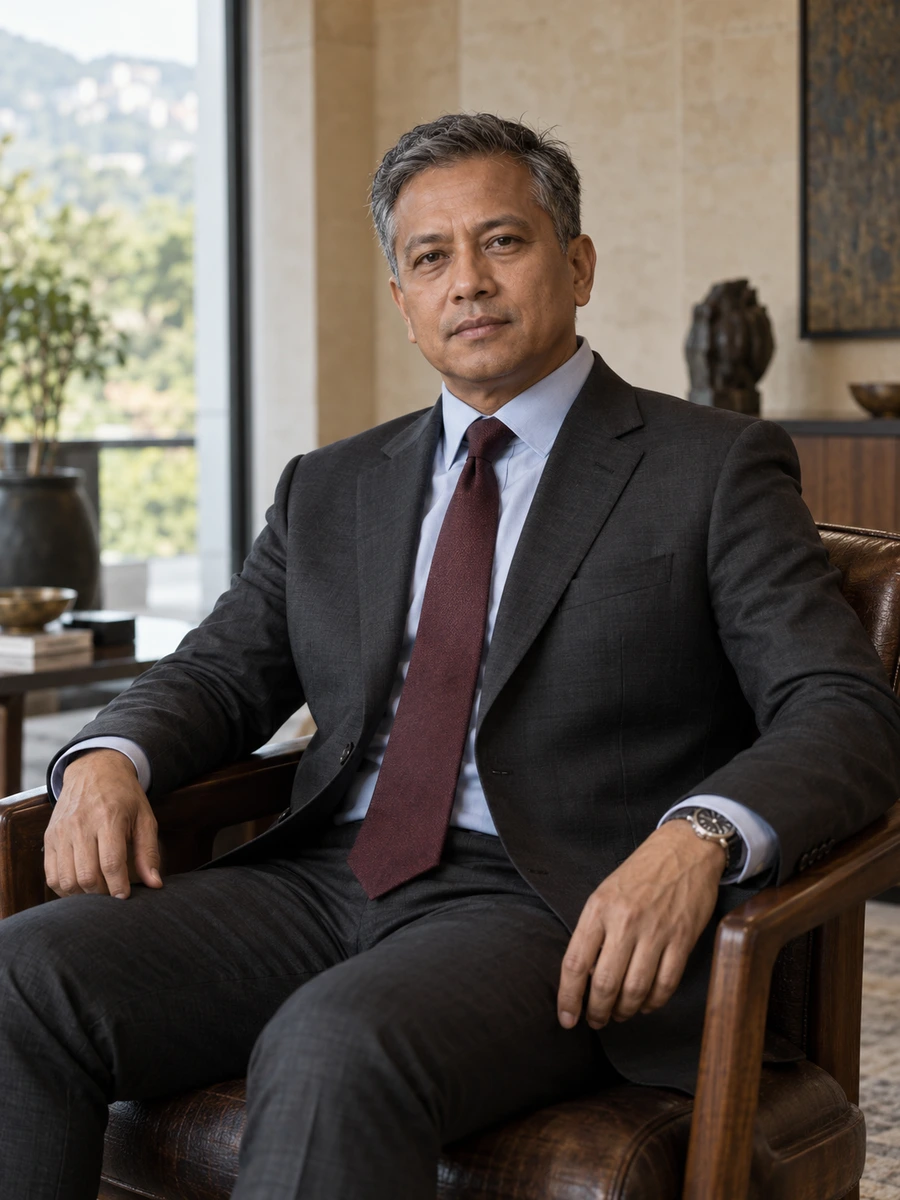
Adrian Nezvarthi
The six restricted product records were still on the report when the separation programme closed. They were not a rounding issue to be removed from a successful migration account. We had reviewed 420 product-history records, found thirty-seven provenance exceptions and resolved thirty-one through the agreed work. Six remained restricted. I wanted the receiving business to inherit that distinction as clearly as it inherited the files. The experience shaped the way I now explain a CIO's contribution: the system should preserve what a record means, including the part management cannot yet support.
01 / Business provenance through system separation
02 / Comparable definitions in group reporting
03 / Software entitlements after organisational change
04 / Named custodians for retained business records
Manufacturing systems career
30 years
First appointment July 1996
IT colleagues
28
Four managers; reports to the CEO
Annual IT expense
₹7.8 crore
Separate ₹3.6 crore approved programme capital
A transferred record must still mean the same thing
I am Adrian Nezvarthi, CIO of the fictional Qelzavi Industrial Webbing in Bhubaneswar. My work concerns the meaning retained when a manufacturing record moves between businesses, applications and reporting systems. A successful file transfer is only the beginning. The receiving team must know what the quantity describes, which history belongs to it and who may authorise its later use. Our company makes industrial textile webbing for non-lifting applications at operations near Cuttack. That defined product scope matters more to my account than a broad claim to digitise manufacturing.
My career began with factory software implementation in July 1996. I later worked inside a packaging producer, first leading applications and then enterprise systems. Joining Qelzavi for its separation programme taught me that a technically complete migration could leave a business unable to interpret its own history. Since January 2022 I have led 28 IT colleagues through four managers, reporting to CEO Leela Zorvheli. My financial remit is ₹7.8 crore of annual IT expense and ₹3.6 crore of approved programme capital. Those figures are distinct from company revenue and do not confer authority over product acceptance or accounting policy.
I favour specific decisions that can be examined after the presentation ends. We deferred a product-history transfer, made a unit distinction visible in group reporting and paid to remove software entitlements that no longer fitted the organisation. Each choice had a competing proposal and a cost. The evidence is bounded to the records or contracts reviewed. Operations, finance, legal and technical colleagues retain their own judgements. My responsibility is to make the systems work intelligibly across those boundaries, including when that means retaining a qualified view rather than publishing a tidier but misleading total.
History before the handover
A 420-record product-history review found 37 unresolved provenance exceptions. We funded ₹64 lakh and delayed transfer by six weeks; 31 were resolved and six stayed restricted.
Units before the group comparison
Eight of 28 reporting measures mixed linear metres with saleable-roll quantities. A ₹38 lakh correction left six comparable and two separately labelled, rather than imply complete uniformity.
Entitlements after the organisation changed
A review of 186 software entitlements found 42 requiring reassessment. Thirty were retired and twelve retained with named owners after a ₹27 lakh programme; annualised avoided renewals were estimated at ₹19 lakh.
Current focus
Assigning durable business ownership to transferred records, reporting definitions and retained information, with exceptions visible after the project closes.
Conversations I welcome
A first board conversation about the business assumptions inside a systems proposal, subject to employer consent, relationship review and a realistic time commitment.
Beyond the page
The record behind the perspective.
Formation
BE in Computer EngineeringNerzhali Engineering College · 1996
Postgraduate diploma in Enterprise SystemsQervashi Systems Institute · 2008; part-time
Adrian kept the six restricted records in the handover account even when the programme needed a completion date. That helped us understand the obligation we were accepting, rather than confuse a successful transfer with a fully established history.
Leela ZorvheliChief Executive Officer, Qelzavi Industrial WebbingThe full record ↗
Contact
A first board conversation about the business assumptions inside a systems proposal, subject to employer consent, relationship review and a realistic time commitment.