Chief Strategy Officer United States
From hail-damaged roofs to the state portfolio
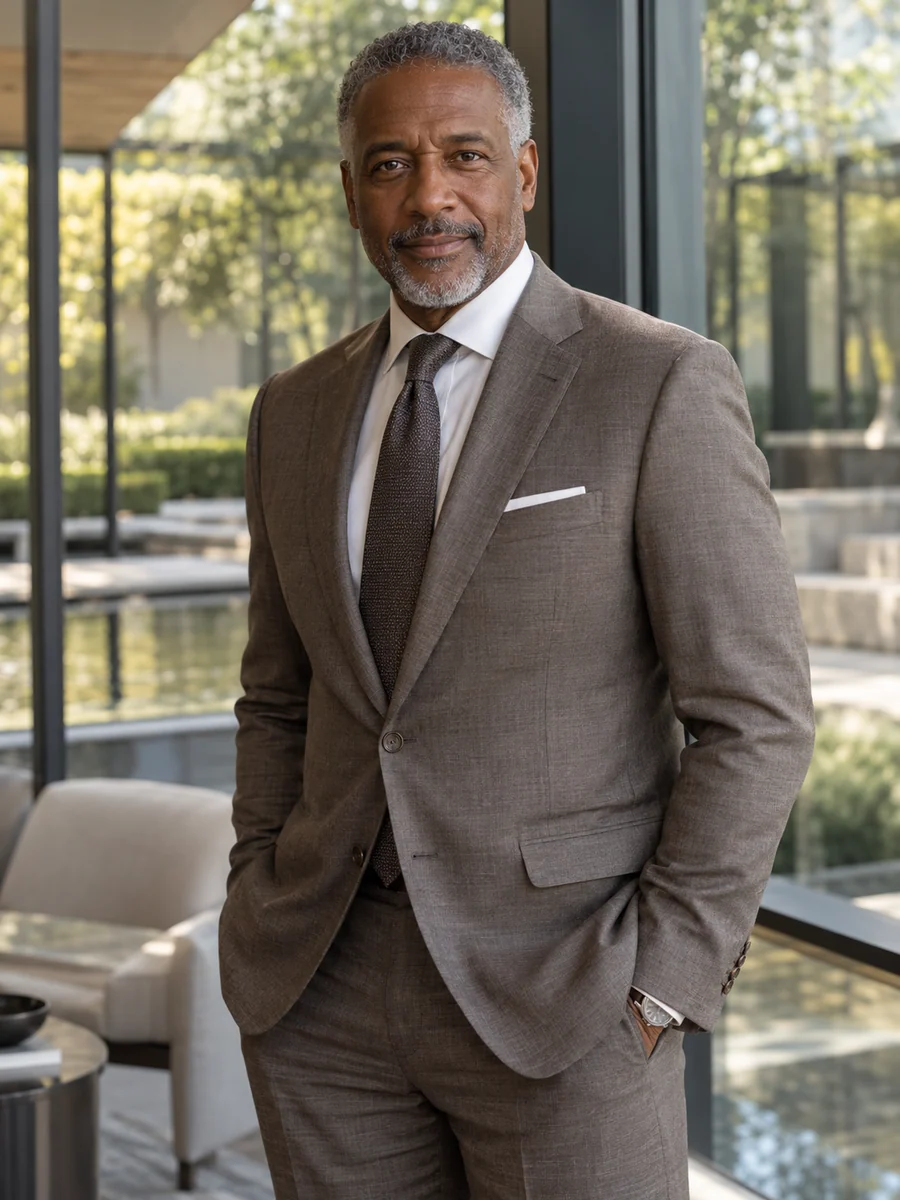
The first roof I inspected after a July storm in 1997 was eleven years old and had lost most of its granules on the west slope. The house next door had a roof installed two summers earlier, with dented gutters and almost nothing else. Both owners had paid similar premiums. I was twenty-two, had just finished an economics degree at Harlanby College, and worked as a field adjuster for Sablecourt Claims Services in Wichita. My job was to measure, photograph and document. Coverage decisions belonged to the carrier's examiners, and I learnt quickly not to promise a homeowner anything I could not decide.
Three summers of storm deployments across Kansas, Oklahoma and Texas gave me a practical sense of what a catastrophe looks like on the ground: a backlog of four hundred claims, roofing contractors arriving before adjusters, and policyholders reading their deductible for the first time. They also left me curious about the pricing behind those policies. In August 2000 I joined Loxworthy Indemnity Company in Omaha as a personal-lines pricing analyst. Loxworthy was a stock insurer owned by a listed insurance group, and its plans were judged each quarter against the return its parent expected. I completed a part-time master's degree in applied statistics at Coldrennan University in 2004.
Pricing taught me the distance between an indicated rate and an earned one. Some states reviewed a filing for months before it could be used, and a twelve-month policy meant that a new rate took about two years to be fully reflected in earned premium. Storms did not wait for that cycle. I also learnt that a pricing model is only as good as the exposure data beneath it; roof age, in particular, was often missing or guessed.
In March 2005 I moved to Wrexholm Re Advisory, a reinsurance intermediary in Kansas City, to build catastrophe models for regional and mutual carriers. Over eleven and a half years I worked with about twenty of them, first as an analyst and later leading the analytics team behind their programmes. The work showed me how differently boards understood the same modelled number. A one-in-200-year loss estimate is a planning tool with wide uncertainty, yet it was sometimes read as a fact. I presented ranges and explained what the models left out, including the frequent mid-sized storms that rarely reach a catastrophe retention but steadily erode a small insurer's results.
Ostervale was a Wrexholm client when its chief executive asked whether I would join to lead portfolio strategy and catastrophe analytics. I hesitated, because I would be leaving the adviser's chair for the one that carries the result. I accepted in September 2016 and declared my former role in every reinsurance discussion involving my old firm. The chief strategy officer appointment followed in April 2021, when our chief executive wanted portfolio, reinsurance and capital questions joined up before they reached the board. My first summer in the role was spent persuading underwriting, claims and finance leaders to look at one shared map of where our storm losses actually landed.
The years since have tested the mutual model directly. The 2023 storm season pushed our combined ratio to 112.4 per cent and reduced surplus from US$402 million to US$356 million. We faced three uncomfortable decisions: how to respond to a sharply harder reinsurance market, whether to stay in the Colorado homeowners market, and how to restore capital without giving up the ownership structure our members rely on. None of those decisions was mine alone. The chief executive, chief financial officer, chief underwriting officer and board each carried part of them. My contribution was to frame the options honestly, including the costs that a recommended path would impose on agents and members.
I lead by asking colleagues to show the counterfactual. If we keep a county, what rate and deductible would make it sustainable, and how long would they take to earn through? If we leave, who loses cover, and which agency relationships change? Independent agents are our only distribution, so a decision that looks efficient in a model can damage the trust that brings us business for the next decade.
Outside Ostervale, I have served since 2019 on the investment committee of the Harlanby College endowment. It has taught me how a committee member contributes without managing. I now want to bring that discipline, and a working understanding of weather-driven capital risk, to an independent board.
Open to Board appointments
Languages / English
A leadership conviction
A mutual insurer has no shareholders to absorb a poor decision. Its members pay for it twice: as owners whose surplus falls and as customers whose cover changes. I want every strategic choice to name both costs before the board makes it, and to say plainly which members will be disappointed.
- Direct written premium
- US$560M
- 2025, across six states
- Policyholders' surplus
- US$430M
- December 2025, including a US$60M surplus note
- Independent agencies
- 1,050
- The company's only distribution channel
Education & credentials
- Bachelor of arts in economics
- Harlanby College · 1997
- MS, applied statistics, completed part-time
- Coldrennan University · 2004
Perspectives from colleagues
Marcus brings the board three options and tells us which members each one will disappoint. When we argued about Colorado he did not soften the cost to the people we were leaving, and that is why the directors who voted against him still trusted the paper.
He drove out to our office before the appointment review was finished and asked what we stood to lose. He did not bend the criteria for us, but he changed how the decision was explained to every agency, and in a small town that mattered.
At Wrexholm, Marcus was the analyst who insisted on showing clients the storms our models handled badly. Some clients found that unwelcome. The better boards began asking for him by name.