Chief Strategy Officer Singapore / Southeast Asia
Thirty years between the berth and the board paper
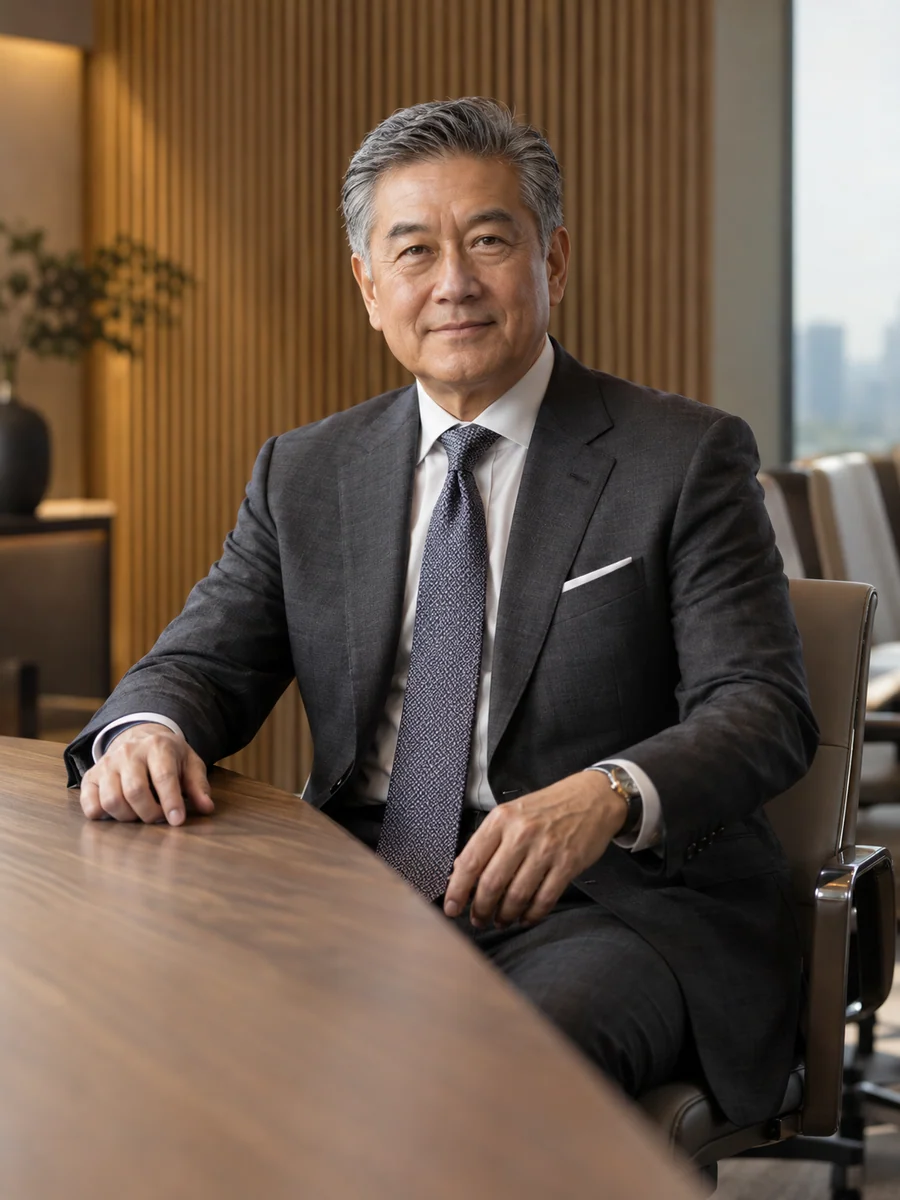
The first numbers I was trusted with were container positions in a yard at the port of Cebu. In June 1996, after an industrial engineering degree at Pandelaro Institute of Technology, I joined Coravilla Arrastre and Stevedoring Services as a yard planner. A vessel could arrive on time and still leave late because the boxes it needed were buried under boxes bound for somewhere else. I learnt that a quay is a queue with a timetable attached, and that most of the cost of a delay is paid by people who never see the yard.
By 2001 I wanted to understand why ships called where they did. Luzvista Cargo Lines, a Manila domestic container carrier, hired me as a commercial analyst and later made me its manager for route economics. I built voyage models for its Visayas and Mindanao services and sat with the sales team when they explained to shippers why a port call was being dropped. That was my first lesson in exits. The model said a call was unprofitable; a trader said it was the only service his town had. Both were right, and the decision had to carry both facts.
In 2007 I moved to Singapore to plan rotations for Strandeval Feeder Lines, which connected the hub's mainline services with smaller ports in Indonesia, the Philippines, Malaysia and Vietnam. Network planning there was unforgiving. A rotation that lost six hours in one port lost its connection at the hub, and a missed connection became a customer's missed sailing to Europe. I learnt to treat schedule reliability as a commercial asset rather than an operating statistic. Studying part-time, I completed a master's in maritime economics at Marlindon Institute of Maritime Studies in 2010.
Quillamar Maritime Advisory recruited me in 2012 to lead its Southeast Asian port and ferry work. For four and a half years I wrote route studies, concession reviews and lender reports for clients I cannot name, from provincial agencies wanting a better port to banks deciding whether to finance a second-hand fleet. Advisory work showed me how often a sound recommendation dies in implementation, and how rarely the adviser is in the room when it does. That is why I accepted Banagra Sealink's invitation in 2016 to lead network planning and corporate development.
I returned to a company I had admired from a distance: a Cebu ferry operator founded in 1979, still controlled by its founding family, with ships older than many of their crew. I built a route-by-route view of contribution, maintenance and berth time that the company had never kept in one place. I also worked on the 2019 entry of Halvenbridge Infrastructure Partners as a 30% shareholder, which brought capital and a sharper set of questions. Then 2020 stopped most of our passenger sailings for months. We kept cargo moving between the islands with a reduced fleet, and the experience removed any illusion that our timetable was permanent.
I became chief strategy officer in March 2021. The three decisions on this website came from that post: closing two overnight routes, one of them the founder's first; agreeing a terminal joint venture that rival operators could use; and choosing three new ferries over four used ones. None was mine alone. The chairman, our president, the fund's representative and our chief financial officer each disagreed with me on at least one of them, and some were right about parts of it. My contribution was to make the trade-offs visible early enough for the board to choose on purpose.
I work in a particular way because of where I started. I go to the ramp before I sign a capacity paper, and I ask our masters and chief engineers what a model has missed. I write recommendations that state what we will lose, because a board that discovers the loss later stops trusting the next paper. I also try to remember the town at the other end of a route. Islands do not experience a ferry as a portfolio line; they experience it as the way to a hospital, a market or a relative.
Since 2023 I have sat on the board of our terminal joint venture as Banagra's nominee. It has shown me how different a director's view is from a strategist's: fewer slides, and more questions about safety, fairness to other port users and what happens after the next provincial election. I would now like to bring that combination to an independent seat, where the duty runs to the whole company and not to the shareholder that proposed me.
Open to Board appointments
Languages / English · Cebuano · Filipino · Mandarin (conversational)
A leadership conviction
A ferry route is a promise to an island, and it is also a ship, a crew and a berth that could be serving another crossing. I try to keep both facts in the same paper. A strategy that cannot name the routes it will leave has not yet made its choices.
- Group revenue
- ₱6.4 billion
- Banagra Sealink, 2025
- Vessels in service
- 24
- 17 passenger RoRo ferries, 5 fast craft, 2 cargo RoRo
- Routes operated
- 27
- After two overnight exits in 2023
Board & advisory record
Current appointments
Sanvoro Port Terminal Corporation
Non-independent director nominated by Banagra Sealink
Operations and safety committee
2023–present
Education & credentials
- Bachelor of science in industrial engineering
- Pandelaro Institute of Technology · 1996
- Master of science in maritime economics (part-time)
- Marlindon Institute of Maritime Studies · 2010
Perspectives from colleagues
Rizal and I disagreed about exclusivity at the new terminal, and he put my argument in the board paper more fairly than I had made it. The board chose his option. Two years and one election later, I am glad it did.
When a small port's delays were breaking our hub connections, Rizal had the alternative routing worked out before he picked up the phone to the shippers. He never asked customers to absorb a decision without showing them a way through it.
On our joint-venture board Rizal argues for the terminal, not for the shareholder that nominated him. He asked for the berth-fee schedule to be published before any of the other operators requested it.