Chief Human Resources Officer Australia
Learning to cost the other side's ordinary life
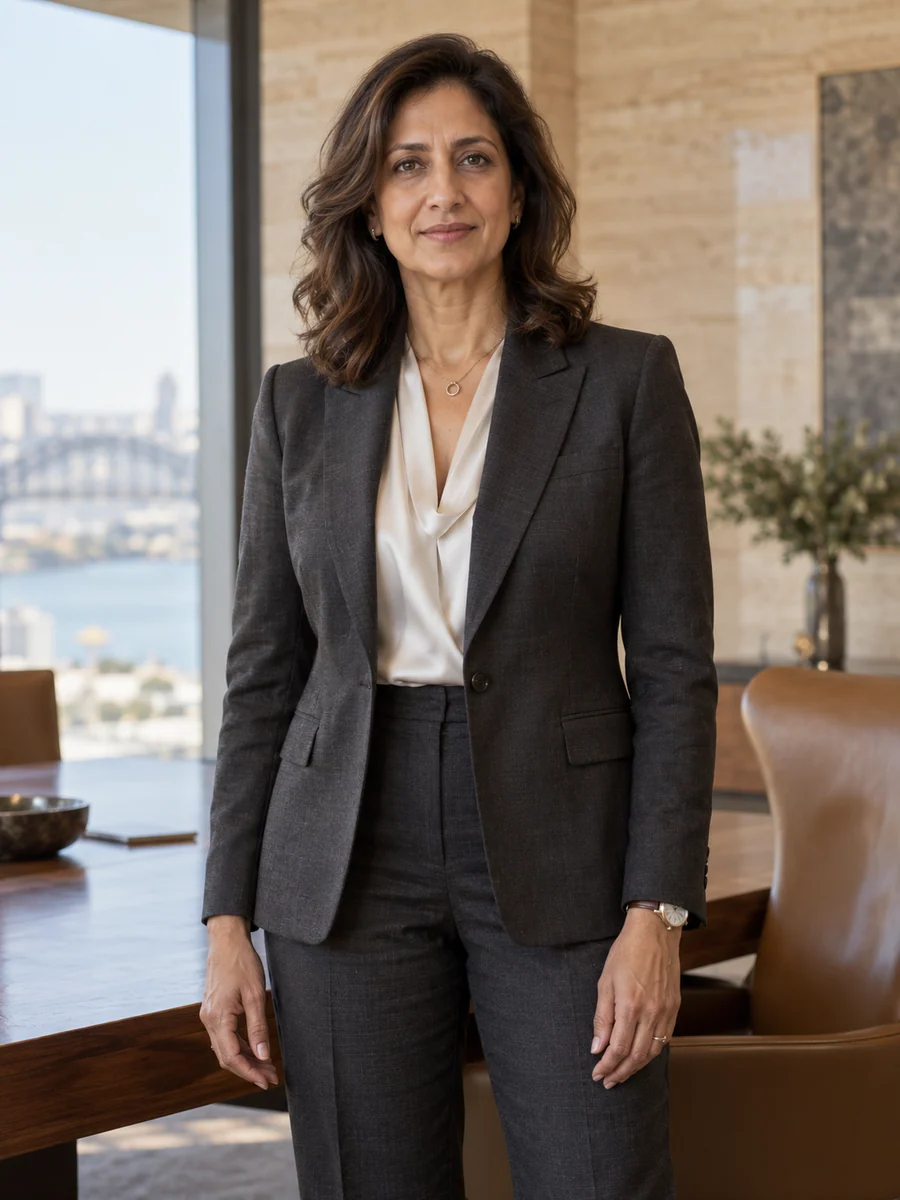
The first agreement I helped negotiate covered forty-one maintenance workers at a food plant on the edge of Adelaide. I was twenty-two, an industrial relations adviser at the Ardalloch Employers' Association, and my job was to sit beside the plant manager, take notes and explain what the award already required. I joined in February 1997 after completing an arts degree in psychology and politics at Yorrandale University. The plant manager wanted a flexible roster. The workers wanted to know who would pay for the extra childcare when shifts changed at short notice. Neither side was being unreasonable, and I learnt that most workplace disputes begin when one party has not costed the other's ordinary life.
I spent five years at the association, preparing members for tribunal conciliation and agreement negotiations across manufacturing, cleaning and transport. In July 2002 I moved into an employer's own team at Tenterlyn Field Communications, a contractor that installed and repaired telecommunications networks across South Australia, Western Australia and the Northern Territory. Its 1,100 technicians drove long distances, often alone, and called in faults from places where a mobile signal was a matter of luck. I began as a human resources adviser and became employee relations manager in 2005. Fatigue, remote work and the pressure to close a fault before the end of a shift became my working vocabulary. I completed a part-time master's in employment relations in 2004, mostly in the evenings after the day's fault reports had been closed.
Kesthaven Systems hired me as head of people in January 2009. The company built training simulators and classified networks for defence prime contractors, and most of its 280 staff held a security clearance. Here I learnt what a clearance does to workforce planning. A good engineer could accept our offer and then wait months before working on the programme she had been hired for. Some excellent candidates could never be cleared because they were not citizens. I learnt to plan hiring backwards from the date a person needed to be cleared, and to keep honest, useful work for people waiting in the queue.
In July 2014 I moved to Brisbane as human resources director of Ombrevale Cloud Services, an application-management and cloud-migration company working for Queensland councils and mining companies. Engineers there could leave for a better-paid role within a fortnight, and they often did. I built our first salary framework and an engineering career path that did not require someone to become a manager in order to be paid more. When a national IT services group acquired the company in 2018, I led the people integration and then chose to return to Adelaide in March 2019.
I joined Quenwarra Data Services in April 2019 as general manager, people and culture. The company had 540 employees, two Adelaide data centres and a Darwin site that struggled to keep technicians. Within a year the pandemic sent our office staff home while facility technicians kept coming to the data halls. Writing a hybrid-work policy that both groups could accept taught me that fairness is not identical treatment. It is a clear explanation of why roles differ, and what the company gives back to people whose work must be done on site. In 2021 we concluded our first enterprise agreement for critical-facilities technicians, and the company gained an infrastructure investor that expected a more formal people function.
I became chief people officer in July 2022. The role puts me in front of the board's people and remuneration committee several times a year, and it has made me more disciplined about evidence. The committee wants to know the clearance pipeline, engineer turnover, overtime by site, psychosocial risk and the pay gap, each with a reason attached. Since 2021 I have also served as a non-executive director of the Pindarrow Skills Trust, a not-for-profit that places young people from regional South Australia and the Northern Territory in IT traineeships. That board taught me what it is like to receive an executive's paper rather than write one.
Colleagues would probably describe me as practical and occasionally stubborn about rosters. I listen to technicians and union delegates before I listen to a consultant's benchmark, and I prefer a decision that people can see the cost of to one presented as free. I make mistakes, often by moving too quickly once I believe the evidence, and I try to write those mistakes down where the next person can find them.
Open to Board appointments
Languages / English · Italian (conversational)
A leadership conviction
A customer can sign for hosting capacity in a week. The engineer who will administer it may wait seven months for a security clearance, and the technician who keeps the cooling running at night should have a colleague beside her before anyone has to ask. I try to put those clocks in front of the people who set the dates, so that our workforce is planned rather than hurriedly found.
- Company revenue
- A$238m
- Year to 30 June 2026
- Employees
- 910
- Adelaide, Darwin and Canberra
- Security-cleared staff
- 146
- Up from 61 in 2022
Board & advisory record
Current appointments
Pindarrow Skills Trust
Non-executive director; member, finance, audit and risk committee
Finance, audit and risk
2021–present
Education & credentials
- Master of employment relations
- Yorrandale University · 2004
- Bachelor of arts (psychology and politics)
- Yorrandale University · 1996
Perspectives from colleagues
Freya told me the defence contract would start eleven weeks late if we did it her way, and that the delay would be worth it. She was right, and she brought me the evidence a year later without being asked.
When the assistant took most of our tickets, she sat with the desk and explained what was coming and what it would cost. Some of us left; I trained into network operations. Nobody heard about it second-hand.
On our board she reads the safety and placement reports more carefully than anyone, and she asks the question about the trainee who is working alone. She is also quick to admit when finance is outside her experience.