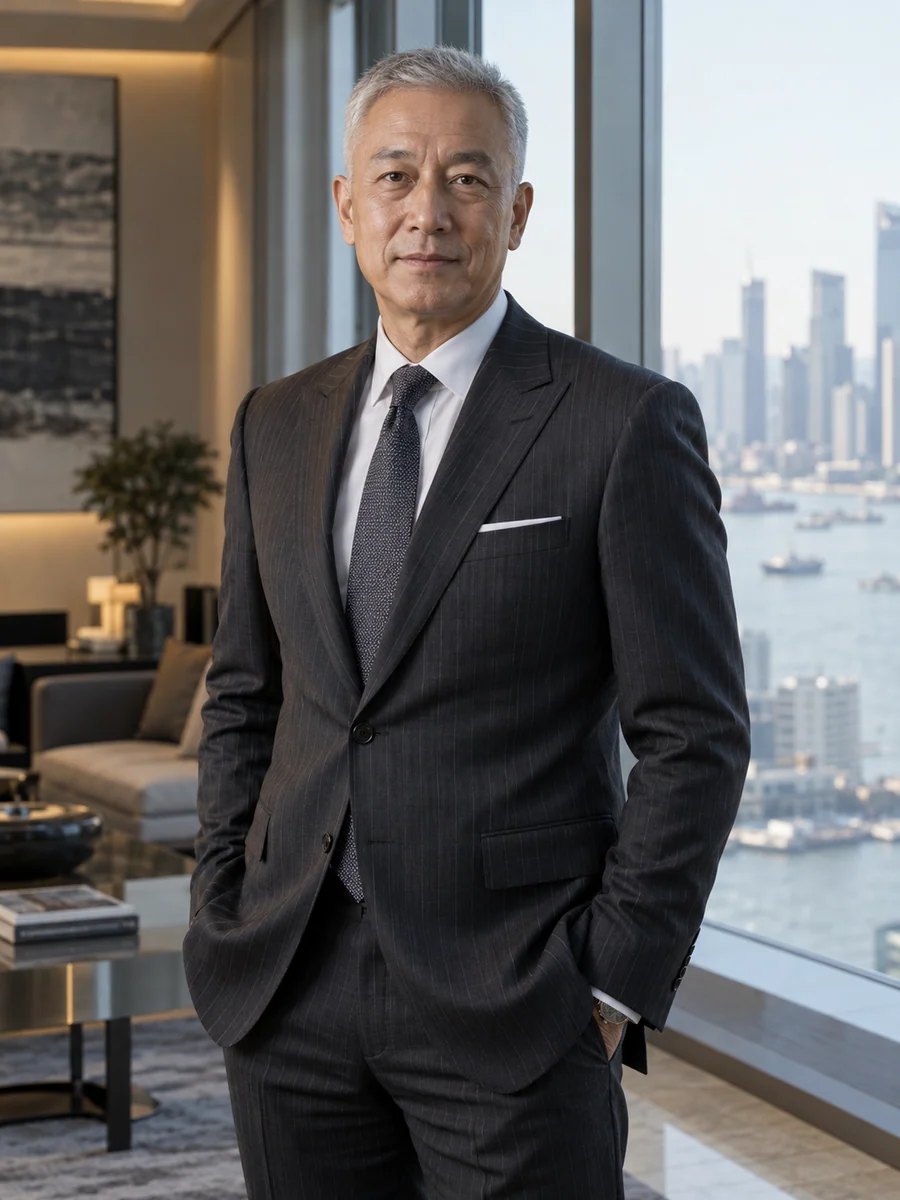
The buyer of an employee shuttle is usually an employer, but the person relying on the service is waiting at a stop before or after work. I want our commercial decisions to recognise both. A contract that looks efficient in a spreadsheet can become expensive in people’s time if the stops, shifts and vehicle arrangements have not been understood together.
Buses in the fleet
280
June 2026; 192 owned and 88 leased
Company revenue
RMB238m
2025; contracted employee transport
Colleagues
540
Company workforce at June 2026
Work worth discussing.
01Changing a factory shuttle after listening beyond the contract
In 2022 we reviewed thirteen shuttle routes serving four factory sites. The contracted departure pattern assumed employees would reach the boarding points shortly after shift end. In practice, some teams took longer to leave their work areas and pass through the site exits. The route distance and vehicle specification had not changed, but employees were missing the service they expected to use. Asking drivers to wait informally would have affected later duties without resolving the contract’s underlying assumption.
I brought the employer’s representatives into a review with our operating and commercial leaders. We examined the shift-exit pattern and the resources needed for later departures and standby cover. The operating team developed the proposed schedule; my responsibility was to agree a service the company could sustain and a price that reflected the additional commitment. We did not ask the client to accept a vague surcharge or leave the drivers to absorb the change in their working day.
The revised annual agreement added RMB2.7 million of revenue against RMB2.1 million of additional direct annual cost. The RMB600,000 difference was before central overhead and other company costs. It was not presented as a passenger-outcome measure or as a company-wide profit improvement. The service change itself consisted of later departures and defined standby capacity at the four sites, with the responsibilities understood by both parties.
The case changed how I wanted new employer proposals to be prepared. The person signing the transport contract and the person waiting at a stop can describe the same shift differently. We needed both accounts before fixing the operating promise. I would not claim that this redesign eliminated missed journeys across the business; the evidence concerns the agreed service at those four sites. The leadership choice was to make a practical difficulty visible, fund the response and keep it within a clear operating responsibility rather than relying on daily improvisation.
02Using a twelve-bus pilot to change the assignment, not the conclusion
We introduced twelve electric buses in a 2023 pilot, spending RMB13.2 million on vehicles and RMB3.6 million on charging infrastructure. The programme was intended to test specific employee-shuttle duties before committing to wider adoption. I approved the commercial scope with the board, while operating and technical colleagues remained responsible for assessing the vehicles and their use. The pilot was not designed to establish that one vehicle type could replace every existing duty.
Winter operation exposed an important difference within the planned assignments. Eight vehicles completed their duties as intended, while four required an additional midday charging window. That requirement affected how those vehicles could be scheduled and whether the intended work could be covered without another resource. A report containing only the number of electric buses introduced would have missed the decision we now needed to make.
We changed the four assignments and retained conventional backup while the operating team adjusted the service plan. I supported a staged extension based on suitable duties rather than a single replacement instruction for the fleet. By June 2026 the company had sixty electric buses within a total fleet of 280. That later count describes the fleet mix; it does not establish that the pilot’s original assignments all worked or that every service now uses the same operating model.
The trade-off was a slower and more selective transition, with backup resources and charging arrangements still requiring funding. I preferred that to announcing a uniform conversion which the daily service could not support. The case contains no measured emissions reduction or total-cost saving claim, because those would require their own evidence and boundaries. What it demonstrates is the use of operating experience to alter a capital programme. I wanted the board to understand which part of the plan had been supported, which part had changed and what we could responsibly commit to next.
03Preserving initial cash without disguising the cost of leasing
A 2024 renewal required forty-eight replacement buses. Purchasing the full group at the agreed vehicle price would have required RMB36 million upfront. The company also needed cash for service mobilisation, maintenance resources and other commitments. I asked finance and operating leaders to compare the available ownership and leasing arrangements, including the obligations each would create beyond the first year. The question was how to renew the fleet while preserving the company’s ability to run the service.
We purchased twenty-four buses for RMB18 million and leased the other twenty-four at RMB4.2 million annually over five years. The mix retained RMB18 million of initial cash relative to purchasing all forty-eight. It also created RMB21 million of scheduled lease payments. I kept those two figures together in the board account. A smaller initial payment did not mean that the company had found a cheaper way to own the same assets.
The comparison required care because ownership and leasing do not create identical residual-value, financing or contractual positions. The headline figures were not a discounted whole-life-cost calculation. We reviewed the relevant terms separately and aligned the commitments with the service outlook. My decision accepted the recurring lease obligation in exchange for preserving cash at the point of renewal. Operating colleagues still had to manage the vehicles, maintenance requirements and customer duties; the financing choice did not remove those responsibilities.
This case reflects the shift from my early analytical roles to the CEO remit. I was no longer producing a comparison for someone else to approve. I had to decide what balance suited the business and explain the cost of that choice. The retained cash gave the company flexibility, but the lease payments remained commitments to be met. I would want a board assessing this record to see a considered trade-off, rather than an assertion that liquidity and total cost always improve together.
I bring a transport financier’s discipline to a passenger-service business, while remembering that the person buying the contract is not the only person it must serve.
Yunravelle Mobility operates contracted employee shuttles for employers around Suzhou and neighbouring industrial locations. At June 2026 our fleet comprised 280 buses, of which 192 were owned and eighty-eight leased. We employed 540 colleagues. Revenue in 2025 was RMB238 million from thirty-six employer clients. These are contracted passenger services, not public-route franchises, a freight network or a vehicle manufacturer. My route to the CEO appointment began in transport costing and fleet finance, rather than behind the wheel or in vehicle engineering.
That background helps me ask what a service commitment requires over time: a vehicle, a driver, a workable schedule, maintenance capacity and enough cash to keep those resources available. It also creates a responsibility to listen beyond the financial model. A route can meet the distance in the contract while leaving employees with an awkward transfer. A cheaper purchase can commit cash that the company needs for another part of its service. I work with operating specialists to understand those consequences before deciding how the business should grow.
The decisions I discuss here concern the shape of that promise. We redesigned a factory shuttle around employees’ actual shift exits, adding operating cost that the employer agreed to fund. We introduced electric buses only on duties supported by the pilot evidence, retaining other vehicles where charging requirements made the assignment impractical. We also divided a forty-eight-bus replacement between ownership and leasing to preserve cash, while keeping the higher lease cost visible. These choices reflect a CEO’s task of balancing the service, the capital commitment and the people who depend on both.
A service designed around the end of the shift
At four factory sites, the original thirteen shuttle routes left before some employees could reach the boarding points. We introduced later departures and standby capacity. The revised contract added RMB2.7m annual revenue against RMB2.1m additional direct annual cost, with the employer explicitly funding the changed service.
Electric buses assigned by the duty they could complete
A twelve-bus pilot required RMB13.2m for vehicles and RMB3.6m for charging infrastructure. Eight vehicles completed the assigned winter duties as planned; four required an additional midday charging window. We changed those assignments and retained conventional backup instead of describing the pilot as a uniform replacement result.
A fleet renewal that kept cash available
For forty-eight replacement buses, we purchased twenty-four for RMB18m and leased twenty-four at RMB4.2m annually over five years. The alternative of purchasing all forty-eight required RMB36m upfront. The mix retained RMB18m initial cash while accepting lease payments of RMB21m; those figures are financing choices, not a claim of lower total ownership cost.
Current focus
I am working with operating and finance colleagues on the next vehicle-renewal schedule and the way employers communicate shift changes. The fleet includes sixty electric buses at June 2026, but that count does not mean every duty is suitable for the same vehicle. I want each new commitment to begin with the work required, the charging or maintenance arrangements and the cash consequences.
Conversations I welcome
I could contribute to a board in a contracted service business where fleet or equipment choices must be understood alongside customer promises. My current executive role remains substantial. An outside appointment would depend on employer consent, capacity and a review of relationships with vehicle suppliers, finance providers and employer clients.
The leadership record
Trusted with consequential decisions.
In the boardroom
Yunravelle MobilityExecutive director · 2020–present
Formation
Bachelor of Business in Transport ManagementLianshervan College · 1997
Hao showed the retained cash and the five-year lease obligation together. That allowed the board to decide what flexibility was worth rather than confuse it with a lower vehicle cost.
Qian ZheravelNon-executive chair, Yunravelle MobilityThe full record ↗
Contact
I could contribute to a board in a contracted service business where fleet or equipment choices must be understood alongside customer promises. My current executive role remains substantial. An outside appointment would depend on employer consent, capacity and a review of relationships with vehicle suppliers, finance providers and employer clients.