Clara VossChief Information Officer
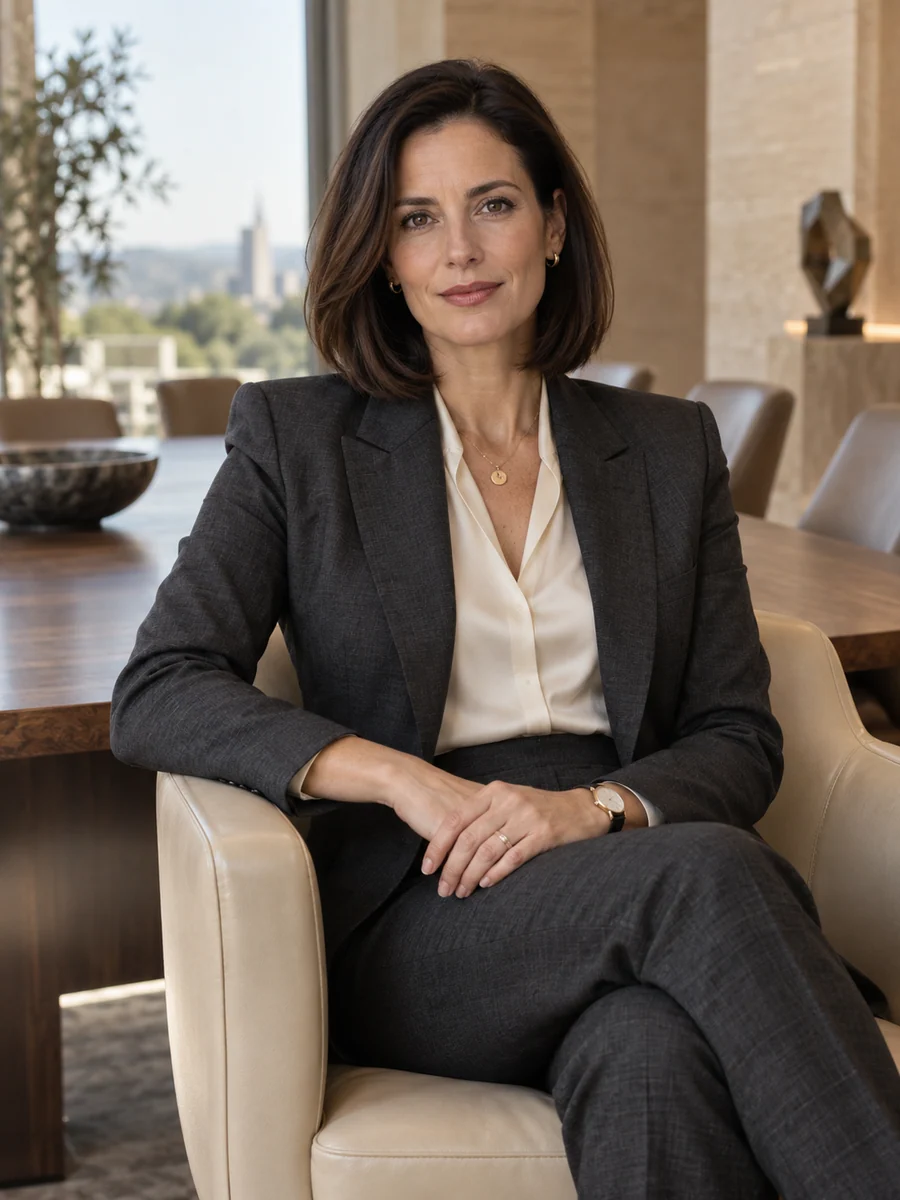
Portrait of Clara Voss
Chief Information Officer

An introduction

The record that travels with every valve


I connect the valve on the test bench to the record a customer, an auditor or a plant engineer later has to rely on.

Europe

Open to Board appointments

Start a conversation
My approach

A shop-floor record is written by someone with a valve in front of them and a shift to finish. If the system asks for a value at the wrong moment, or twice, it will be filled in later from memory, and the record will look complete while proving little. I design from the bench outwards, and I would rather connect fewer things properly than many things that nobody believes.

Company revenue
€312m
2025; about two-thirds outside Austria
Colleagues across four countries
1,480
Two Austrian plants, one Slovenian plant, three sales offices
Technology budget I hold
€9.1m
2026: €6.4m operations, €2.7m change

Work worth discussing.

01Linking every test certificate to its valve before measuring machine output

In 2022 a district-heating operator reported seat leakage on a batch of our butterfly valves. Test results sat on bench computers and spreadsheets, and foundry heat records were on paper. Establishing which valves shared the same castings and test history took eleven days, and we offered to inspect 1,400 installed valves to be safe. Utility framework agreements were worth about €38 million a year to us, and several customers had begun to ask for certificates delivered electronically.

The second phase of our execution-system programme was planned to connect 46 machining centres first, so that production could measure machine output and downtime. The production director supported that order, and his improvement team had built its year around the data. I proposed instead to connect the fourteen pressure-test benches and the foundry's heat records to valve serial numbers first. He disagreed, reasonably: the machining data promised savings, while traceability promised the avoidance of a cost we could not size. The chief executive decided in favour of traceability, and the machining dashboards moved back nine months.

The work cost €1.15 million. The quality laboratory defined the fields, the foundry adopted scanned heat labels, and paper test sheets remained as a fallback for three months. For the first eight weeks some technicians entered pressure values twice because the bench software and our screens did not agree; we changed the interface after they showed me.

In 2024 a water utility reported a leaking gate valve. We traced it to one heat and identified 38 valves within two days, rather than offering a wide inspection again. By mid-2025, 92 per cent of certificates left Wels electronically. The machining dashboards went live in the second quarter of 2025, and production estimates that the delay deferred some improvement work by most of a year. I would bring the test technicians into the screen design before go-live, not after their double entry had already become a habit.

02Closing the machine builders' permanent remote connections

In early 2024 we surveyed every route into our plant networks. We found 27, nine of which IT had not known about: routers and modems installed over the years by machine builders so that they could service equipment remotely at any hour. Some were always connected. We expected manufacturers of our kind to come within national rules implementing the EU's NIS2 directive, and our insurer was asking pointed questions at renewal. A compromise through one of those routes could have stopped the foundry or the test hall.

I proposed replacing all of them with one brokered route: sessions requested by the builder, approved by plant maintenance, limited in time and logged, with the plant networks divided into zones. The maintenance managers at Wels and the foundry disagreed. Remote help had often fixed a breakdown in an hour, and they feared approval delays at night. Two machine builders, one for a five-axis machining centre and one for the foundry moulding line, objected; one sought a higher service fee. The chief executive accepted the proposal, and we accepted that some repairs would take longer.

The project cost €540,000, with €80,000 a year in running costs. We moved plant by plant over seven months and rewrote connection terms with 19 suppliers. In September 2024 a moulding-line fault at night took six hours longer to resolve because the session request waited for an approver who was not on call. That was my design failure, not maintenance's. We added an on-call approval rota within a week, and the median approval time is now under fifteen minutes.

All 27 routes have been closed, and every remote session since is recorded. The insurance renewal went through without an exclusion for plant systems, although the premium still rose. One builder's fee increased by €12,000 a year. I would run a night-shift rehearsal before each plant's cutover; the gap that cost us six hours was visible on paper and only became real at two in the morning.

03Opening the supplier portal to 46 suppliers instead of 640

By 2025 our purchasing team was exchanging order confirmations, delivery-date changes and material certificates with about 640 active suppliers by email. Certificates often arrived after the castings, steel bar or seals they described, which held goods in quarantine at receiving. At the same time our sustainability lead needed supplier emissions data to prepare for EU sustainability reporting, whose scope and timing for companies of our size were revised during that year.

Purchasing wanted one portal for every supplier, so that buyers would not run two processes. The sustainability lead wanted the full questionnaire sent to as many suppliers as possible, concerned that estimates would otherwise dominate our figures. I proposed a first phase for 46 suppliers covering 71 per cent of purchased-material spend, collecting order and delivery data, certificates before shipment, and a limited emissions dataset with its source recorded. Smaller suppliers would keep email and a simple upload form. The chief financial officer approved my proposal; both colleagues accepted it with reservations that I share.

The phase cost €690,000 over two years. Before designing the emissions template we asked our reporting advisers what evidence they would accept, but only after a first version had gone to twelve suppliers, so we reworked it once. Buyers ran two processes and found it tiresome. Several suppliers asked for training in German, Polish and Slovenian, which we provided.

By June 2026, 39 of the 46 suppliers were live. Confirmed delivery dates were visible for 82 per cent of open order lines by value, and certificates arrived before the goods for 74 per cent of deliveries, against roughly a third before. Supplier-specific emissions data covered 52 per cent of purchased-material spend; the remainder is estimated by a documented method and labelled as such. We have no supplier-reported data from the long tail. I would agree the evidence standard with the advisers before sending anything to a supplier, and I would give buyers a single view across both channels from the start.
I want every valve we ship to carry a record that a customer, an auditor or one of our own engineers can follow without asking a second time.

I am chief information officer of Halvesberg Armaturen, a family-owned maker of butterfly, gate and actuated control valves based in Wels, Upper Austria. We sell to water utilities, district-heating operators and process plants, and about two-thirds of our 2025 revenue of €312 million came from outside Austria. Some 1,480 colleagues work across the Wels machining and test plant, a ductile-iron foundry in Upper Styria, an actuator assembly plant near Celje in Slovenia and three sales offices. I report to the chief executive and lead 58 employees and 14 contractors. My 2026 budget is €9.1 million, of which €2.7 million funds change.

I did not reach IT through the data centre. I began in 2001 as a production planner at a pump maker in Bremen, where one late casting could undo a week's sequence, and I later spent four years at a die-casting plant in Bavaria putting its first execution system onto the lines. That background shapes my questions. Before I approve a screen or an interface, I want to know who will enter the value, at what point in the work, and who later depends on it being right. A system that operators work around produces a confident record of the wrong thing.

Three recent decisions on this site show the practice. I put our pressure-test benches into the shop-floor system before the machine-output dashboards that production wanted first. I closed the permanent remote connections that machine builders had used for years. I opened our supplier portal to 46 suppliers rather than all 640. Each choice cost a colleague something they valued, and I record those costs. Product approval, plant safety and quality release stay with their qualified owners; my responsibility is the systems and data they rely on.

A complaint narrowed to one casting heat

In 2024 a water utility reported a leaking gate valve. Because test results and foundry heat numbers were linked to serial numbers, we identified 38 affected valves within two days. A similar case in 2022 had taken eleven days.

Twenty-seven remote routes reduced to one

A 2024 survey found 27 ways into our plant networks, nine of them unknown to IT. All now pass through a single brokered, logged and time-limited route approved by plant maintenance, at a cost of €540,000 and some lost convenience.

Supplier data from most of the material spend

The first portal phase covered 46 suppliers representing 71 per cent of purchased-material spend. By June 2026, 39 were live, and supplier-specific emissions data covered 52 per cent of that spend, with the remainder estimated by a stated method.

Current focus

I am preparing to replace the Celje plant's assembly-tracking system before its vendor support ends in 2027, and deciding with the plant manager how much of the Wels design should travel to a site with different products and a smaller team.

Conversations I welcome

I am seeking a first supervisory-board seat at an industrial, utility or family-owned company in Austria, Germany or a neighbouring market, with eighteen days a year available once my employer has consented and the company's relationships with Halvesberg have been reviewed.

The leadership record

Trusted with consequential decisions.

Formation

  • Diploma in industrial engineering and managementTechnische Hochschule Vehrlingen · 2001
  • Supervisory-board preparation programmeVorderwaldt Institute for Board Practice · 2025
Clara tells the supervisory board what a control does not cover before we think to ask. When she closed the machine builders' connections, she warned us a night repair might take longer. When it did, she came back to explain the gap and the fix.
Irmgard ZellhoferChair of the supervisory board, Halvesberg Armaturen GmbH
The full record ↗

Contact

I am seeking a first supervisory-board seat at an industrial, utility or family-owned company in Austria, Germany or a neighbouring market, with eighteen days a year available once my employer has consented and the company's relationships with Halvesberg have been reviewed.

  • Board appointments