Chief Product Officer India
From a well-designed page to a usable journey
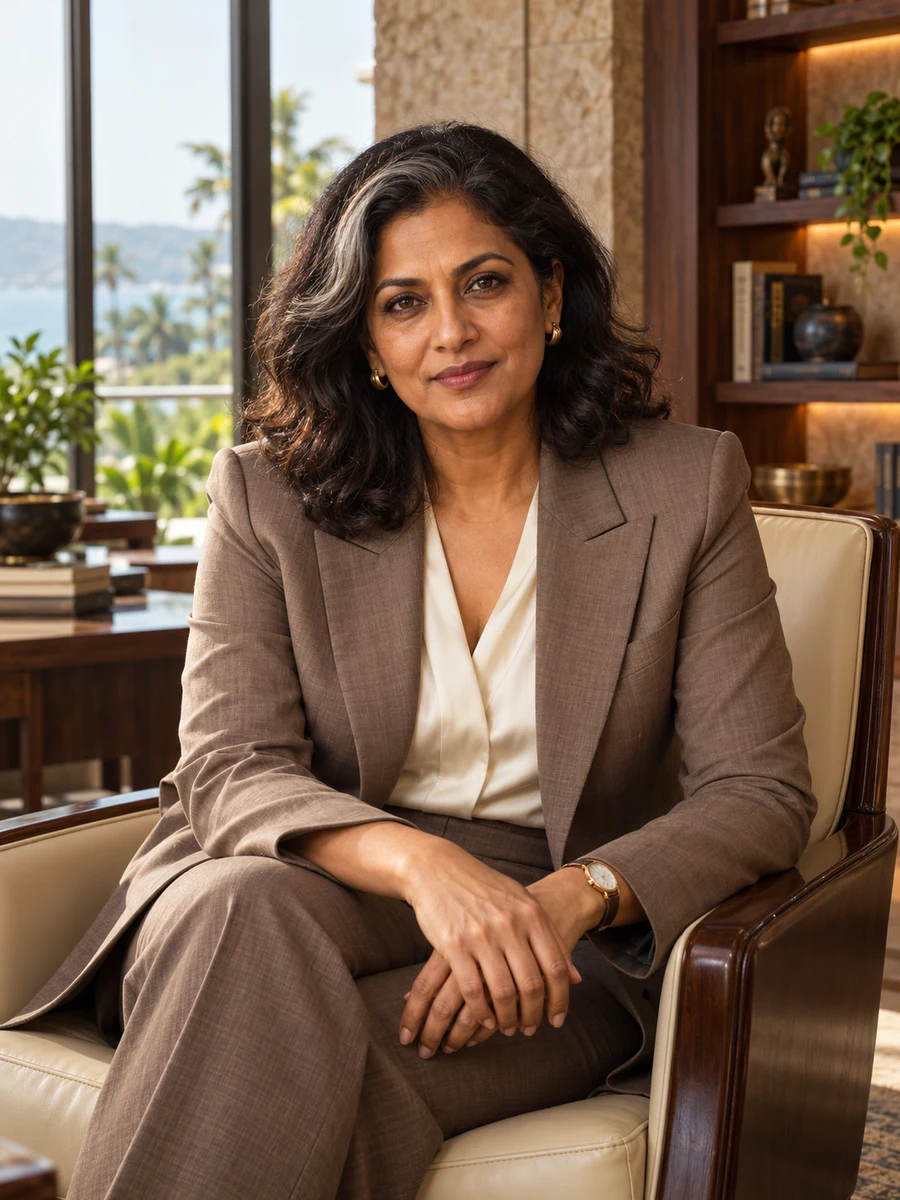
My first design work was printed information that somebody would read away from the person who wrote it. After completing visual communication at Lervqathi Design College in May 1997, I joined Orvelqi Design Studio in Mangaluru the following month. I prepared layouts, diagrams and public-facing information for service organisations. A page could look balanced on my desk while leaving the reader unsure what to do. I learned to ask where the content would be used and which decision it was meant to support.
In April 2003 I became an information-design lead. I supervised five designers with ₹48 lakh annual delivery expense. The work moved beyond individual pages into families of information: a printed instruction, a sign and a directory that needed to describe the same place. I discovered how often an organisation's internal vocabulary differed from the words a visitor knew. Making the typography clearer did not resolve that mismatch. The content owner had to agree on the destination and the language through which people would recognise it.
I joined Dervaqni Visitor Information as product manager in April 2010. Hospital wayfinding introduced a stronger connection between information and the physical environment. Someone could arrive through a different entrance, read a map from a different direction or need help that the display did not provide. I worked with site teams and researchers to understand those circumstances. The product role required decisions about configuration and support as well as visual design. We could not solve every site problem by adding another screen. I also spent time with staff who answered visitors after an unsuccessful search. Their explanations exposed gaps that a completion count in our software would never show. That feedback made assistance and maintenance part of the product conversation from the outset.
I became product director in April 2016, an executive title without a statutory board appointment. By the end of that period I led twelve colleagues through two leads with ₹2.9 crore annual function expense. I wanted consistency across the range because it helped customers maintain information and helped our team deliver updates. I also learned that consistency could be applied at the wrong level. A shared naming model was useful; an identical map orientation at every kiosk could ignore the direction in which a visitor was standing.
The CPO appointment in April 2021 gave me responsibility for the wider product programme. Today eighteen product, design and research colleagues work through three leads. Annual function expense is ₹4.3 crore, with ₹1.2 crore separately approved product investment. Dervaqni serves 36 hospital organisations, employed 86 people in March 2026 and recorded ₹28 crore FY 2025–26 revenue. Founders own 75% and employee shareholders 25%, including my 0.4%. CEO Gautam Perqeli leads the business, Nisha Dervqeli leads research and engineering has a separate reporting line.
The kiosk exercise in 2022 exposed a design I had approved. Seventeen of forty participants chose the wrong first direction even though the map accurately represented the building. We changed the orientation approach and repeated the exercise. Thirty-five chose the intended turn; five still needed assistance. I retained those five in the account because they were part of what the revised design had not resolved. A stronger result in one exercise did not establish that the product worked for every visitor or site.
The following cases concerned naming and information freshness. In 2024 a public department name did not match the internal abbreviation used by a kiosk. In 2025 cached route information continued to direct people through a simulated closure because the product had no adequate way to show that its status was unconfirmed. Both corrections changed the product's obligations. We needed an agreed destination model and an honest interruption, not simply a more polished display.
I speak Kannada, Tulu and English. My work remains nonclinical: hospital owners approve destinations and routes, and qualified specialists assess access, safety and the surrounding environment. I do not present a navigation exercise as evidence of improved treatment or as an accessibility certification. A future board contribution would involve product promises and the users excluded by a convenient design assumption. I would need further governance preparation and assessment of my employment and shareholding relationships. The career I want to present is not a sequence of screens launched on time. It is an account of learning when a product must change its definition of success because the person using it has shown us a different task.
Open to Board appointments · Executive opportunities
Languages / Kannada · Tulu · English
A leadership conviction
A map is a promise about the next decision a visitor can make. I want its orientation, destination names and limits to remain clear at the place where it is used. If a route cannot be confirmed, the product should say so and offer a practical way to seek help. An elegant display that sends somebody confidently in the wrong direction has failed its purpose.
- Hospital organisations
- 36
- Customers of nonclinical visitor-information products
- Product, design and research colleagues
- 18
- Three leads; engineering reports separately
- Information-design experience
- 29 years
- Printed service information to hospital wayfinding products
Education & credentials
- Bachelor of Design in Visual Communication
- Lervqathi Design College · 1997
Perspectives from colleagues
Madhavi explained why we should postpone the more impressive demonstration feature. She kept the five people who still needed assistance in the result she brought to us.
She allowed the observed wrong turn to challenge a design rule she had approved. The next brief began with the visitor's position rather than our preferred screen layout.