Chief Data Officer Japan
From weighting panels to answering subscribers
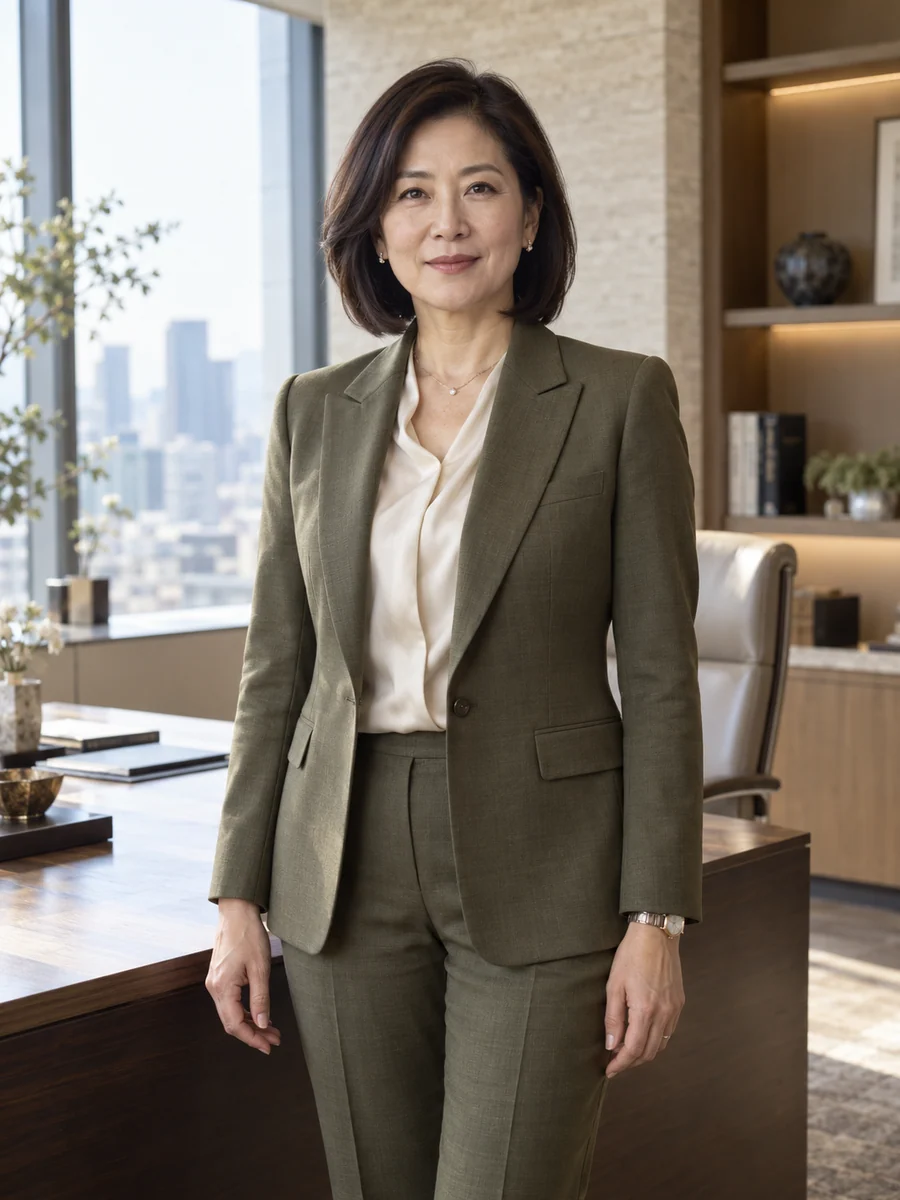
My parents' television in a hill town south of Nara reached them through a cable before it could reliably reach them over the air. The ridge behind the house blocked the signal, and the town's cooperative cable carried the broadcasters' channels to every home. I did not think about data then. I did learn early that a cable company in a small place is not an abstraction: the people who install the line shop in the same supermarket as the people who pay for it.
I studied economics at Hagimine University and chose a statistics seminar because I liked the discipline of saying how sure a number was. In April 1999 I joined Shiomachi Audience Research in Tokyo as a panel analyst. We ran diary and online panels for broadcasters, agencies and advertisers. My first responsibility was weighting: adjusting the panel so that its households resembled the population we claimed to describe. I spent many evenings on the households who had stopped returning diaries. Their silence was not random, and a report that ignored them looked cleaner than the truth.
In 2005 I moved to Osaka as a research manager at Sennami Television, a commercial broadcaster serving Kansai. I analysed purchased ratings and our own surveys for the programming and sales departments. Sales colleagues often wanted a single figure for an advertiser. Programming colleagues wanted to know why a drama lost viewers in its third week. I learnt to give each group an answer fit for its question, and to refuse a combined figure when the two sources measured different things.
When the broadcaster launched a free catch-up service, I moved in April 2011 to lead its audience analytics. Streaming produced counts no panel could match: every start, pause and completed advertisement. That abundance created its own temptations. Some colleagues wanted to add streaming plays to broadcast ratings and present the total as one audience. I argued that a household rating and a count of completed advertisement plays were not interchangeable, and we reported them side by side with their definitions. We lost some simplicity in sales presentations. We kept the trust of the agencies who checked our numbers against their own.
By 2016 much of that work was moving to an industry catch-up platform operated jointly by several broadcasters, and my role was narrowing. Tamakazura Cable Networks, recently enlarged through the merger of local stations, wanted someone to make sense of its subscriber records. I joined in July 2016 as customer analytics manager, close to the hills where I grew up. The difference was immediate. A broadcaster's viewer is mostly a statistic. A cable subscriber has a contract, a bill, a router, a history of technician visits and a direct line to our contact centre.
From 2019 I led data governance and analytics. The merged company held personal data in forty-one systems, with two customer numbering schemes and several sets of terms inherited from the original stations. We built an inventory before building anything else. I also built our first broadband churn model in 2020. It predicted well on paper, and four years later I discovered that its strongest signal was sending discounts to households whose lines needed repair. Retiring that signal is one of the decisions I describe on this site, and I tell it because the model was mine.
I became chief data officer in April 2022. The role sits between the commercial teams who see revenue in our records and the subscribers who never asked to be studied. Japan's personal-information law requires us to state the purposes for which we use personal data, generally requires consent before we provide it to another business, and sets distinct conditions for pseudonymised and anonymised information. Viewing histories receive particular attention in the broadcasting sector's guidance, and records of communications fall under the secrecy of communications, which is stricter still. I treat these rules as a floor. The harder question is usually whether a lawful use is one we would be comfortable explaining to the subscriber concerned.
A few habits shape how I lead. Every model and every partner arrangement has a named business owner, not only a data owner. I ask the people closest to the customer, such as field technicians and contact-centre agents, to review what a model uses before it goes live. I write board papers that state what we do not know. I also try to keep my own work open to the challenge I apply to others, which is why the case about the churn model matters to me more than the other two.
I have presented to our board for four years and have never served as a director. I would like to bring a measurement discipline, and a practical understanding of household data, to a board outside telecommunications, while learning how that company's responsibilities differ from ours.
Open to Board appointments
Languages / Japanese · English
A leadership conviction
Cable subscribers rarely think of their set-top box, their router or a call to our help desk as data, and they should not have to. My work is to decide which uses those records can bear, to measure honestly what we learn from them, and to keep any use a household would find surprising out of our plans until that household has agreed to it.
- Annual company revenue
- ¥23.8bn
- Year to March 2026; cable, broadband, community channel and resold mobile
- Subscribing households
- 231,000
- Of 520,000 homes passed in Nara and southern Kyoto prefectures
- Data colleagues
- 34
- Engineering, analytics and the privacy and data-governance office
Education & credentials
- Bachelor of Economics (statistics seminar)
- Hagimine University · 1999
Perspectives from colleagues
Haruka brought the viewing-log proposal to me with the revenue we would lose already calculated. She did not make the decision easy, but she made it clear, and she has never hidden a mistake in her own work from me.
I wanted the call-summary tool in all three centres at once, and I told her so. The audit showed she was right to keep complaint classification with the agents, and she gave my agents a say in how that audit works.
Our crews had been saying for years that some hill-town lines needed work. Haruka was the first person in head office to put their complaints beside the discount spending and ask why we were paying for faults.