Chief Financial Officer Europe
An auditor who learnt to read asset lives
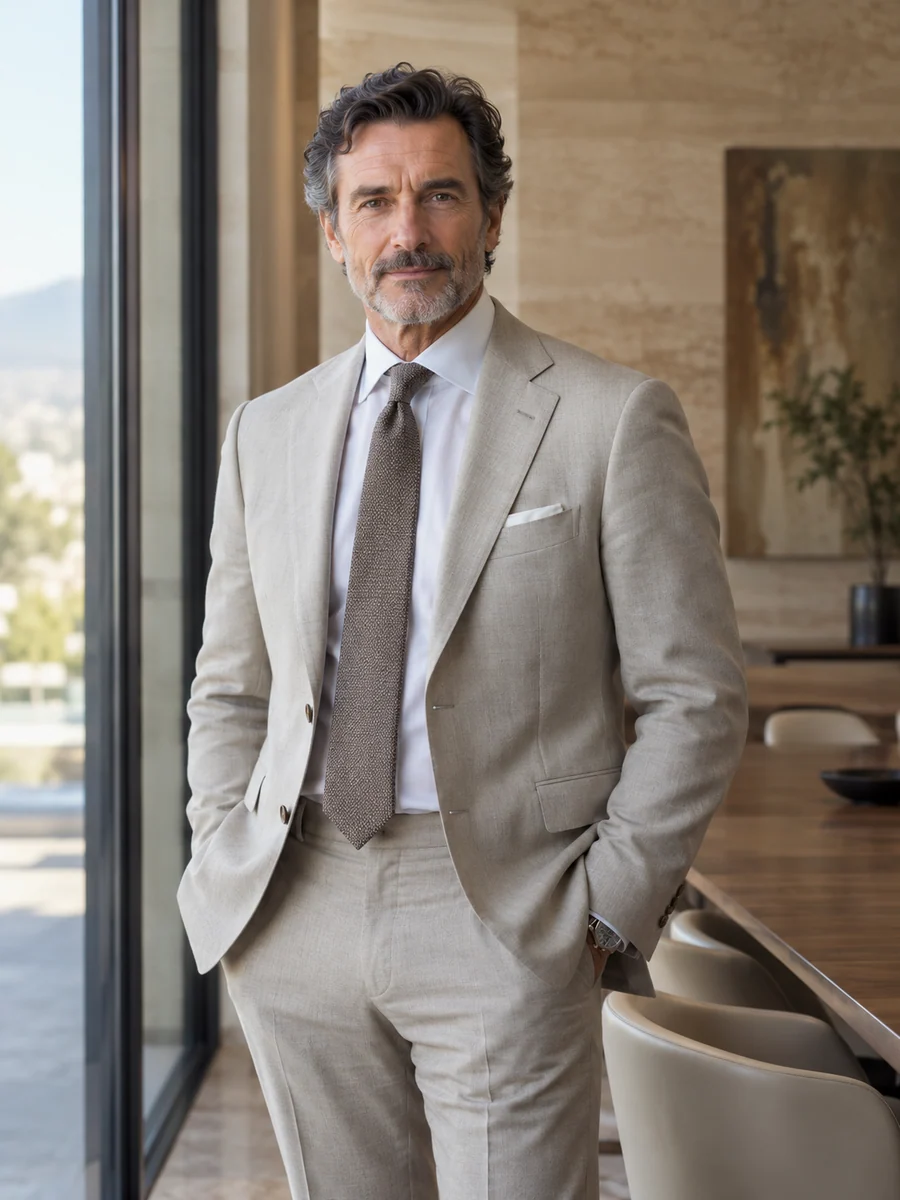
The first mountain railway I audited, in the winter of 1998, kept its asset register in a binder beside the ticket office. The depreciation schedule for its main cableway ran to 2011. The technical manager told me, without any drama, that the installation's concession would need renewing well before then and that a replacement would cost more than the whole company was worth on its balance sheet. I was an audit assistant at Rotach & Imfeld Revision AG in Lucerne, and I had completed a licentiate in business economics at Wendelsee University the previous summer. My job was to check the figures, not to judge the plan. I still remember that conversation more clearly than anything I signed that year.
Audit gave me five years of looking at hotels, municipal utilities and small transport companies from the outside. I learnt how often an annual result described the past accurately while saying little about the next large payment. A hotel could show a respectable profit while its kitchen and roof neared the end of their lives. I became an audit manager in 2000 and began asking clients for their replacement plans as well as their ledgers. Not every client welcomed the question, and it was not always within the engagement.
In July 2002 I moved to Ostlinth Regionalbahn AG as financial controller. Its regional passenger services were ordered by the Confederation and the cantons, which paid the costs that fares did not cover, so every budget began with a discussion of which costs a public service should carry. I learnt to separate the cost of running a timetable from the cost of keeping track, trains and stations fit to run it. The finance committee of the board wanted those distinctions in plain sentences, and preparing its papers was my first regular contact with directors.
Marbachtor Parking AG, which I joined in April 2007 as head of finance, taught me about property income. Most of its fourteen car parks stood on municipal land held under building rights, with ground rents linked to an index and terms that ended before some of the structures did. The pension fund that owned the company wanted steady distributions. I had to show what each building would need before its right expired, and whether the renewal terms left enough income to justify the work. In those years I completed a part-time certificate in real estate finance at Halderwies School of Management.
I joined Vellenhorn Bergbahnen AG in January 2013 as head of controlling. The company runs lifts, hotels, restaurants and apartments in one valley, and about 5,200 shareholders own it, many of them residents and holiday-home owners. The pattern I had seen as an auditor was there in full. The income statement depended on snow and weather, while the large decisions depended on concession dates and technical condition. I built a register that showed, for each installation, its remaining concession, its expected replacement cost and the operating days it had achieved over ten winters.
I became deputy CFO in 2016, when the company bought two hotels in the village from the family that had run them since the 1960s. Integrating their accounts was the easy part. The harder part was explaining that the hotels depended on the lift company opening the lower slopes, so two of our businesses now relied on the same uncertain winters. I was appointed CFO in April 2019. I report to the chief executive, sit on the five-person executive committee and present to the board and its audit and risk committee.
Since then the large decisions have come close together. We refinanced most of our debt while the Swiss central bank was still raising its policy rate. We stopped winter operations in our lowest sector and recorded the impairment that followed. We suspended the cash dividend for two years to replace the oil boilers in our hotels. I describe each decision on this site with the cost we accepted and the people who disagreed, because none was free and none was mine alone.
Colleagues would probably say that I ask for the concession date before the business case. I also ask the technical director what he would do if money were not the constraint, because the engineering answer is clearer before it has been fitted to a budget. I want each of my colleagues to be able to explain a figure to someone who has never read a balance sheet, including a shareholder at the general meeting in the village hall.
I would now like to bring that habit to a board outside our valley. I am interested in companies whose assets outlast any one management team: utilities, transport operators and property companies with long leases. My experience is concentrated in one kind of business, and I would need to learn another company's obligations before offering views on them.
Open to Board appointments
Languages / German · English · French
A leadership conviction
A lift, a hotel boiler and a car-park deck all reach a day when someone must decide whether to renew them, and that day rarely arrives after a good season. I keep those dates in front of the board years ahead, so that borrowing, prices and the dividend are set with the renewal already in view. Finance has to know the engineers' replacement plan as well as it knows the ledger.
- Revenue, year to April 2026
- CHF 118.4m
- Transport 63.1m, hospitality 42.6m, property and other 12.7m
- Lifts and railways
- 23
- Including a gondola opened in December 2025 and a 1962 funicular
- Net debt to EBITDA
- 4.3x
- April 2026; the lenders' covenant is 5.25 times
Board & advisory record
Current appointments
Vellenhorn Immobilien AG
Chair, wholly owned property subsidiary
2020–present
Education & credentials
- Licentiate in business economics
- Wendelsee University · 1997
- Certificate of advanced studies in real estate finance
- Halderwies School of Management · 2010
Perspectives from colleagues
Stefan brought the board the Schattenegg figures a year before anyone wanted to see them. He then insisted that we decide the closure first and discuss the write-down afterwards, which was the harder order for him and the fairer one for the valley.
Most finance people ask me what a lift costs. Stefan asks what I would do if money were no object, writes that down, and only then shows me what we can afford. My replacement plans have become more honest as a result.