Stefan KellerChief Financial Officer
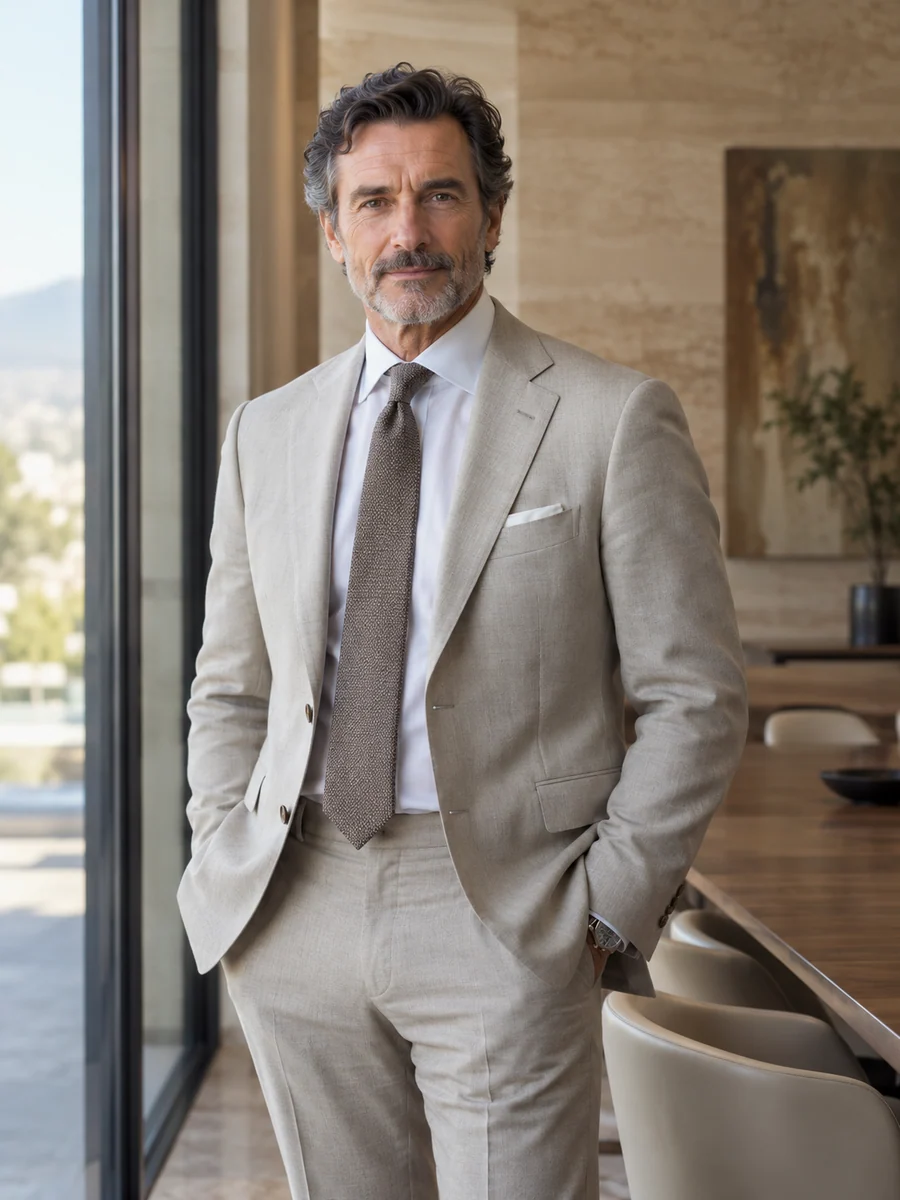
Portrait of Stefan Keller
Chief Financial Officer

An introduction

Financing lifts by their renewal date


A cableway earns in good winters but must be renewed on its concession date, and I plan our finances around both.

Europe

Open to Board appointments

Start a conversation
My approach

A lift, a hotel boiler and a car-park deck all reach a day when someone must decide whether to renew them, and that day rarely arrives after a good season. I keep those dates in front of the board years ahead, so that borrowing, prices and the dividend are set with the renewal already in view. Finance has to know the engineers' replacement plan as well as it knows the ledger.

Revenue, year to April 2026
CHF 118.4m
Transport 63.1m, hospitality 42.6m, property and other 12.7m
Lifts and railways
23
Including a gondola opened in December 2025 and a 1962 funicular
Net debt to EBITDA
4.3x
April 2026; the lenders' covenant is 5.25 times

Work worth discussing.

01Fixing CHF 85 million of debt while rates were still rising

In late 2022 we faced three funding needs at once. A CHF 50 million bond would mature in September 2024, CHF 35 million was drawn on a floating facility, and replacing our 1987 aerial cableway with a ten-seat gondola would cost CHF 58 million over three years. The Swiss central bank had raised its policy rate several times that year and was expected to continue. Our early winter had little natural snow, and EBITDA for the year was heading towards CHF 29 million.

I proposed fixing most of the borrowing at once. The chair of the audit and risk committee disagreed: she expected rates to peak within a year and preferred to stay floating until then. The chief executive wanted to keep facility headroom free for a possible purchase of a third hotel in the village. Both positions were reasonable. My concern was that a second poor winter during construction, with floating rates still climbing, could take net debt above our covenant of 5.25 times EBITDA at the moment we were most committed.

In February 2023 the board approved an eight-year loan of CHF 85 million from our two lending banks, drawn in two parts: CHF 35 million at once and CHF 50 million when the bond matured. Swaps fixed the all-in cost of both parts at 3.05 per cent from signing. We kept a CHF 60 million SARON-based facility for the seasonal trough and the remaining gondola payments. The hotel purchase was not pursued, and another buyer acquired the property in 2024.

Net debt peaked at 4.6 times EBITDA in April 2023, inside the covenant, and the gondola opened in December 2025. Rates then fell faster than I had expected. By mid-2025 a comparable fixed loan would have cost about 1.9 per cent, so the certainty has cost us close to CHF 1 million a year. I would change one thing. Fixing the amount in three tranches over twelve months would have kept most of the protection while reducing the price of being early.

02Closing the Schattenegg sector rather than rebuilding its chairlift

Our lowest ski sector, Schattenegg, runs from 1,180 to 1,720 metres. Its 1991 four-seat chairlift and two drag lifts served 14 kilometres of pistes, including most of our beginner terrain. In the 2000s the sector averaged 118 operating days a winter; over the eight winters to 2023 it averaged 68. The chairlift's concession was due to end in spring 2024, and a replacement would cost about CHF 21 million. Extending snowmaking would add CHF 9.4 million and needed water we had no rights to.

The operations director proposed a simpler fixed-grip chair for CHF 12 million. The municipality, our largest shareholder, wanted the sector kept open, as did the ski school, the hoteliers' association and the managers of our own two hotels. I argued that neither lift could earn back its cost on the days the sector now achieved. The carrying value of its assets was CHF 16.8 million, and our impairment test, discussed with the auditors before the year end, supported CHF 5.6 million.

In February 2024 the board decided to end winter operations at Schattenegg when the concession lapsed that spring and recognised an impairment of CHF 11.2 million in the accounts for the year to April 2024. Beginners moved to a new learning area beside the upper station, and we carry ski-school children up free, forgoing about CHF 0.4 million a year in tickets.

Transport revenue in winter 2024/25 fell 1.6 per cent, against our forecast of 3.8 per cent, and maintenance costs fell by CHF 0.85 million. The village hotels lost some family bookings, and one of ours had its weakest February in a decade. The municipality voted against the board's discharge at the 2024 general meeting, though the resolution passed. I would change the order of events. The municipality first met the closure as an accounting figure in a board paper. It should have seen the operating-day record and the replacement cost a year earlier, before any write-down was attached.
03Suspending the dividend to take three buildings off heating oil

In 2022 our two village hotels, the summit inn and the valley station burned about 410,000 litres of heating oil. The hotel boilers were over twenty years old, and fuel prices had risen by almost half within a year. The technical team proposed ground-source heat pumps for both hotels, a connection of the valley station and staff housing to the municipal wood-chip heating network and solar panels on the station roof. The programme would cost CHF 14.6 million over two years, with public building-energy subsidies of CHF 1.1 million.

The gondola had already committed most of our borrowing capacity. I proposed funding the programme from operating cash and suspending the cash dividend of CHF 2.40 a share, about CHF 1.82 million a year, for two years. Two directors argued that the dividend was a commitment to local shareholders and that a green loan with a margin discount was the better route. I showed that the loan would take net debt to 4.9 times EBITDA in a poor winter, too close to the covenant, and that the margin discount was worth less than the headroom we would lose.

The board proposed the suspension, and the general meetings of September 2024 and September 2025 approved it, the first with 71 per cent of the votes cast. We left the shareholder benefits on ski passes unchanged. The share price fell 7 per cent in the week after the announcement.

Oil use fell to about 55,000 litres in the year to April 2026; the summit inn keeps an oil boiler as back-up. Energy costs are about CHF 0.74 million a year lower at 2025 prices. The September 2026 general meeting approved a resumed dividend of CHF 1.60 a share for 2025/26, under a policy we published in 2025. I would publish such a policy before needing it. Shareholders read the suspension as a one-off judgement by management, when it could have been seen as the application of a stated rule.

I finance a mountain business by the dates its lifts must be renewed, then test that plan against the winters we actually receive.

I am chief financial officer of Vellenhorn Bergbahnen AG, a listed company that runs 23 lifts and railways, two village hotels, a summit inn, eleven restaurants and 184 apartments in a valley in central Switzerland. Revenue for the year to April 2026 was CHF 118.4 million: CHF 63.1 million from transport, CHF 42.6 million from hospitality and CHF 12.7 million from property and other income. About 540 people work for us all year, rising to roughly 880 in winter. I lead 28 finance colleagues through three heads of function and report to the chief executive.

Our accounts follow the seasons, but our largest decisions follow concession dates and technical condition. A cableway can earn well for twenty winters and still need CHF 50 million or more when its operating concession comes up for renewal. I began my career auditing hotels and small transport companies, then worked for a regional railway paid partly from public funds and for a car-park company before joining Vellenhorn in 2013. Each taught me to read a balance sheet beside a replacement schedule and a lease register.

The cases on this site concern three recent choices. We fixed most of our borrowing early in 2023 and paid more for that certainty than we would have a year later. We closed our lowest winter sector and wrote down its assets rather than rebuild its chairlift. We suspended the cash dividend for two years to replace the oil heating in our village hotels. Each had a cost that I state as plainly as the benefit, because many of our shareholders live in the valley and ride the lifts.

CHF 85 million fixed for eight years

In February 2023 we replaced a maturing bond and part of a floating facility with an eight-year loan fixed at 3.05 per cent all-in. Comparable rates were near 1.9 per cent by mid-2025, so the certainty has cost close to CHF 1 million a year.

One sector closed, CHF 11.2 million written down

The Schattenegg sector averaged 68 operating days over eight winters. We did not spend CHF 21 million replacing its 1991 chairlift, ended winter operations there in spring 2024 and recognised the impairment in the 2023/24 accounts.

Heating oil down from 410,000 litres to 55,000

A CHF 14.6 million programme moved two hotels and the valley station to heat pumps and district heating. The CHF 2.40 cash dividend was suspended for two years and resumed at CHF 1.60 for 2025/26 under a published policy.

Current focus

I am preparing the financing plan for our 1962 funicular, whose concession runs to 2031, and agreeing with the board how much of its replacement should come from retained cash rather than new borrowing.

Conversations I welcome

I would like to join one board as a non-executive director, ideally on the audit and risk committee of a company with long-lived infrastructure or property assets. I can give about twenty-two days a year, subject to my chair's consent and a review of our lenders, suppliers and tenants.

The leadership record

Trusted with consequential decisions.

In the boardroom

  • Vellenhorn Immobilien AGChair, wholly owned property subsidiary · 2020–present

Formation

  • Licentiate in business economicsWendelsee University · 1997
  • Certificate of advanced studies in real estate financeHalderwies School of Management · 2010
Stefan brought the board the Schattenegg figures a year before anyone wanted to see them. He then insisted that we decide the closure first and discuss the write-down afterwards, which was the harder order for him and the fairer one for the valley.
Regula AmbühlsenChair of the board, Vellenhorn Bergbahnen AG
The full record ↗

Contact

I would like to join one board as a non-executive director, ideally on the audit and risk committee of a company with long-lived infrastructure or property assets. I can give about twenty-two days a year, subject to my chair's consent and a review of our lenders, suppliers and tenants.

  • Board appointments