Reina MizukaedeChief Information Officer
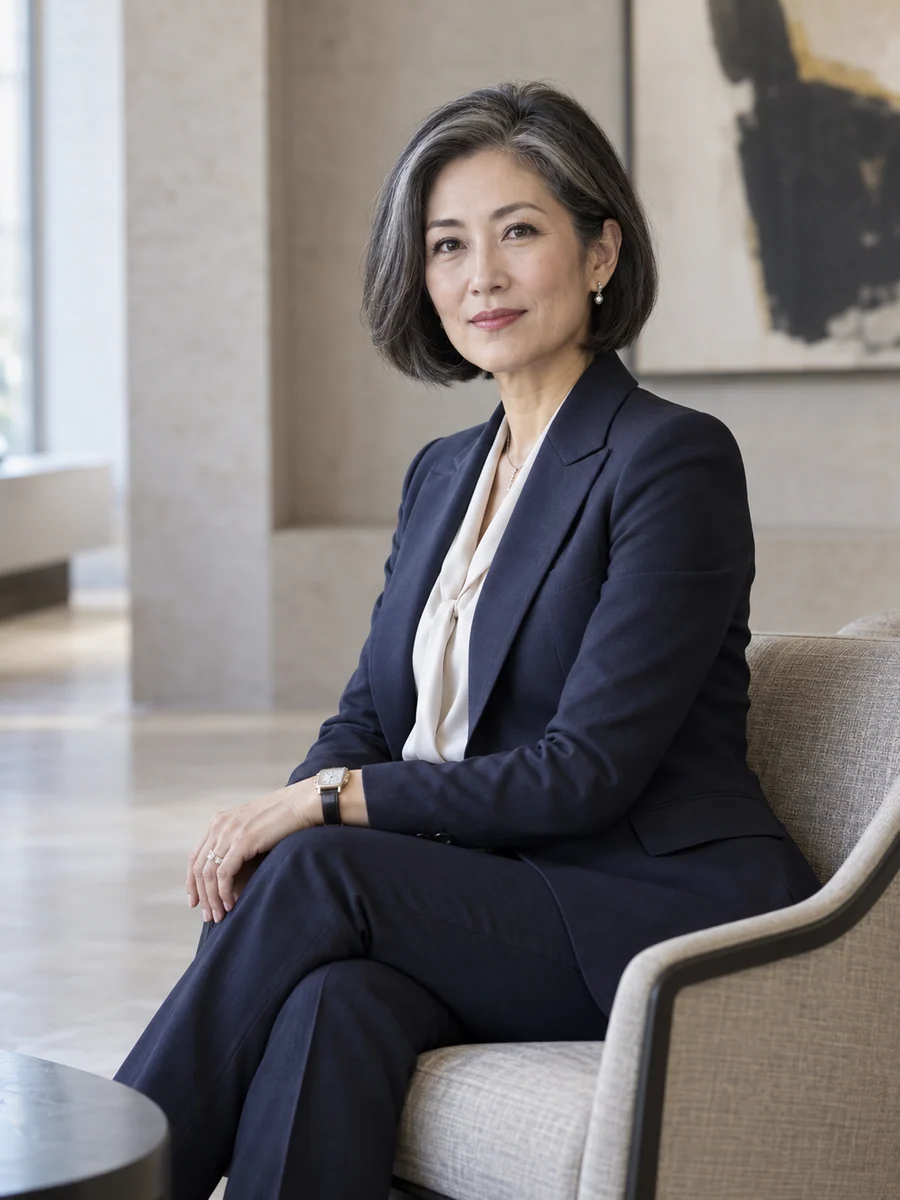
Portrait of Reina Mizukaede
Chief Information Officer

An introduction

Renting the system, still owning the promise


Technology for a Shikoku securities firm whose median customer is sixty-eight years old.

Japan

Open to Board appointments

Start a conversation
My approach

Our customers never chose our suppliers, our batch windows or our sign-in methods, yet each of those choices decides whether they can sell a holding on the morning they need to. I treat every system we rent, configure or switch off as a commitment the firm has made to someone at a counter in Kochi or a kitchen table in Imabari. Sales, compliance and operations own their decisions. My part is to make the limits of our technology plain before the morning they matter.

Customer assets in custody
¥1.12tn
186,000 active accounts at March 2026
Branches
27
Kagawa, Ehime, Tokushima, Kochi and Okayama
Annual technology budget
¥2.6bn
Including ¥1.4bn of shared back-office fees

Work worth discussing.

01Holding 1,180 accounts while the shared service caught up

At 07:40 on a Tuesday in November 2024, Kuranoe Information Systems told its 23 user firms that the overnight batch had stopped partway. Positions and cash balances still reflected the close of business on the previous Friday; Monday's trades and payments had not been posted. Kuranoe expected recovery at about eleven, long after our branches opened at nine.

Three options were on the table by eight. Tetsuo Hagimura, our head of retail sales, wanted to accept every order and have branch staff check Monday's trade confirmations by hand. Our compliance general manager preferred to suspend all orders until recovery, so that every customer was treated alike. I proposed a third course: accept orders from accounts with no trades or cash movements on Monday, whose Friday positions were still accurate, and hold the 1,180 accounts that had changed. We could identify them only because we keep our own copy of each day's executed orders. The president approved my proposal at 08:15. Its cost was that the most active customers, who might most want to act again, waited longest.

Branch managers received the list of held accounts by 08:40, with a script explaining why an order could not yet be taken and when we expected to call back. Kuranoe restored positions at 11:05, and we released the held accounts at 11:20 after reconciling a sample against our own records.

No settlement failed, and no order was accepted against shares a customer no longer held. We received 214 complaints, mostly from held customers, and two took their case to the industry's dispute-resolution service. We made no goodwill payments for price movements during the hold. Afterwards Kuranoe agreed to deliver a position file by 06:30 every morning whatever the state of the batch, and the rule we improvised is now written policy. Next time I would want that rule agreed with sales and compliance before any incident, and I would tell held customers by text message before nine rather than at the counter.

02Making passkeys compulsory and accepting a smaller online channel

In the spring of 2025, criminals used phishing sites to take over customer accounts at several Japanese online brokerages and place unauthorised trades. Our online channel had 41,000 enabled accounts, protected by a password and a one-time code sent by email or SMS. We had suffered no takeover, but our customers received the same phishing messages, and a one-time code can be typed into a fake site as easily as a password.

In May I recommended that from October every online sign-in require a passkey on the customer's phone or a hardware security key, with no SMS fallback. Daichi Morosawa, who runs our online services, argued for keeping SMS codes for customers whose phones could not hold a passkey; he expected several thousand to leave the channel. I accepted that the channel would shrink. A fallback that phishing could defeat would simply have become the route attackers used, and the president agreed.

We spent ¥118 million on development, 6,000 hardware keys and extra contact-centre staff. Advisers helped customers enrol during home visits and at branches through the summer. Customers who could not or would not enrol were offered telephone ordering at online commission rates for twelve months, which we estimated would forgo about ¥46 million of commission.

By the October deadline, 33,800 customers had enrolled passkeys and 2,100 were using hardware keys. Of the remaining 5,100, 3,400 chose telephone ordering and 1,700 did not respond; their online access was suspended until they enrolled at a branch. Contact-centre calls rose 31 per cent for nine weeks. We have had no online account takeover since, though I cannot claim the change alone explains that. I would have tested enrolment with customers over seventy-five before announcing the date. I would also have presented hardware keys as an equal option from the start, rather than as a fallback that some customers felt marked them out as less capable.
03Funding the inheritance desk before the customer app

In the autumn of 2022, the board had ¥640 million of change budget for the following year and two serious claims on it. Our planning office wanted a customer app ready for the new NISA in January 2024, aimed at younger investors who were opening accounts with online brokers. I proposed an inheritance case system first. We were handling about 2,900 inheritance transfers a year, with a median of 94 days from first contact to transfer. Heirs, many living in Osaka or Tokyo, received repeated requests for family-register documents, and only 38 per cent of the value we transferred stayed with us.

The stakes ran both ways. The app was part of how the firm would reach the next generation of customers; the inheritance work concerned assets that were already ours to lose and families at a difficult moment. Our head of planning disagreed strongly, and the president asked us to put both cases to the board. The board funded the inheritance system at ¥410 million and deferred the app by fourteen months.

We built a case system that listed the documents required for each family circumstance, checked family-register documents centrally rather than in branches, let heirs follow their case status by telephone or online, and sent transfer instructions to Kuranoe without rekeying. The estates desk in Takamatsu took over cases from branches, which some branch managers resented, because the heirs had been their relationships.

By 2025 the median transfer time had fallen to 41 days, and 52 per cent of transferred value stayed with Ogiwatari. The cost was real: the app arrived in March 2025, and we opened 9,800 new NISA accounts in 2024 against a plan of 16,000. I cannot know how many more the app would have brought. I would change two things. I underestimated how many heirs lived outside Shikoku and added online document submission late. I should also have offered a simple NISA application form in 2023 instead of deferring every digital feature to the full app.

A regional broker that rents its core systems still owns every promise those systems make to its customers.

I am executive officer and chief information officer of Ogiwatari Securities, a Takamatsu firm founded in 1921 that holds ¥1.12 trillion of customer assets across 186,000 active accounts. Our 27 branches serve Kagawa, Ehime, Tokushima, Kochi and Okayama, and the median account holder is sixty-eight. I lead 58 technology staff through four general managers, with about forty contractors and an annual budget of ¥2.6 billion. More than half of that budget pays for a shared back-office service that we use alongside 22 other securities firms. I report to the president and present system risk to our board; I am not a director.

I started in 1996 writing COBOL batch jobs for credit cooperatives at a Takamatsu computing centre. Card authorisation work in Matsuyama and seven years at an Osaka systems integrator showed me how financial systems fail, and how often a failure appears first at a counter rather than on a console. I came to Ogiwatari in 2013 to lead the move from our own mainframe onto the shared service, which went live over Golden Week in 2016. It removed most of our bespoke code, and it means our most important overnight processing now runs on someone else's machines.

This site describes three decisions taken inside that dependence. During a supplier batch failure, we accepted orders only from accounts whose positions we could still trust and held the rest until late morning. After the account takeovers that struck Japanese online brokerages in 2025, we made passkeys compulsory and moved thousands of customers to telephone ordering. Earlier, I asked the board to fund an inheritance case system before a customer app, and we missed the opening months of the new NISA as a result. Each choice cost somebody something, and I have tried to say who.

1,180 accounts waited so that nobody traded on stale positions

When the shared service could not post Monday's trades, we accepted orders from every account without activity that day and held the 1,180 that had traded or moved cash until 11:20. No settlement failed; 214 customers complained, and two took the matter to the industry's dispute-resolution service.

Passkeys became compulsory across 41,000 online accounts

From October 2025 we removed password-and-code sign-in with no SMS fallback. 3,400 customers moved to telephone ordering at online commission rates for a year, and 1,700 had online access suspended until they enrolled at a branch.

Inheritance transfers fell from 94 days to 41

The board funded a ¥410 million inheritance case system ahead of a customer app. Median transfer time fell to 41 days, but the app arrived only in March 2025, and we opened 9,800 new NISA accounts in 2024 against a plan of 16,000.

Current focus

I am renegotiating our shared-service contract, which runs to March 2028, so that the exit terms, the returned-data format and the 06:30 position file are each tested yearly rather than written once and assumed.

Conversations I welcome

I would consider one outside-director seat at a listed company in western Japan from April 2027, with about twenty-four days a year, subject to my president's consent and a review of the relationships set out on my readiness page.

The leadership record

Trusted with consequential decisions.

Formation

  • Bachelor of engineering in information scienceHanatsuge University · 1996
I argued against her that November morning, and I still think some of my held customers deserved better than a phone call at eleven. But nobody sold shares they no longer owned, and Reina came to the branch managers' meeting herself to explain why.
Tetsuo HagimuraHead of retail sales, Ogiwatari Securities
The full record ↗

Contact

I would consider one outside-director seat at a listed company in western Japan from April 2027, with about twenty-four days a year, subject to my president's consent and a review of the relationships set out on my readiness page.

  • Board appointments