Chief Strategy Officer India
The commercial count needed its conditions restored
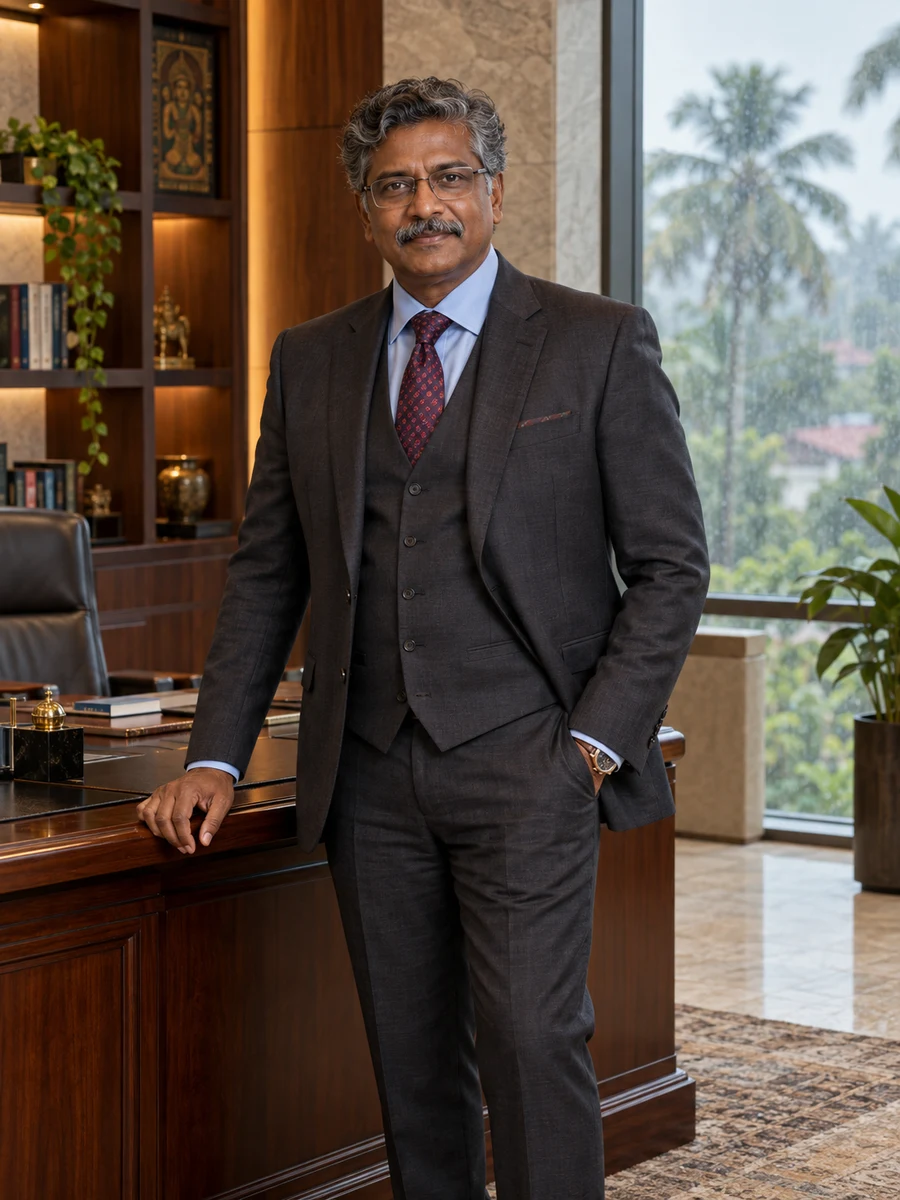
I began with measurement work because I liked the discipline of a result that could be traced to its conditions. Moving into planning introduced a different kind of number: a forecast of work the company might win. The danger was that commercial figures looked just as precise while carrying much weaker assumptions. My own capacity recommendation eventually exposed that difference. I had counted prospective jobs carefully and still failed to describe what performing them would require.
I completed physics studies at Naqzelvri Science College in May 1992 and joined Delvrqazi Measurement Services the following month. Eight people formed the supervised measurement group. I assisted with records and preparation without independent authority to select methods or release results. The work taught me to respect the conditions attached to a measurement and the responsibilities of qualified reviewers. I also learned that a customer might ask a question that the requested test did not answer, making the purpose of the work as important as the accuracy of an individual reading.
In April 2000 I became programme planner, coordinating thirteen colleagues within ₹1.4 crore annual planning and delivery-support expense. Client testing charges and laboratory approvals remained separate. Scheduling showed me that assignments sharing a broad name could occupy resources very differently. Preparation, duration and qualified staffing all affected what could be promised. I wanted to connect those practical conditions with decisions about which services the company should develop, rather than only allocate work after a commercial promise had been made.
Zaqvelri Power Evaluation appointed me portfolio-development manager in April 2008. Nine colleagues worked within ₹2.1 crore annual function expense. I examined prospective services and the evidence required to turn customer interest into a credible proposal. Laboratory head Suresh Qezvalthi helped distinguish equipment ownership from capability to perform a defined examination. I learned to ask what the recipient intended to do with a report, because a technically competent service could still be unsuitable for a particular procurement or acceptance route. Those questions should have made my later capacity error less likely, but the attraction of a simple opportunity count proved stronger than my earlier experience.
The head-of-strategic-development role in April 2015 brought twelve colleagues and ₹2.8 crore annual expense. In 2018 I supported a proposal that converted twenty-four prospective jobs into 960 chamber-hours by applying forty hours to every job. Sixteen fitted that assumption; eight required four hundred hours in the planning model. The revised total was 3,840 hours before additional allowances, beyond the 3,000 uncommitted hours in the reviewed window. I withdrew the recommendation and accepted that the error was in the strategic interpretation I had endorsed, not just in an operating detail somebody else had failed to supply.
Since April 2021 I have been CSO, reporting to CEO Kavita Vezqrali. Sixteen strategy employees work through three heads within ₹3.8 crore annual expense. Our ₹28 crore portfolio is a set of proposals for authorised consideration, not money delegated to my team. In 2023 we removed favourable-result fees from a proposed service offer. In 2025 we narrowed an overseas expansion account after learning that some intended recipients required a different accepted reporting route. Both cases required us to let the service’s underlying credibility change the shape of the commercial opportunity.
The company now employs 210 people and recorded ₹94 crore fee revenue for the year ending March 2026. Technical founders hold 51 percent, a domestic services investor 39 percent and an employee vehicle 10 percent. Neither an ownership interest nor a statutory director role accompanies my present employment. Laboratory methods, result release, professional competence and accreditation assessment are not strategy approvals. Nor does a favourable commercial review establish that a customer or authority will accept a report. Keeping those decisions separate is part of making the proposal accurate, rather than a disclaimer to add after its economics have been settled.
I would seek another strategy role in which a smaller credible market is preferable to a larger market supported by an unexamined service promise. A board contribution would require preparation beyond my experience of presenting recommendations to directors. I could help colleagues ask whether the business model preserves the conditions that make its service valuable. I would not offer to certify a laboratory or negotiate customer acceptance privately. The mistake that still guides me is the twenty-four-job forecast: it was complete as a count and incomplete as a basis for committing the company.
Open to Board appointments · Executive opportunities
Languages / Malayalam · English · Hindi
A leadership conviction
Growth is useful only if the evidence we sell remains possible to produce, impartial in its conclusion and usable for the customer’s actual purpose.
- Strategy employees
- 16
- Three heads; company employment totals 210
- Annual strategy function expense
- ₹3.8 crore
- ₹28 crore proposal portfolio requires separate approval
- Career since June 1992
- 34 years
- Measurement support through technical-services strategy
Education & credentials
- Bachelor of Science in Physics
- Naqzelvri Science College · 1992
Perspectives from colleagues
Benedict withdrew a recommendation he had supported when the workload behind the opportunity changed. He kept proposal value separate from permission to commit capital.
He lets duration, impartiality and recipient requirements change the commercial route. Strategy does not ask the laboratory to make the preferred market story true.