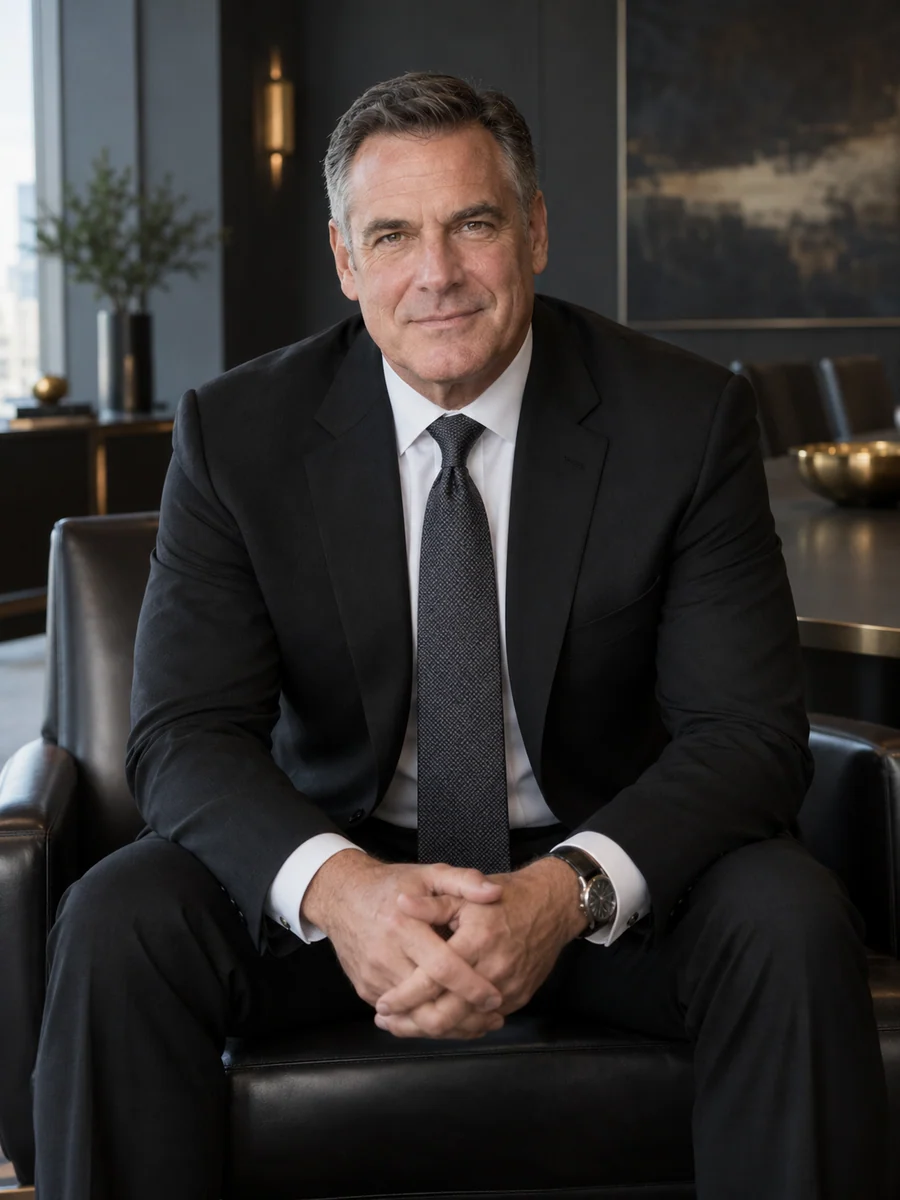
A treatment plant does not care which budget paid for its control system. It needs an alarm that sounds when a tank is high, a reading that agrees with the pipe and an operator who knows what the screen is not showing. I judge a technology proposal by whether it improves those three things, and I say so plainly when it does not.
Alexander Kesterby
Water customer connections
126,000
Plus 41,000 wastewater connections, December 2025
Water and wastewater systems
78
Southern and central Indiana and northern Kentucky
2026 technology budget
US$29.5M
US$17.8M capital and US$11.7M operating
Leadership, seen by others.
Alexander told us the acquired plant would stay staffed overnight far longer than our filing assumed, and he brought the cost to the board himself. He did not hide behind the network diagram; he explained what each month of delay was buying us.
Lorraine QuellbeckChief executive officer, Halverick Water Company
He would not change a control program until my operators had shown him what they did when it misbehaved at three in the morning. The screens changed more slowly than he wanted, and the crews trusted them afterwards.
Curtis AmbleforthFormer plant superintendent, Ellisbrae Regional Sewer District
Selected leadership work
Holding an acquired plant on local control for eleven months
In September 2020 Halverick completed the purchase of the water and wastewater systems of a small northern Kentucky city: a 3.2-million-gallon-a-day treatment plant, a wastewater plant and 6,800 connections.
Operational technology in a water utility earns its cost only when the people running the plants can trust what it measures and what it controls.
I am chief technology officer of Halverick Water Company, a privately held water and wastewater utility based in Columbus, Indiana. We run 51 drinking-water systems and 27 wastewater systems across southern and central Indiana and northern Kentucky, serving 126,000 water and 41,000 wastewater connections. Revenue in 2025 was US$162 million and about 590 people work here. I report to the chief executive and lead 82 colleagues through five managers: plant control systems, telemetry and instruments, infrastructure and security, business applications, and asset records. Treatment decisions stay with certified operators and our water-quality director; rate filings stay with finance and regulatory affairs.
I came to this work through control panels rather than software. After an electrical engineering degree I programmed process controls at a grain plant, then spent six years at an integrator writing logic for municipal pumping stations and filter galleries. A regional sewer district showed me what operators do when a screen and a pump disagree. Consulting on utility risk and resilience assessments then showed me how unevenly small and large utilities understood their own networks. I joined Halverick in 2019 to bring acquired systems into one control environment and became CTO in January 2023.
Three decisions show how I work. I kept an acquired plant on local control, staffed overnight, for eleven months instead of connecting it on the timetable in our acquisition filing. I asked for district flow meters to be field-tested before a leakage reduction went to the board, and about two-thirds of the claimed improvement disappeared. I recommended a subscription for our work and asset management system although the capital option would have earned a regulated return. Each recommendation took away something colleagues had reasonably counted on, and the cost is recorded with each case.
Eleven months of local control
An acquired Kentucky plant arrived with an internet-facing remote connection and undocumented logic. We closed the connection on day one and kept night operators for eleven months, at an extra US$410,000, before joining it through a rebuilt, segmented network.
A loss figure tested at the pipe
Analytics reported real losses falling from 61 to 44 gallons per connection per day. Field testing of 64 district meters found 13 reading low, and the verified figure was 55.
A subscription with its regulatory cost declared
The subscription retired servers we patched ourselves but moved about US$9.8 million out of the capital plan. Directors approved it knowing the forgone return and the open question over implementation costs.
Current focus
I am replacing the last eleven acquired control systems that still run on unsupported operating software, and writing a commissioning test that every new sensor must pass before its readings reach an operator's screen or a management report.
Conversations I welcome
I would welcome a first independent board seat at a regulated utility or an infrastructure-services company where plant technology carries real risk, with twenty-two days a year available, subject to my chief executive's consent and a full review of vendor and acquisition relationships.
The leadership record
Trusted with consequential decisions.
Formation
Bachelor of science in electrical engineeringHarlanmere Institute of Technology · 1997
Master of science in engineering management (part-time)Dunsmoor University · 2010
I would welcome a first independent board seat at a regulated utility or an infrastructure-services company where plant technology carries real risk, with twenty-two days a year available, subject to my chief executive's consent and a full review of vendor and acquisition relationships.