Chief Operating Officer United States
Learning operations from the coldest aisle
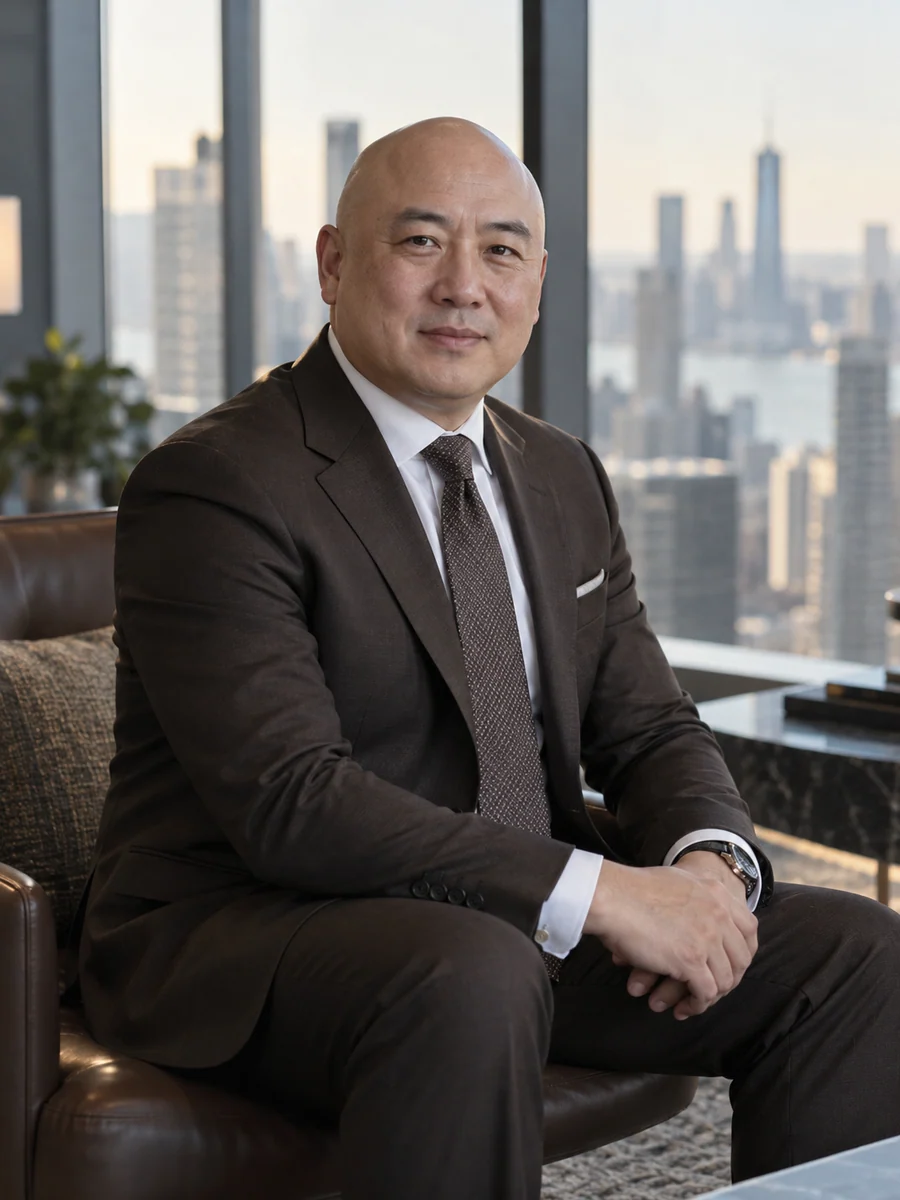
I learnt what a freezer does to a working night before I learnt anything about operations management. To pay for an industrial engineering degree at Wetherell State University, I spent three winters picking frozen orders on the night shift at a grocery warehouse in eastern Washington. By the fourth hour my hands were slow and my counting was worse. The older selectors knew to warm up before they made mistakes rather than after. I graduated in May 1995 with a lasting suspicion that productivity standards are usually written by people who are warm.
My first full-time post was as a transport planner at Garroway Foodservice in Spokane, which delivered to restaurants, schools and hospitals across eastern Washington and northern Idaho. I began with paper maps and moved our routes onto early routing software. The more useful discovery was how often a customer's delivery time was a habit rather than a need. When I became night distribution supervisor, I inherited the consequences: loaders squeezed into four hours, drivers leaving before dawn and overtime that our weekly report treated as a cost rather than as a choice someone had made.
In August 2002 I joined Fenwyck Creamery, a family-owned dairy processor near Salem, Oregon, to run its direct-store delivery branch. Our drivers stocked supermarket shelves themselves and took back product that had reached its code date, issuing the store a credit. Returns were my education in the link between ordering and waste. The routes with the highest returns were rarely in the weakest stores; they were the ones where drivers set quantities because commission followed delivered volume. Changing that took two years and a long negotiation with the drivers' union. The lesson I kept was that a waste figure usually describes an incentive somebody designed, and that the people closest to the shelf can see it long before a report does.
Hollisford hired me as director of transportation in April 2009. A retailer-owned cooperative was new to me. Our customers were our owners, and the board approving my budget was made up of grocers who received our trucks. I spent my first months riding to member stores, including a week in Alaska, where the barge sailing from Tacoma governs what we can promise stores in Anchorage and on the Kenai Peninsula. In 2014 I became vice-president of distribution, responsible for both distribution centres, and in 2016 I led the expansion of our perishables centre at Troutdale, Oregon.
From 2018 I ran the stores the cooperative operates itself, together with the services we sell to members. We take over stores when a member retires without a buyer and run them until an independent owner can be found. Running them showed me the retailer's side of every wholesale decision: the scheduling rules a store manager must follow, the spoilage a late truck causes and the cost of a recall in an aisle rather than in a spreadsheet. Oregon's predictive scheduling law applied to us, and I learnt to treat a posted schedule as a commitment to people rather than a draft.
I became chief operating officer in July 2021. I lead through six direct reports covering distribution, transportation, cooperative stores, member store services, engineering and facilities, and food safety and quality. Our director of food safety and quality can stop the shipment of any product without my approval, and I have not overruled her. My role is to connect what commercial and member-services colleagues promise with the people and equipment that must deliver it.
Since 2022 I have also served on the board of the Pugetvale Food Bank Network, a not-for-profit distributor supplying food banks in four Washington counties. It is my only directorship. Sitting as a director rather than presenting as an executive has shown me how little a board can see unless management chooses to show it, and how much depends on directors asking about work that never appears in their papers.
I am now looking for a first seat at a company where physical work and its risks deserve the board's attention. I would bring the habit of asking what a commitment costs the people who carry it out. I would also bring the awareness that most of my career has been spent inside one cooperative, and that another company's economics, ownership and workforce will need to be learnt rather than assumed.
Open to Board appointments
Languages / English · Spanish (working knowledge)
A leadership conviction
A delivery window, a written quota and a posted store schedule are each a promise about somebody's hours. I try to know whose hours they are before we make the promise, and to tell the people asking for it what it will cost. In a cooperative those people are also our owners, which makes candour about trade-offs a duty rather than a courtesy.
- Cooperative wholesale net sales
- US$2.14bn
- Fiscal year ended June 2026; cooperative-wide, not my budget
- Independent grocery stores supplied
- 293
- Owned by 214 member companies in five states
- Colleagues in my organisation
- 2,140
- Two distribution centres, fleet, eleven operated stores and food safety
Board & advisory record
Current appointments
Pugetvale Food Bank Network
Director, not-for-profit board
Operations and facilities committee
2022–present
Education & credentials
- Bachelor of science in industrial engineering
- Wetherell State University · 1995
Perspectives from colleagues
Jonathan brought the freezer cap to me three weeks before our busiest season and told me exactly what it would cost and who would object. He was right about both, and he never pretended the cost had disappeared once the injuries came down.
I argued against the delivery fees because my stores take two trucks a week and had nowhere to move. He came to see my backroom and supported the exemption. I still disagree with parts of the scheme, but I have never doubted the figures he gave us.
Most managers come into the freezer for a photograph. He worked a full pick with us during peak and asked what the fourth hour felt like. The rotation was his decision, but the extra warm-up break was our idea, and he said so to everyone.