Skip to website
Rukmini VezqavriChief Human Resources Officer
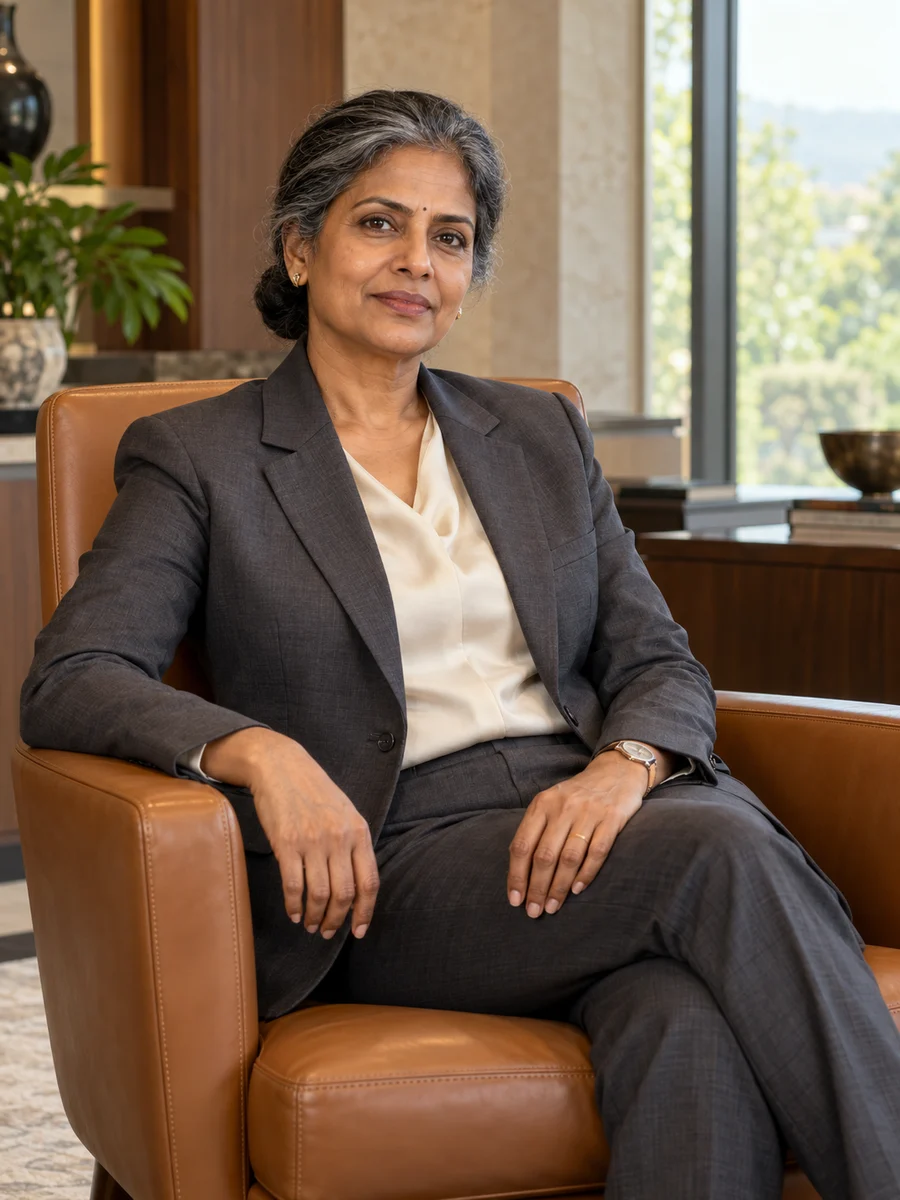
Portrait of Rukmini Vezqavri

Chief Human Resources Officer · India

RukminiVezqavri

The unbilled judgement still belongs in the career

I work on the employment choices around professional judgement.

Open to
  • Board appointments
  • Advisory roles
  • Speaking invitations

The unbilled judgement still belongs in the career

I endorsed an appraisal framework that gave client-billable assignment time too much influence. Latha asked how it recognised the internal technical review we had instructed colleagues to undertake. The work mattered to the enterprise, but the assessment could make it look like time missing from a successful year. We reopened the records of twenty-eight affected employees. Six ratings changed and twenty-two were confirmed. The resulting ₹18 lakh pay correction belonged to that review, not a claim that every unbilled hour had the same value.

I am Rukmini Vezqavri, the fictional CHRO of Zaqvermi Asset Surveys in Coimbatore. Our 312-person enterprise provides infrastructure asset-condition survey, advisory and asset-record services. I lead fourteen HR colleagues through three leads and report to CEO Farhan Qezomthi. My annual function expense is ₹2.4 crore. The technical judgement remains with qualified professionals; my work concerns how employment responsibilities, recognition and career choices support that judgement without pretending that an HR title can confer it.

The appraisal correction happened in 2018, before my CHRO appointment. It taught me to ask whether the organisation's account of contribution matches the work it actually commissions. Since then, I have examined predecessor service after an acquisition, created a choice between principal technical and people-management responsibilities, required a fair response to client requests for staff removal and developed a permission process for professional portfolios. These decisions all carry costs. Recognition can require more administration, a slower response or a different salary commitment. The alternative is to praise expertise while making the employment system reward something else.

Acquired colleagues retained a service history to examine

A voluntary recognition review confirmed predecessor service for thirty-three of forty-two employees. Nine records remained unresolved, with ₹27 lakh allocated for the additional recognition cost.

Senior technical responsibility did not require a management detour

Of nineteen professionals considering their next role, eight chose principal technical positions, seven a people-management route and four remained undecided. The eight principal roles added ₹56 lakh annual expense.

Professional visibility received a bounded permission route

Thirty-six portfolio requests produced fourteen approved sanitised accounts, eight authorship clarifications, six pending client permissions and eight refusals for confidentiality reasons.

Current focus

I am examining how technical employers recognise contribution without confusing customer approval, internal appraisal and professional authority.

Conversations I welcome

People-leadership and professional-career conversations, with possible first-board discussions after preparation and capacity assessment.
28 years

People-function experience

Fictional continuous career from July 1998

312 people

Enterprise employees

March 2026; external contractors excluded

14 colleagues

HR function

₹2.4 crore funds the function annually; three reporting leads

₹86 crore

FY2026 enterprise revenue

Survey/advisory and asset-record services

I want the organisation to recognise the work it asks a professional to do, including the work that does not become a separate client invoice. A career should offer responsibility that fits the contribution, with an honest account of who can judge technical competence and who can decide the employment arrangement around it.

Rukmini Vezqavri

Chief Human Resources Officer

Areas of stewardship

Where accountability has been mine.

  1. IRecognition of technical contribution
  2. IIProfessional career architecture
  3. IIIPeople integration after acquisition
  4. IVFair client-interface employment decisions

Selected work

Decisions, and what they changed.

I

Reopening the ratings that my framework had narrowed

In 2018 I endorsed an appraisal framework with a strong emphasis on client-billable assignment time.

The full account

II

Letting predecessor service remain part of the acquisition account

An acquisition in 2022 brought forty-two employees into the enterprise.

The full account

III

Funding technical seniority without requiring a team to manage

In 2023 nineteen experienced professionals considered their next role within the survey enterprise.

The full account

In the words of others

Trusted by those who appoint.

In this fictional career review, Rukmini made the cost of the principal roles and the continuing need for managers visible together. She did not present a new title as a complete answer to capability. The recommendation explained the different responsibilities the enterprise was choosing to fund.
Farhan QezomthiFictional CEO, Zaqvermi Asset Surveys
This invented colleague observation concerns the appraisal correction. Rukmini accepted that the framework she had endorsed did not adequately recognise internal review we had instructed. She reopened the employment account while leaving the assessment of technical competence with its proper owners.
Latha TeqzavriFictional technical director, Zaqvermi Asset Surveys

The journal

Perspective, set down with care.

An invitation

Contact

People-leadership and professional-career conversations, with possible first-board discussions after preparation and capacity assessment.

Open to
  • Board appointments
  • Advisory roles
  • Speaking invitations

office@rukminivezqavri.example