Skip to website
Sanjay TezqevmiChief Financial Officer
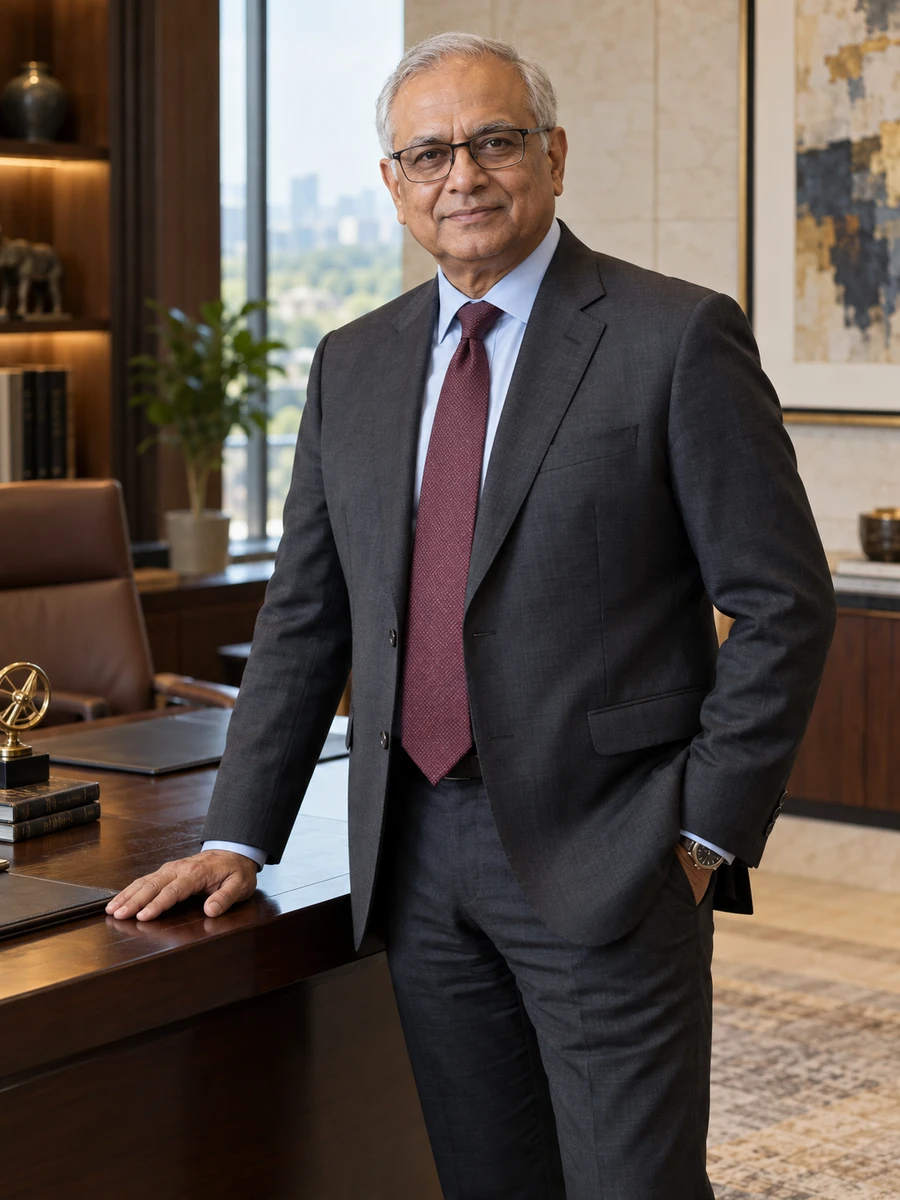
Portrait of Sanjay Tezqevmi

Chief Financial Officer · India

SanjayTezqevmi

Follow the decision through to the cash it changes

The tables cost ₹48 lakh to buy. I endorsed a ₹60 lakh management budget for the lot, accepting a restoration basis that had not been grounded well enough in inspection.

Open to
  • Board appointments
  • Advisory roles
  • Speaking invitations

Follow the decision through to the cash it changes

I lead finance at Zhequrvi Renewed Furniture in Gwalior. We sell refurbished household wooden furniture through six showrooms and online, with workshops in Gwalior and Jhansi. The invented company employs 280 people and recorded ₹112 crore revenue and ₹7.8 crore operating profit for FY ending March 2026. Twenty-three finance colleagues work through three heads within ₹3.9 crore annual function expense.

My forty-one years began in household-goods cost accounting. Refurbished retail later taught me to examine the work between acquiring an item and offering it for sale. The same attention matters when management considers closing a warehouse, promising a future purchase from a customer or accelerating a supplier payment. A prominent amount needs to be understood in relation to the choice it is being asked to support.

In 2021 I endorsed a ₹60 lakh management budget for a 240-table lot without a sufficiently grounded restoration assessment. Purchase cost was ₹48 lakh, restoration ₹22 lakh and freight ₹8 lakh, giving ₹78 lakh of specified lot cost. The ₹18 lakh overrun belonged in my account of the decision. ₹20,000 purchase cost per table could not stand for the ₹32,500 specified cost per unit after that work.

An allocated expense did not become an equal closure saving

A warehouse carried ₹1.32 crore of annual allocated expense, but only ₹54 lakh was avoidable in the first-year scenario. After ₹18 lakh transition cost, the model showed ₹36 lakh potential before further unmodelled service effects. The CEO deferred closure pending service assessment; no achieved saving is claimed.

A fixed future purchase promise faced an uncertain recovery

For 1,000 eligible items, a proposed ₹9,000 future buyback would mean ₹90 lakh outflow if all returned. Assumed ₹6,000 resale per item gave ₹60 lakh gross recovery, leaving ₹30 lakh before transport and refurbishment. The board rejected the fixed promise and funded assessment of condition-based quotations.

A discount needed to retain the cost of taking it

A 2% discount on a ₹1 crore invoice offered ₹2 lakh gross. Quoted funding of ₹1.4 lakh and processing of ₹0.3 lakh left ₹0.3 lakh modelled advantage on the aligned period. We did not make early payment automatic from the headline discount.

Current focus

Decision accounts that distinguish specified refurbishment cost, avoidable cash, conditional recoveries and owner liquidity from the larger figures that can obscure them. Finance supports the choice; operations retains acceptance and the board retains material commitments.

Conversations I welcome

A first outside non-executive contribution after relationship, eligibility and capacity review. I hold 0.8% within employee ownership and no statutory seat. Fictional databank registration and proficiency assessment are complete; twenty-four provisional days remain subject to the actual appointment and employer consent.

23

Finance colleagues

Three heads within a 280-person refurbished-furniture retailer

₹3.9 crore

Annual function expense

Finance responsibility; material capital remains with the board

41 years

Finance career

Cost-accounting entry in July 1985; refurbished retail since September 2003

The cheapest purchase is not necessarily the least costly item to make ready, and an expense allocated to a location is not necessarily cash the enterprise can avoid. I want the financial account to follow the proposed choice closely enough that management can see which amount changes, which assumption remains uncertain and whose responsibility the decision actually is.

Sanjay Tezqevmi

Chief Financial Officer

Areas of stewardship

Where accountability has been mine.

  1. IRefurbishment decision costing
  2. IIAvoidable cash and closure scenarios
  3. IIIFuture recovery assumptions
  4. IVFunding choices and ownership liquidity

Selected work

Decisions, and what they changed.

I

Owning the restoration budget I had allowed purchase price to dominate

In 2021 we acquired a lot of 240 tables for ₹48 lakh.

The full account

II

Replacing the warehouse's allocated total with a decision-specific cash scenario

A 2022 warehouse closure proposal began with ₹1.32 crore of annual allocated expense.

The full account

III

Testing a fixed future buyback against the recovery it assumed

In 2023 commercial colleagues proposed a future buyback promise of ₹9,000 per eligible item after three years for a group of 1,000 items.

The full account

In the words of others

Trusted by those who appoint.

Sanjay made the warehouse proposal harder to simplify and easier to decide responsibly. He kept the service work still needed beside the narrower cash scenario rather than announce a saving we had not achieved.
Ira NevqelmiCEO, Zhequrvi Renewed Furniture; fictional colleague
He retained his endorsement in the account of the restoration overrun. That let us examine the budget basis and the operating work together without pretending a cost calculation could replace acceptance of the furniture.
Vikram DeqzuriOperations Director, Zhequrvi Renewed Furniture; fictional colleague

The journal

Perspective, set down with care.

An invitation

Contact

A first outside non-executive contribution after relationship, eligibility and capacity review. I hold 0.8% within employee ownership and no statutory seat. Fictional databank registration and proficiency assessment are complete; twenty-four provisional days remain subject to the actual appointment and employer consent.

Open to
  • Board appointments
  • Advisory roles
  • Speaking invitations

office@sanjaytezqevmi.example