Skip to website
Kunal ZhevqariLeadership review 2026

Leadership review

Kunal Zhevqari

Chief Strategy Officer · India

Choose the business behind the market opportunity

Open to
  • Board appointments
  • Advisory roles
  • Speaking invitations
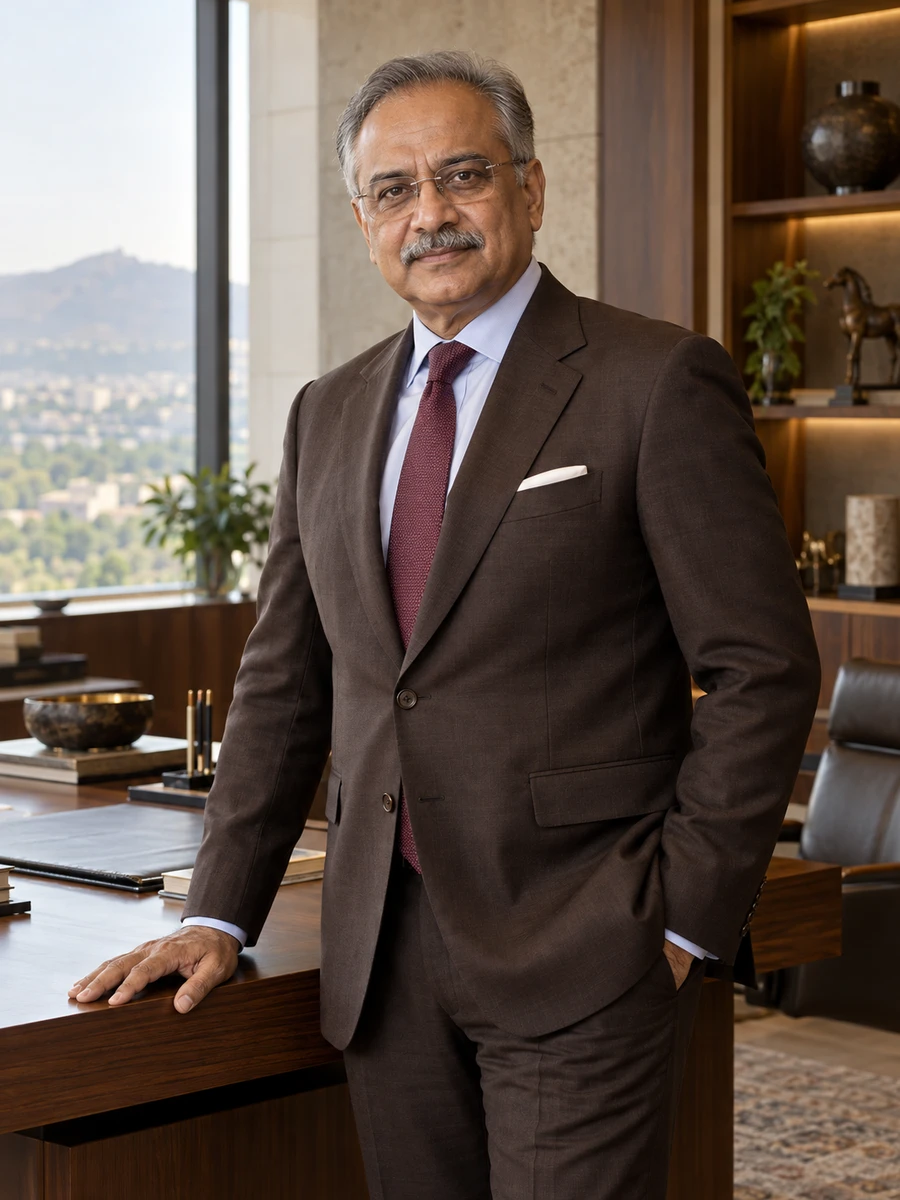
Portrait of Kunal Zhevqari

Choose the business behind the market opportunity

I lead strategy at Lerqavhi Workholding in Nashik. We manufacture mechanical toggle clamps for industrial fixtures, with production in Aurangabad. Our 680-person company recorded ₹296 crore revenue and ₹25.2 crore operating profit for FY ending March 2026. Eighteen strategy colleagues work through three heads within ₹5.8 crore annual expense. I report to CEO Maya Zerqavli; investment approvals, product suitability and financial reporting remain with their responsible owners.

My starting question is what kind of business we would have to become to serve an opportunity. A distributor route and a wholly owned local subsidiary do not differ only in their opening cost. An acquisition's revenue may include trade already passing through our channels. A territory we stop pursuing may still contain commitments that deserve attention. Strategy has to make those relationships understandable before a large market number becomes a reason to act.

In 2016 I supported a paper describing ₹120 crore of demand as a merchant opportunity. It included ₹45 crore of captive internal supply that independent sellers could not simply pursue. The corrected merchant estimate was ₹75 crore, still a market estimate rather than our revenue forecast. Research and replanning cost ₹38 lakh, and a proposed ₹36 crore expansion was held. I do not call the unspent proposal a saving. I retain the original mistake because it changed how I examine the boundary around an opportunity.

Two entry routes described different institutions

We selected a distributor-led launch with ₹2.4 crore approved scope over a ₹14 crore local-subsidiary proposal. The routes differed in staffing, control and reach. Four of six distributors placed repeat orders in the first eighteen months; two did not. Neither the budget difference nor the repeat count established a completed return.

Acquisition revenue was not automatically new reach

A catalogue reseller's ₹31 crore annual sales included ₹18 crore sourced through our existing channel. We declined the ₹22 crore acquisition after ₹64 lakh diligence. The overlap informed the strategic question without becoming an assumption that every rupee would be cannibalised.

Withdrawal left work that still belonged to the enterprise

A two-territory distributor exit retained eleven open commitments. Seven were completed while four remained under review. Finance approved an ₹84 lakh transition provision; that was not a statement that the full amount had been spent or that the exit was finished.

Current focus

Making market entry, application coverage and geographic withdrawal part of one coherent account of the business we intend to run. That includes the roles, relationships and obligations a route creates, and the evidence still needed before the next commitment.

Conversations I welcome

One carefully assessed first outside board role where commercial strategy can complement operating, financial and technical expertise. I have no equity or statutory seat; fictional registration and assessment completion are preparation facts. Twenty provisional days depend on employer consent, relationship review and the actual appointment demands.

Highlights

The demand number was real; my commercial boundary was wrong

39 years

Commercial and strategy career

Continuous employment from July 1987; CSO since January 2021

18

Strategy colleagues

Three heads within a 680-person manufacturing enterprise

₹5.8 crore

Annual strategy expense

Separate from investment approval and the company's revenue

A letter from Kunal Zhevqari

Dear reader,

Portrait of Kunal Zhevqari

A market can be large while the opportunity available to our particular business is smaller. I want a strategy to explain the route by which we would serve that opportunity, the institution that route requires and the commitments it creates. I have had to narrow a market paper I wrote, and I expect a withdrawal decision to be examined as carefully as an entry proposal.

The demand number was not invented. The boundary I placed around it was wrong. In 2016 my paper described ₹120 crore as an opportunity for independent suppliers, even though ₹45 crore related to captive internal supply. Correcting the merchant estimate to ₹75 crore required us to reconsider the expansion case I had supported. We incurred ₹38 lakh in research and replanning, and held a proposed ₹36 crore investment. The unspent proposal was not a saving. The error was my willingness to let a broad demand account stand for the market we could actually pursue.

Kunal Zhevqari

Chief Strategy Officer
Strategic priorities

Where I focus my leadership.

Performance

What the priorities delivered.

Priority outcome 01

Removing captive supply from the opportunity I had asked us to pursue

In 2016 I supported a market paper describing ₹120 crore of demand as an opportunity for independent suppliers. Within that account, ₹45 crore was captive internal supply. It was not available through the merchant relationships assumed by the proposal. The corrected merchant estimate was ₹75 crore, still an estimate of a market rather than a forecast of Lerqavhi's own revenue. The paper informed a proposed ₹36 crore expansion. We held that proposal and spent ₹38 lakh on research and replanning. The investment had not been committed, so I do not describe its face value as money saved. Nor do I turn the corrected market boundary into proof that the enterprise could never serve any part of the excluded activity under a different future arrangement. I had allowed a demand total to answer a more specific commercial question. The relevant issue was not merely how much of the product category existed. It was which buyers an independent supplier could pursue through the route and relationships the proposal contemplated. The original account gave the investment a larger apparent opportunity than that defined route supported. I worked with commercial and finance colleagues to restate the boundary and reconsider the recommendation. Investment authority remained with the authorised decision-makers. My responsibility was to present an opportunity account they could assess, including the error in the earlier version and the cost of correcting it. The outcome was a held proposal and a more limited market estimate, not a completed new strategy or realised benefit. I retain this case because the mistake was mine to explain. A persuasive strategic paper should let its reader see the relationship between total activity, accessible opportunity and the enterprise's own possible participation, rather than allow the largest number to stand for all three.

Priority outcome 02

Choosing a distributor route without calling the smaller budget a saving

In 2022 we selected a distributor-led entry programme with ₹2.4 crore approved launch scope. The alternative was a ₹14 crore proposal for a wholly owned local subsidiary. The two routes differed in staffing, control and customer reach, so subtracting the budgets would not have described an achieved saving for the same business outcome. The distributor route let us begin through partners who carried local commercial relationships. It also meant accepting limits on direct control and learning through an intermediary. A subsidiary would have required a different institution, with its own people and continuing management work. I wanted the choice framed around those responsibilities before the discussion settled on the smaller opening number. I recommended the partner route as the next commitment we could support, rather than as proof that direct presence would never be appropriate. Commercial, finance and qualified jurisdictional owners retained their respective decisions. Product suitability remained a technical responsibility; entry into a territory did not confer approval for every customer application. During the first eighteen months, four of six distributors placed repeat orders and two did not. That mixed record mattered. Repeat activity suggested a relationship worth examining further, but it did not establish a final return on the programme or show that the alternative route would have performed worse. The two inactive relationships remained in the account. The case changed how I explained an entry recommendation. I included the control we would not have, the evidence we expected to learn and the work needed to support the chosen partners. A route can be appropriate for the present stage while retaining weaknesses that need attention. The review should examine those weaknesses before treating the original choice as permission to extend indefinitely.

Priority outcome 03

Declining a reseller acquisition whose turnover overlapped our existing channel

A 2023 acquisition proposal offered a catalogue reseller for ₹22 crore. The reseller recorded ₹31 crore annual sales, of which ₹18 crore was sourced through our existing channel. That relationship did not make the reseller's business unreal, but it made the headline turnover an incomplete account of what ownership would add to our commercial system. We spent ₹64 lakh on diligence and declined the transaction. I worked with finance and commercial colleagues to examine the intended strategic contribution. The question was whether the enterprise would gain the reach, relationships or capabilities the proposal relied on, and what new obligations it would assume. Reported turnover alone could not settle that question. The overlap was not a mechanical valuation formula. I did not subtract ₹18 crore from the purchase price or assume every overlapping sale would be lost after acquisition. Customers and intermediaries can respond differently to a change of ownership, and the reviewed account did not establish those outcomes. It did show that some of the apparent commercial addition already touched our existing route. I recommended declining because the evidenced fit did not justify the commitment we were being asked to make. The reseller could remain a viable business for its owners or another buyer. Our refusal was an enterprise-specific judgement, not a declaration that catalogue distribution lacked value. The diligence cost remained a cost. I did not convert the unspent acquisition price into a saving or claim that rejecting the deal created an equivalent return elsewhere. The useful result was a clearer boundary around the growth account we were prepared to support. An acquisition recommendation should explain the change in the combined business, including its relationships, rather than place two revenue totals beside each other and let their addition imply the strategy.

Priority outcome 04

Giving four application sectors an initial commitment while leaving eight undecided

In 2024 we screened twelve application sectors for broader customer coverage. We selected four for an initial programme, deferred eight and approved ₹3.8 crore for the first stage of a three-year direction. The first-stage decision did not mean that all twelve had been funded or that the eight deferred sectors were unattractive. The problem was how to sequence commercial learning and support. A long list of possible applications could make the strategy look comprehensive while leaving the enterprise unsure where to put its immediate attention. I wanted a smaller set in which the customer questions, partner work and internal responsibilities could be examined deliberately. Technical owners retained suitability decisions for particular fixtures and uses. Our mechanical toggle clamps were not represented as lifting equipment, and a sector's presence in a strategic screen did not approve every application within it. Commercial and operating colleagues helped define the work required to serve the chosen areas. The programme was an organisational commitment, not a substitute for those assessments. I supported the four-sector first stage and kept the deferred group visible in the strategic review. The later sequence would depend on evidence and capacity; it was not an automatic continuation already earned by the first approval. The direction could change if the learning challenged the original assumptions. The outcome in this account is an approved first stage with a defined focus. It contains no invented completed revenue, market share or universal product acceptance. It also retains the cost of waiting: the enterprise would learn less immediately about the eight deferred sectors. Strategy needs to explain that consequence as well as the benefit of focus. A staged decision should make the next commitment intelligible without pretending that the rest of the future has already been decided.

Priority outcome 05

Leaving two territories while keeping four unfinished commitments in view

In 2025 we began withdrawing from two overseas distributor territories. The direction was a strategic decision about where the enterprise would continue to develop its commercial presence. It did not extinguish the relationships and commitments already created there. Eleven open commitments remained in the transition account. Seven had been completed at the point reviewed, while four still required attention. Finance approved an ₹84 lakh transition provision. That figure was not a statement that the entire provision had been spent, nor was the completion of seven items permission to describe the withdrawal as finished. The remaining four stayed visible in the review. My role was to explain the direction and ensure its consequences were part of the strategic account. Commercial, finance and qualified legal owners retained contract, accounting and jurisdictional decisions. Technical or support questions needed their proper specialists. A CSO's preference to leave a market does not settle every obligation attached to a previous commitment. The difficult part was to resist the appeal of a clean announcement. A map with fewer active territories can suggest that attention has already moved elsewhere. The underlying work may take longer. I wanted the enterprise to distinguish a decision to stop developing new business from the orderly completion of what it had already accepted. This case has an unfinished outcome by design. It does not claim a seamless exit, universal customer satisfaction or a measured financial benefit from withdrawal. It shows a direction being carried through with costs and outstanding work still attached. I would rather present that mixed state clearly than make a strategic choice look more complete by removing the part that still requires management attention.

Stakeholder voices

What those I have served alongside say.

Kunal explained the control we would give up through the distributor route alongside the commitment it required. He kept the two relationships without repeat orders in our review instead of presenting only the four that progressed.
Maya ZerqavliCEO, Lerqavhi Workholding; fictional colleague
He distinguished the reseller's turnover from the commercial reach the acquisition would add. The diligence cost stayed in the account when we declined, and the unspent purchase price did not become a claimed benefit.
Dev MezvuliCFO, Lerqavhi Workholding; fictional colleague

Outlook

Perspectives on what comes next.

An invitation

Contact

One carefully assessed first outside board role where commercial strategy can complement operating, financial and technical expertise. I have no equity or statutory seat; fictional registration and assessment completion are preparation facts. Twenty provisional days depend on employer consent, relationship review and the actual appointment demands.

Open to
  • Board appointments
  • Advisory roles
  • Speaking invitations

office@kunalzhevqari.example