Arvind ZevqethiChief Technology Officer
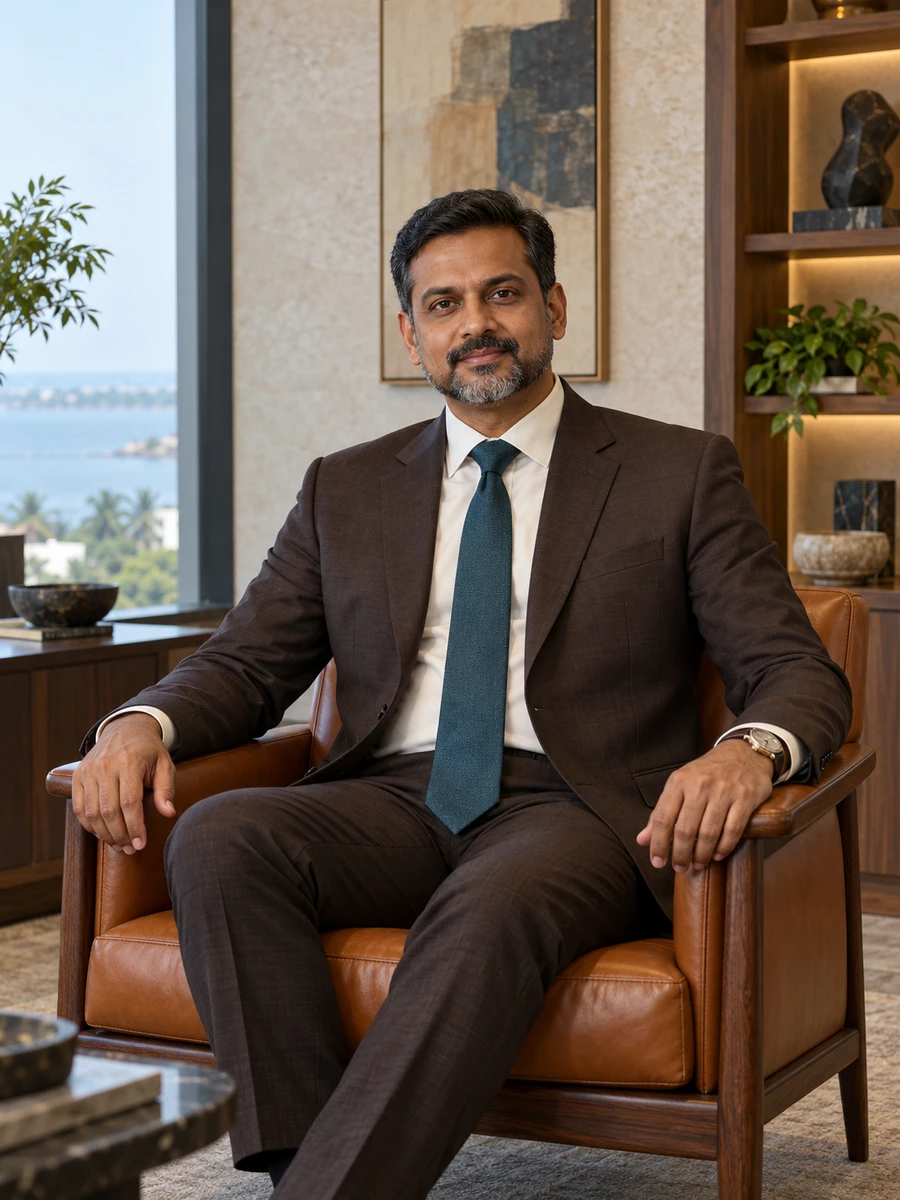
Portrait of Arvind Zevqethi

Chief Technology Officer · India

ArvindZevqethi

Let the use conditions shape the engineering claim

The first mount remained still during the demonstration.

Open to
  • Board appointments
  • Advisory roles
  • Speaking invitations

The teaching room asks more of a design than the demonstration

I am CTO of Tevzuni Dental Simulation Works in Mangaluru. We develop bench-mounted simulators and practice rigs for dental education, serving 28 college customers. I lead 38 engineers through four heads, with ₹10.2 crore annual engineering expense and a separate ₹3.4 crore approved capital allocation. Our company employs 185 people and recorded ₹58 crore revenue and ₹6.1 crore operating profit for FY ending March 2026. These figures describe different scopes; the enterprise result is not solely an engineering achievement.

My career began in mechanical design for workshop instruments in 2002. I moved into dental teaching equipment in 2012 and learned that a functioning mechanism still needed to be considered in the hands of different users and within the rhythm of a teaching room. Educators decide what and how students should learn. My role is to make the equipment's engineering behaviour intelligible enough for those decisions, without claiming that a bench test proves clinical competence or improved patient care.

The cases here include a mount I approved too early, a geometry that did not serve every participant, force-display checks, a shared-room response problem and a cassette installation that remains under review after redesign. They include held units, extra engineering expense and a release that did not proceed. I want a prospective collaborator to see which question each test answered, which conditions were represented and what remained unsettled after the result was reported.

Repeated loading challenged my initial approval

An initial static check had looked satisfactory, but a later forty-rig review found 28 holding position and twelve tilting under the repeated-load test. We held 240 preproduction units before shipment, spent ₹62 lakh on redesign and accepted a seven-week delay.

The participant mix changed the geometry decision

A positioning review included 48 right-handed and 24 left-handed participants. All 48 in the first group and eighteen in the second met the reviewed positioning criterion; six left-handed participants did not. We funded ₹84 lakh of adjustable-mount work rather than describe the first geometry as suitable for everyone.

A better latch still had unresolved installations

The original cassette review recorded 1,092 correctly seated installations and 108 mis-seated ones in 1,200 attempts. After ₹58 lakh of latch redesign, a separate 200-attempt review had 196 correct and four unresolved results. Broader release remained paused; the unequal samples were not treated as proof of a universal improvement.

Current focus

I am connecting mechanical, sensing and controller decisions with the specific conditions of use they are meant to support. The test population, repeated-load sequence and shared-room workload need to remain visible in the engineering account. A smaller or less favourable conclusion can be the responsible one when the evidence does not cover every user or operating condition.

Conversations I welcome

I am considering a first outside board contribution in specialist equipment or educational technology, subject to employer consent and a review of my 4% shareholding and commercial relationships. I hold no statutory directorship. The fictional record includes June 2026 IICA registration, an unfinished assessment and no exemption. Twenty-one days is a provisional commitment, not a conclusion about appointment suitability.

38

Engineers through four heads

₹10.2 crore annual engineering expense

24 years

From mechanical drawings to CTO responsibility

Five continuous appointments beginning July 2002

28

College customers served by the company

185 employees; ₹58 crore FY 2026 company revenue

I want the engineering question to resemble the conditions in which the teaching equipment will be used. A rig that holds still once may move after repeated loading. A mount that suits one hand may obstruct another. A fast isolated response may become uneven in a room full of stations. Those are different questions, and a successful demonstration should not answer them by implication.

Arvind Zevqethi

Chief Technology Officer

Areas of stewardship

Where accountability has been mine.

  1. IRepeated-use mechanical evaluation
  2. IIInclusive positioning geometry
  3. IIIReference-based sensing checks
  4. IVShared-room response and installation evidence

Selected work

Decisions, and what they changed.

I

Reopening the mount approval after repeated loading

In 2018 I approved a simulator-mount geometry after an initial static check appeared satisfactory.

The full account

II

Changing the mount when six left-handed participants could not use the reviewed position

A 2022 positioning review included seventy-two participants: forty-eight right-handed and twenty-four left-handed.

The full account

III

Keeping the three failed force-display points in the acceptance discussion

In 2023 we checked an instrumented teaching rig's force display against twelve specified reference points.

The full account

In the words of others

Trusted by those who appoint.

Arvind kept the four unresolved cassette installations in the release discussion after we had already paid for redesign. He explained the next question clearly without allowing the expenditure to become a reason to declare the product finished.
Saira QavthuriCEO, Tevzuni Dental Simulation Works; fictional colleague
Arvind looked at the six left-handed participants inside the overall result. He brought the geometry back into the engineering discussion rather than assuming the teaching team should make an unresolved limitation disappear through instructions.
Meghna QervesiEducation Adviser, Tevzuni Dental Simulation Works; fictional colleague

The journal

Perspective, set down with care.

An invitation

Contact

I am considering a first outside board contribution in specialist equipment or educational technology, subject to employer consent and a review of my 4% shareholding and commercial relationships. I hold no statutory directorship. The fictional record includes June 2026 IICA registration, an unfinished assessment and no exemption. Twenty-one days is a provisional commitment, not a conclusion about appointment suitability.

Open to
  • Board appointments
  • Advisory roles
  • Speaking invitations

office@arvindzevqethi.example