Skip to website
Jaswant RehqavriChief Data Officer
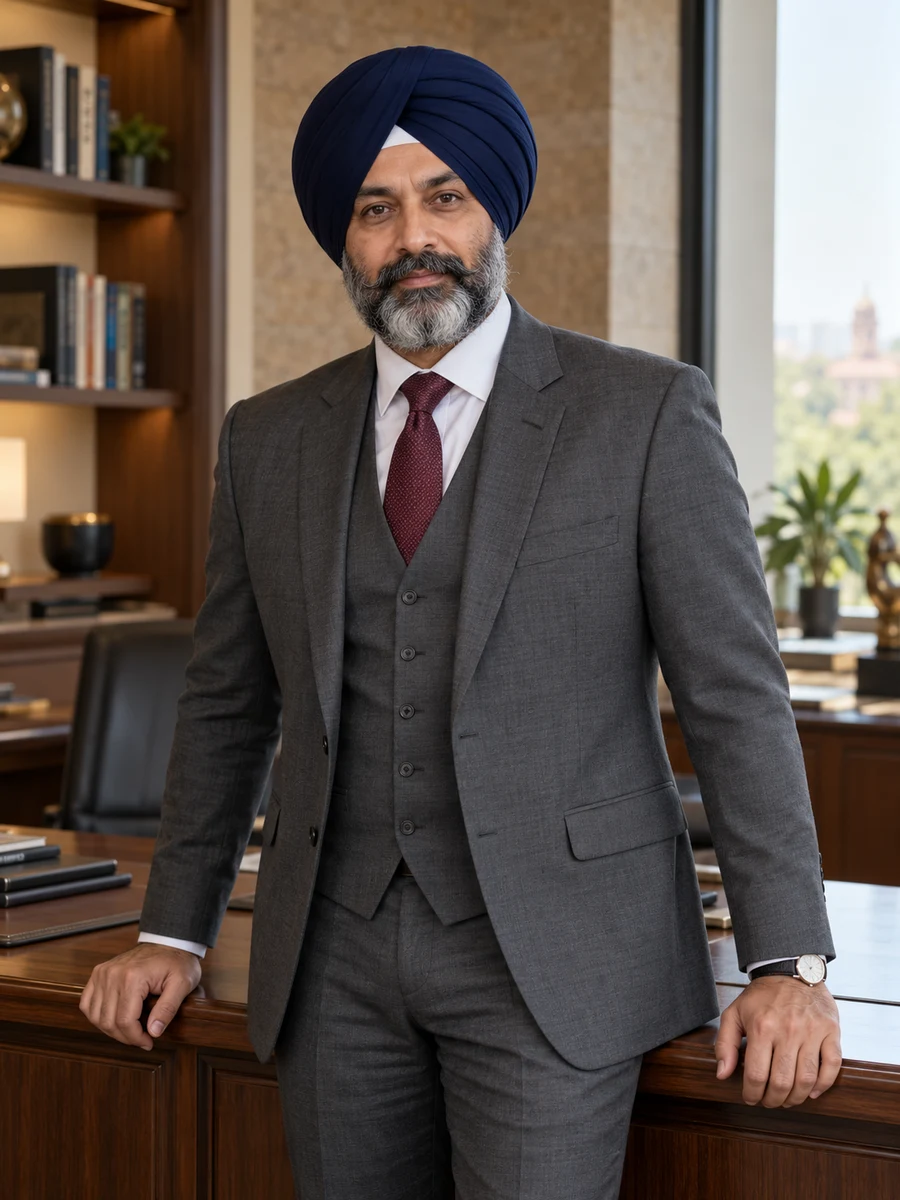
Portrait of Jaswant Rehqavri

Chief Data Officer · India

JaswantRehqavri

The arithmetic was exact; my description was wrong

I grew up in Amritsar and became interested in the distance between a number and the question somebody believes it answers.

Open to
  • Board appointments
  • Advisory roles
  • Speaking invitations

The arithmetic was exact; my description was wrong

I approved an average that was arithmetically correct for two contract prices and wrong for the pooled-volume question we claimed to answer. One fictional contract covered 1 MWh at ₹4,000 per MWh; the other covered 9 MWh at ₹6,000. Their equal-contract mean was ₹5,000, but their combined ₹58,000 expenditure across 10 MWh gave ₹5,800 per MWh. I had allowed the convenience of a simple mean to decide the meaning of the published figure.

I am Jaswant Rehqavri, the fictional CDO of Qezramthi Energy Studies in Patiala. We publish regional industrial-energy research; we do not generate, trade or sell electricity. Thirty-one data colleagues work through four leads, with five external research specialists separately counted. My ₹6.2 crore function expense is distinct from the 145-person enterprise's ₹82 crore FY2026 revenue. Qualified methodology, licensing and commercial owners retain their responsibilities, and our readers make their own procurement decisions.

Nitin's challenge required a correction to the research account, with ₹43 lakh review and publication expenditure retained. The contracts shared the study period and an energy-only price basis. Neither average represented an all-in customer bill or an actual market recommendation. I keep the example because it exposes a mistake in my own interpretation, not because volume weighting is automatically the right answer to every price question. The intended unit and purpose have to be established first.

A revised series kept its earlier release

Seven of twenty-four monthly observations changed during revision. We preserved first-release and latest values with dated explanations instead of silently replacing the account a reader had originally received.

The respondent panel did not become the whole country

A 120-respondent panel contained 84 urban-industrial and 36 other respondents. The published scope was narrowed to that panel while further design work examined the coverage needed for a broader claim.

A category change remained separate from physical change

A classification review left 51 of 60 respondents with supported new-category mapping and 9 unresolved. The unresolved records remained visible without being forced into comparisons their attribution could not support.

Current focus

I am improving the traceability of our research conclusions through weights, release histories, respondent coverage, permitted data use and classification changes.

Conversations I welcome

Research-data discussions and a potential first outside contribution after preparation, capacity and relationship review.
29 years

Research-data experience

July 1997–October 2026; continuous fictional appointments

31 colleagues

Data-function employees

Four leads; five external research specialists separately

₹6.2 crore

Annual function expense

Distinct from the publisher's enterprise revenue

145 people

Research-publisher workforce

March 2026; subscriptions and commissioned studies

I want a reader to recover the question a number answers. That requires more than retaining a source file. The account must preserve the population, the weighting, the version available at the time and the classification applied. My own averaging mistake showed that accurately copied prices can become a misleading summary when the unit of the intended question disappears.

Jaswant Rehqavri

Chief Data Officer

Areas of stewardship

Where accountability has been mine.

  1. IThe question behind a weighted summary
  2. IIResearch releases with recoverable histories
  3. IIICoverage and classification in comparative evidence
  4. IVPermitted use within the data product

Selected work

Decisions, and what they changed.

I

I published the answer to a different averaging question

In 2018 I approved a research summary describing the average energy-only price across a combined purchased volume.

The full account

II

Seven revised observations did not erase the first release

In 2022 our current series contained revisions to seven of twenty-four monthly observations.

The full account

III

A useful respondent panel could not speak for all industrial India

In 2023 a research paper used responses from 120 industrial participants.

The full account

In the words of others

Trusted by those who appoint.

In this fictional account, Jaswant made the limits of the research product clear enough to discuss before expanding its promise. His panel recommendation retained the commercial consequence of narrowing the claim and the work still needed for a broader study.
Salma DeqvarthiFictional CEO and current manager, Qezramthi Energy Studies
This invented observation reflects my methodology relationship with Jaswant. He accepted that accurate rates had been assembled into an answer to the wrong question, then preserved the quantities and competing interpretations instead of treating a new figure as sufficient explanation.
Nitin DeqzavriFictional methodology colleague, Qezramthi Energy Studies

The journal

Perspective, set down with care.

An invitation

Contact

Research-data discussions and a potential first outside contribution after preparation, capacity and relationship review.

Open to
  • Board appointments
  • Advisory roles
  • Speaking invitations

office@jaswantrehqavri.example