Salim Qevrushi

A leadership monograph

Salim Qevrushi

The promise must fit the factory that will fulfil it

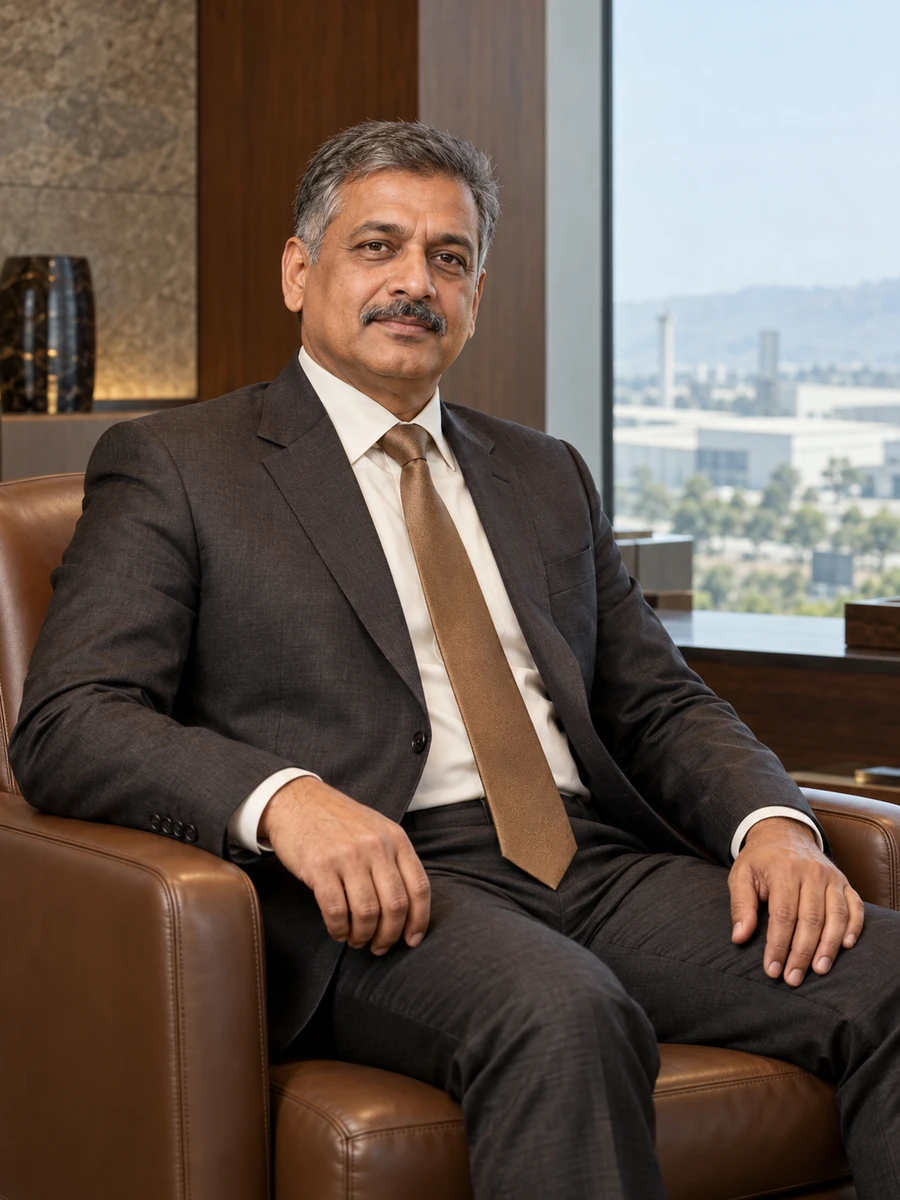
Portrait of Salim Qevrushi

Chief Executive Officer · India · Volume I · 2026

The promise must fit the factory that will fulfil it

I lead Vezqoshi Industrial Screens from Kolhapur, with manufacturing sites here and in Sangli. We make woven-wire and fabricated industrial screening panels, employ 520 people and recorded ₹228 crore revenue with ₹19.4 crore operating profit for FY ending March 2026. I have six executive direct reports and enterprise profit responsibility within a ₹24 crore annual capital envelope approved by the board. I am a professional CEO with no direct equity and one executive board seat, reporting to non-executive chair Mira Qezthavi.

My career began in production engineering in 1992. As COO in 2016, I supported outsourcing a tensioning process by comparing a ₹2.4 crore annual outside fee with ₹3.6 crore of internal expense. The apparent ₹1.2 crore difference did not describe equivalent responsibilities. A nine-month trial brought ₹78 lakh of additional freight and rework, and we returned the process in-house. That extra cost was not a complete calculation of net loss, and the original comparison was not an achieved saving.

Later decisions required the same attention to what a headline concealed: secondary-sale proceeds paid to owners rather than the company, a customer forecast that was not a firm order, a shift whose positions were not all filled and automation demonstrated on a simpler product mix. I work with finance, commercial and operating colleagues to make those distinctions visible before the enterprise commits. Technical release remains with authorised specialists, and a revised proposal still needs evidence of delivery.

The outsourcing quotation did not carry the whole process

The nine-month tensioning trial incurred ₹78 lakh of additional freight and rework alongside its other costs. We brought the process back and planned the return of 22 redeployed colleagues. I retain my approval and the incomplete comparison rather than turn the later correction into an outsourcing success.

New ownership did not put the sale proceeds into our factory

A 55% secondary transfer paid ₹96 crore to selling founders. The resulting ownership was founder family 30%, investor 55% and employee trust 15%. A separate ₹18 crore capital proposal needed its own company funding assessment and board approval; the transaction proceeds were not available enterprise cash.

A single-product demonstration was not our mixed-production rate

A demonstration at 240 panels an hour did not describe accepted output across twenty models. The reviewed mixed-production rate was 140 accepted panels an hour. We selected an ₹8.4 crore cell instead of a ₹15 crore full-automation proposal with different scope, without claiming a like-for-like ₹6.6 crore saving.

Current focus

I am connecting investment and commercial decisions more closely with the production conditions they create. That means explaining the process retained after outsourcing, the company funds available after an ownership change and the people and product mix behind a capacity proposal. I want a smaller, supportable commitment to be understood on its own terms rather than presented as an equivalent result at a lower price. Actual delivery must still be assessed after the decision.

Conversations I welcome

I would explore one outside board contribution in manufacturing or industrial services, with employer consent and a qualified review of commercial relationships and my existing executive seat. The fictional preparation record includes April 2026 IICA registration and an August assessment pass, with no exemption claimed. Twenty-two provisional days must be tested against preparation, travel and exceptional demands before a role is accepted.

Chapter I

Preface

I supported the tensioning-process outsourcing because the quoted annual fee looked lower than the expense of keeping the work inside our factory. In 2016, as COO, I compared ₹2.4 crore outside with ₹3.6 crore inside and allowed the apparent ₹1.2 crore difference to carry too much of the argument. During a nine-month trial, additional freight and rework reached ₹78 lakh. We brought the process back and planned the return of 22 colleagues who had been redeployed. The extra cost was not a full net-loss calculation, but it was enough to expose the incomplete comparison I had approved.

I was born in 1970 and grew up in Aurangabad before making Kolhapur my base. I speak Marathi, Urdu, English and Hindi. I completed a Bachelor of Engineering in Production Engineering at Tevquli Engineering College in June 1992 and joined Qerzhavi Wire Products the following month. The company had eighty employees and ₹14 crore revenue for FY ending March 1993. I worked in a six-person engineering group under the works manager, without direct reports or delegated expenditure. My early work was close to the practical sequence that turned material into a usable industrial product.

In May 2000 I became plant manager. Qerzhavi employed 240 people and recorded ₹62 crore revenue for FY 2001. I led 120 operating colleagues through four heads with ₹9.6 crore annual operating expense under the COO. Managing the plant required a different kind of explanation from solving an individual production problem. I had to connect output plans with people, process availability and the work that remained when a stage did not perform as expected. That responsibility developed my judgement, but it did not prevent the later outsourcing mistake.

I joined Vezqoshi Industrial Screens in July 2009 as operations general manager. The enterprise employed 310 people and recorded ₹108 crore revenue for FY 2010. I led 190 operating colleagues through five heads with ₹18.2 crore annual expense, reporting to the CEO. The business made woven-wire and fabricated screening panels for industrial processes. I needed to understand how variations in the product and its finishing work affected the manufacturing account, rather than treat every panel as the same unit merely because the commercial category was shared.

I became COO in April 2015. Vezqoshi had 430 employees and ₹174 crore revenue for FY 2016. My responsibility covered 330 operating colleagues through five heads and ₹28 crore annual operating expense under the CEO. The tensioning trial belonged to this period. A quoted fee did not remove the company's responsibility for the process around it. Returning the work in-house required planning for equipment, people and customer commitments, not just reversing a purchase decision. I changed how I presented the boundaries of an operating comparison and kept my original sponsorship visible in the account.

In February 2021 I became CEO and an executive director. I now lead six executive direct reports with company-wide profit responsibility and a ₹24 crore annual capital envelope approved by the board. Mira Qezthavi is non-executive chair and Thomas Nevquri leads finance. The enterprise has 520 employees across Kolhapur and Sangli, with ₹228 crore revenue and ₹19.4 crore operating profit for FY 2026. Those are company results, not outcomes attributable to one leader alone. I hold no direct shares, and the executive seat is my only statutory appointment.

The 2022 ownership transition required us to separate the shareholders' transaction from the company's investment plan. A regional industrial investor acquired 55% from founders who previously held 85%, paying ₹96 crore to the selling owners. The founder family retained 30% and the employee trust 15%. That was a secondary transfer, not capital paid into Vezqoshi. A separate ₹18 crore company capital proposal required its own funding assessment and board approval. I helped make the distinction clear while respecting the authority of shareholders, directors and finance colleagues.

Commercial and capacity decisions have since tested the same discipline in different forms. We declined a five-year fixed-price proposal tied to a ₹42 crore annual customer forecast, then agreed a two-year framework with quarterly input review and ₹26 crore of firm first-year orders. We delayed an additional shift when 92 people were available for 120 positions. We also compared an automation demonstration with accepted output across twenty product models before choosing a more limited cell. Each case required a specific account of the commitment rather than a general preference for growth or restraint.

I would consider an outside board role where manufacturing and industrial-service experience could help directors examine the business behind a proposal. My existing executive seat provides governance exposure, but does not make every committee or company a natural fit. The fictional preparation includes IICA registration in April 2026 and an August assessment pass, without an exemption claim. Twenty-two provisional days, employer consent and a qualified relationship review would need to fit the receiving enterprise. I would bring the lessons of both corrected and unsuccessful decisions, with enough humility to learn the operating conditions that differ from my own.
Chapter II

A Philosophy of Leadership

I want the commercial promise to arrive with an honest account of what the factory must do to keep it. A cheaper process quotation, a new shareholder or a faster demonstration can all look like progress before their operating consequences are understood. I have supported an outsourcing proposal whose comparison was incomplete. That experience makes me ask which responsibilities remain with us when the headline changes.

Salim Qevrushi

Chapter III

Areas of Practice

  1. IWhole-process operating comparisons
  2. IIOwnership transitions and company funding
  3. IIICommercial terms matched to production exposure
  4. IVCapacity grounded in people and product mix

Chapter IV

Selected Work

§ 1

Bringing tensioning back after the lower quotation failed to describe the process

As COO in 2016, I supported an outside tensioning trial using a comparison of ₹2.4 crore annual supplier fees with ₹3.6 crore internal expense. The apparent ₹1.2 crore difference was attractive, but the two amounts did not describe equivalent responsibilities. Production colleagues questioned how transport, handoffs and rework would affect the account. I gave those concerns insufficient weight because the quoted process appeared easier to separate from the surrounding operation than it proved to be. Twenty-two colleagues were redeployed as the trial began.

Over nine months, additional freight and rework reached ₹78 lakh. That amount sat alongside the other trial costs; it was not a complete net-loss figure and could not simply be subtracted from an annual estimate to establish a saving. We stopped the trial, brought tensioning back in-house and planned the return of the redeployed colleagues. The decision required work on the operating sequence and responsibilities, not just cancellation of an external purchase. I retained ownership of the original comparison instead of assigning the entire problem to supplier performance.

The reversal gave up the apparent simplicity of a lower external fee and required us to rebuild the internal arrangement. We did not claim that bringing the process back automatically removed every production issue or created a verified economic benefit. The technical and quality teams retained their release responsibilities. My task was to make the enterprise's choice and its consequences clear, including what our original proposal had failed to account for and what still needed to work after the return.

I changed the approval discussion so the boundary of a quoted process had to be examined with the people responsible for the surrounding work. Outsourcing can remain a legitimate option, but a fee for one stage is not necessarily the cost of delivering the whole commitment. The case remains an unsuccessful comparison I supported, with its extra expenditure and people implications visible. The later correction is evidence of a response to the failure, not a reason to rewrite the original decision as though it had achieved what we intended.

§ 2

Keeping the secondary-sale proceeds out of the company's investment account

In 2022 the founder family sold 55% of Vezqoshi to a regional industrial investor for ₹96 crore. Before the transfer, founders held 85% and the employee trust 15%; afterwards the founders retained 30%, the investor held 55% and the trust remained at 15%. The proceeds went to the selling owners. Some internal discussions treated the transaction headline as though it created a new factory investment fund. Finance challenged that interpretation because the company had not received the sale proceeds.

I separated the ownership transition from a proposed ₹18 crore capital programme. Thomas and the finance team assessed the company's funding position, and the board considered the investment through its own approval process. The shareholder transaction and the capital decision had different recipients, purposes and authorities. I helped make that distinction explicit in the enterprise account, without presenting myself as the sole decision maker in either the share transfer or the board's investment approval. The founder family, investor and trust remained distinct ownership interests.

The clearer account required us to moderate expectations of what the transaction itself made possible. A new owner could support a different strategic direction, but that did not turn a payment to selling shareholders into cash available for equipment. The separate capital programme still needed financing and implementation. Its approval did not mean all ₹18 crore had been spent or that a production benefit had already been delivered. We kept those states separate rather than allow the excitement of a transaction to compress them into one achievement.

The lesson was to describe where money goes before describing what it can fund. As CEO, I needed colleagues to understand the company's actual commitments and resources while respecting the different decisions made by owners and directors. The case does not argue that secondary transactions are less valuable than primary funding. It shows why their effects are different and why an operating plan must be assessed on the funds and approvals the enterprise actually has, rather than the size of a headline associated with a change in control.

§ 3

Trading the five-year fixed-price forecast for a shorter, reviewable commitment

In 2023 a customer proposal combined a ₹42 crore annual forecast with fixed prices for five years. Our screening panels carried exposure to steel inputs, and the forecast was not a set of firm orders. Commercial colleagues valued the prospect of a large relationship and a long planning horizon. Finance asked how the enterprise would carry input changes under the proposed terms, while operations wanted clarity about what volume could responsibly enter the production plan. The headline opportunity was more definite than the obligations and orders behind it.

I did not approve the five-year fixed-price form. We negotiated a two-year framework with quarterly input review, and the first year brought ₹26 crore of firm orders. The framework and the orders are separate facts: the former defined terms, while the latter specified committed business. The ₹42 crore figure remained a forecast in the original proposal. We did not describe the difference between 42 and 26 as a realised revenue loss, because neither a forecast nor an order is automatically recognised revenue.

The decision gave up the longer fixed arrangement the customer initially sought and required a more demanding commercial conversation. Quarterly review did not eliminate all margin uncertainty or establish a universal right to pass through every cost. The terms belonged to this fictional agreement and required administration by the responsible teams. My role was to align the commitment with an examined account of input exposure, duration and order certainty, rather than accept the largest figure as proof that the proposal was commercially sound.

The outcome was a narrower, clearer relationship, not a claim that we had maximised every possible sale. We retained the uncertainty around future volumes and the work needed to manage the agreement. I learned to ask which part of a commercial proposal is binding before using its headline to justify factory decisions. A long forecast can help a conversation, but it should not silently become both secured demand and a reason to accept a different risk whose consequences the enterprise has not yet agreed to carry.

§ 4

Delaying an extra shift whose positions were not yet staffed

In 2024 an expansion proposal aimed to add 1,500 panels a month through an extra shift. Its staffing model required 120 positions, while 92 people were available and 28 remained unfilled. Commercial colleagues wanted to protect a window of customer demand. Operating leaders questioned whether the proposal described a functioning shift or merely a roster with missing names. The difference mattered before the capacity figure could become a commitment. I did not treat the unfilled positions as an administrative detail that the factory could absorb after approval.

We delayed the expansion by six months and funded ₹1.4 crore of transport and training work to support the staffing plan. The decision meant foregoing a ₹2.8 crore forecast-order opportunity during the delay. That amount was not booked revenue or a measured accounting loss, and the programme expenditure did not instantly fill every position. We retained the distinction between people available, positions required and the work still needed to make the additional shift supportable. Technical and operating responsibilities stayed with the relevant leaders.

The delay was unpopular because the proposed output increase was easy to communicate and the missing conditions were less visible. We accepted the need to explain a smaller immediate commitment. I did not claim that postponement itself established a safety outcome or that every extra shift must meet the same staffing pattern. This was the operating model for the proposed work, and it had not yet been resourced as described. The appropriate response required examining the actual plan rather than invoking a general preference for either growth or caution.

The case changed how I reviewed capacity approvals. A production number needs the people and conditions that make it credible, with unresolved requirements visible before a customer relies on it. Funding a response is a step towards that capability, not evidence that capability is already present. The CEO's responsibility was to keep the commercial promise connected to the operating account and accept the consequence of delay, rather than leave the factory to make an incomplete proposal appear complete through effort the plan had never properly described.

§ 5

Choosing an automation cell after the mixed-product rate changed the comparison

In 2025 an automation proposal drew attention to a demonstration rate of 240 panels an hour. The demonstration concerned one product, while our reviewed production mix covered twenty models and showed 140 accepted panels an hour. Engineering colleagues wanted the investment discussion to reflect changeovers, variety and accepted output, rather than assume the demonstration described the whole factory's work. Some sponsors preferred the larger headline because it made the full-automation proposal easier to present as a step change in capacity.

We selected an ₹8.4 crore cell instead of the ₹15 crore full-automation proposal. The options had different scope, so we did not claim a like-for-like ₹6.6 crore saving. The more limited cell had to be judged against the work it would actually perform and the responsibilities retained elsewhere. The 140-panel figure described the reviewed mixed-production account, not a universal future rate or a warranty of performance. Technical validation and release remained with the specialists authorised to make those assessments.

The choice gave up some of the breadth and simplicity associated with the full proposal. It required a clearer explanation of what would be automated, what would remain outside the cell and how the investment would be assessed after implementation. We did not present approval as completed production benefit, or treat a lower capital amount as proof of a better return without comparable scope. Finance and operations needed an account they could continue to examine after the purchasing decision, not only a convincing approval headline.

The lesson was to make the product mix part of the capacity claim. A demonstration can be useful evidence for the condition it represents, but it does not automatically describe a different pattern of accepted work. My contribution was to keep those conditions in the enterprise decision and choose a commitment we could explain without borrowing a rate from a simpler setting. The case is about matching evidence and investment scope, not a general rejection of automation or an assertion that the selected cell had already delivered every intended result.

Chapter V

The Boardroom

  • Vezqoshi Industrial Screens

    Executive Director

    No committee chair role asserted

    February 2021 onward

Chapter VI

Essays

An invitation

Contact

I would explore one outside board contribution in manufacturing or industrial services, with employer consent and a qualified review of commercial relationships and my existing executive seat. The fictional preparation record includes April 2026 IICA registration and an August assessment pass, with no exemption claimed. Twenty-two provisional days must be tested against preparation, travel and exceptional demands before a role is accepted.

Open to
  • Board appointments
  • Advisory roles
  • Speaking invitations

office@salimqevrushi.example