The person behind the perspective
The shopper's question has stayed with me as the canvas grew
I began by listening to people who were choosing textiles for rooms I would never see. Some arrived with a colour in mind, some with a piece of fabric and some with a price they could not exceed. The shopkeeper knew that those were different starting points. As a young researcher I was more inclined to put them into one category. Learning why that lost something useful was the beginning of my interest in consumer marketing.
I was born in 1973 and completed commerce and postgraduate marketing qualifications at fictional Raveli Institute in June 1994 and June 1996. In July 1996 I joined Tarvani Textiles in Ahmedabad as a retail research executive. The company supplied home textiles through distributors and shops. My work involved arranging conversations, recording what customers and retailers actually said and bringing those observations back to a six-person research group. I had neither people-management responsibility nor a budget to allocate. The discipline was to distinguish something I had heard from a conclusion I could defend.
In July 2002 I moved to Velmira Home as category marketing manager. The retailer had been founded in Pune in 1999. Working for a business with its own stores brought the choices closer together: a photograph, a product description and a display could be discussed with the people who would use them. By the end of that appointment I led eight employees through two direct reports with ₹2.4 Cr annual marketing authority. I reported to the marketing director. The company had fourteen stores, 280 employees and ₹86 Cr revenue in FY2007–08; its commercial and product decisions were larger than the part I owned.
The regional brand-head appointment followed in July 2008. I became responsible for marketing work across western and southern India, reporting to the CMO. Fifteen employees, three direct reports and ₹9 Cr annual authority gave me a wider account to reconcile. I learned that an occasion could be commercially recognisable across markets without being described identically in each one. Regional colleagues were not simply recipients of a central artwork file. They could expose an assumption about language or shopping practice that the central brief had never made explicit.
In July 2014 I took on consumer and brand strategy. The role brought national research and brand choices together, with twenty-eight employees, four direct reports and ₹24 Cr annual marketing authority by its close. Velmira added a minority growth-equity shareholder in 2017 while remaining founder-controlled. I had to explain how a proposed brand investment related to the retail business, rather than expect a larger campaign to justify itself through visibility. By FY2019–20 the company had eighty-two stores, 1,450 employees and ₹610 Cr revenue. Those were measures of the employer, not results I could attribute to my function alone.
I became CMO in July 2020. I now report to chief executive Arun Kelvankar and lead forty-eight employees through six direct reports, with twenty-two agency personnel separately. My FY2026–27 marketing authority is ₹68 Cr. Velmira's FY2025–26 revenue was ₹1,280 Cr across 146 company-operated stores and ecommerce, with 2,700 employees. Commercial director Meera Talvane owns the trading account and authorised prices. I do not run stores, buy merchandise, approve fabric specifications or own the ecommerce platform. My accountability is substantial without absorbing those responsibilities into a convenient claim about the whole company.
Several recent decisions have made the boundary between a persuasive scene and a useful purchasing explanation more tangible. We revised thirty-one of forty-eight festive roomsets after examining which optional props could be mistaken for included items. We changed twelve of eighteen bathlinen colour descriptors following selected Hindi and Gujarati conversations. A later offer review required revisions or withdrawal of thirty proposed creatives. These were decisions about the integrity and usefulness of our presentation. I do not describe them as measured improvements in sales, returns or trust when the work did not establish those outcomes.
The giftlist pilot introduced a different question. Forty-four of sixty-two participants completed a list, but thirty lists had led to at least one purchase by the cutoff. That distinction mattered to a decision about further investment. Store colleagues also described the practical work involved. I recommended a more limited next step than a fast national introduction. A marketing proposal should be able to become smaller when the evidence warrants it; otherwise the pilot is merely a ceremony before a decision already made.
I have presented relevant matters to Velmira's board as an executive since July 2020 and have never held a director appointment. I am interested in a first contribution to a consumer or service board where my experience can help examine customer interpretation and commercial promises. That would require induction, employer consent, a conflict review and a credible calendar. The prospect interests me because it asks for a wider form of judgement, not because my current title settles those questions. My professional record is most useful when it makes the decisions and their limits visible enough for someone else to assess the fit.
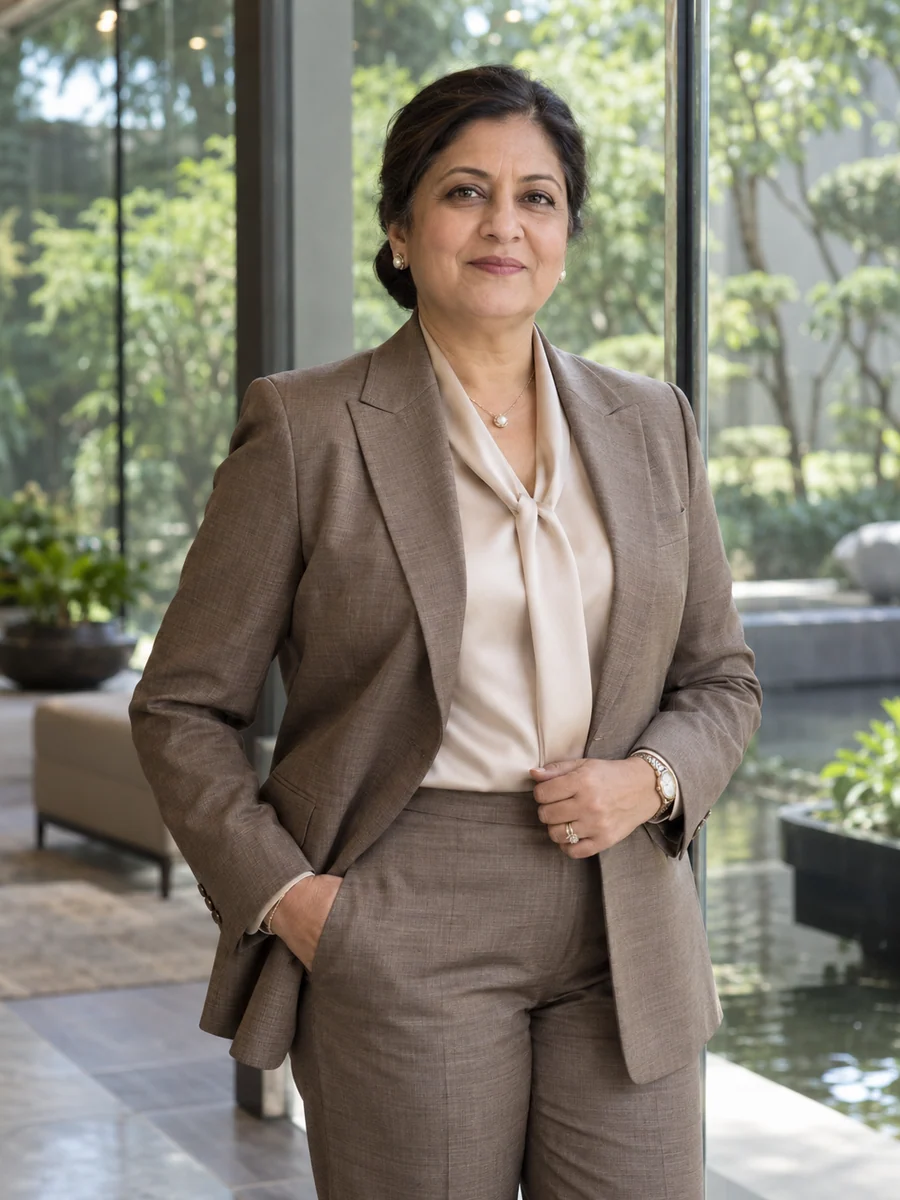
In my own words
An attractive room can help someone imagine a purchase. It can also conceal the question they came to answer. I want our marketing to preserve the detail that matters when the photograph meets a household's budget, language, occasion and existing possessions.
Nandita Virekar
Education
Formation
- Postgraduate qualification in marketingRaveli Institute1996
- Degree in commerceRaveli Institute1994
Working languagesEnglish · Hindi · Gujarati