Skip to website
Darius QevzomriLeadership review 2026

Leadership review

Darius Qevzomri

Chief Strategy Officer · India

Build the strategy around the business we actually own

Open to
  • Board appointments
  • Advisory roles
  • Speaking invitations
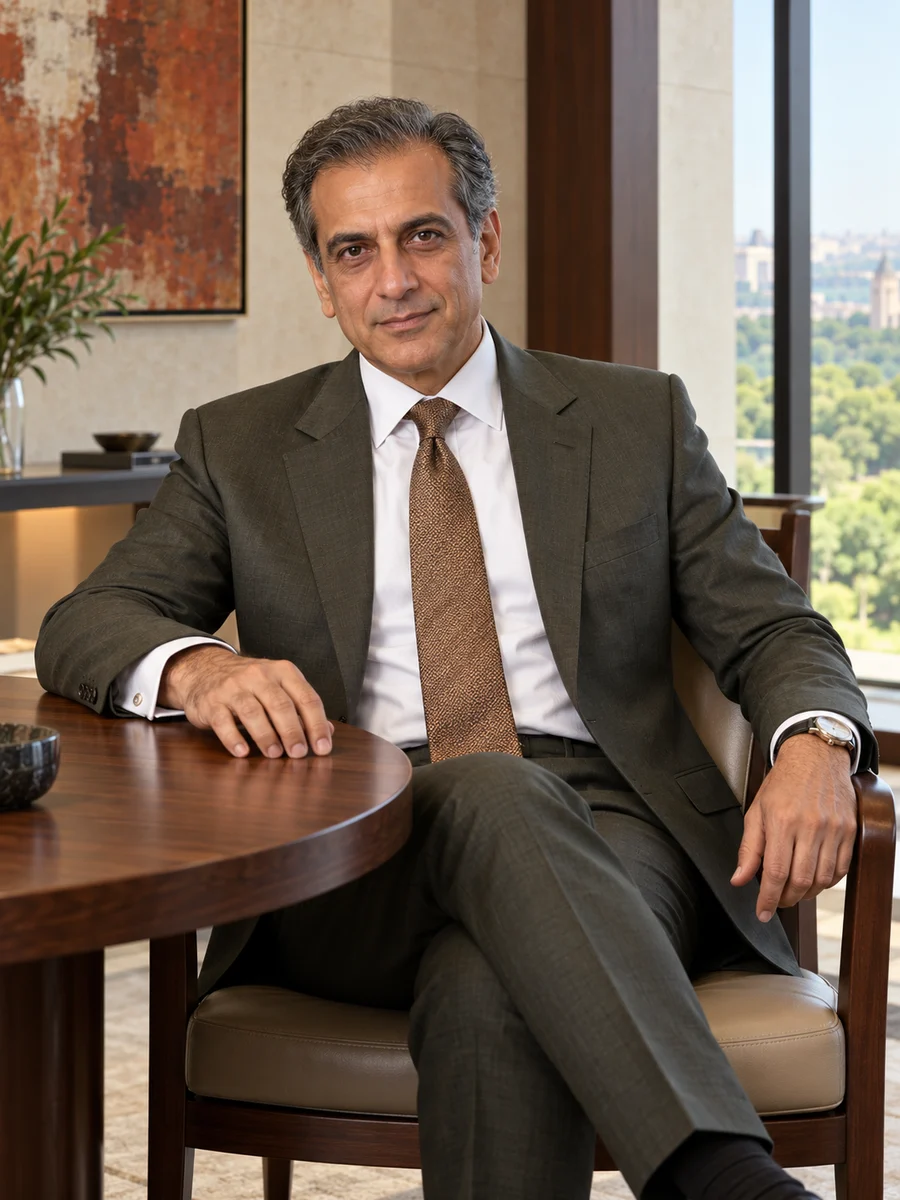
Portrait of Darius Qevzomri

Size the business by the responsibility it earns

The most useful correction in my strategy career made an opportunity look smaller. In 2018 I led a paper that foregrounded ₹186 crore of ticket face value processed for a selected client portfolio. Our service fees from that portfolio were ₹12.4 crore. The larger number described the events passing through the system, not income belonging to the service enterprise. We spent ₹37 lakh revisiting the appraisal and did not proceed with the proposed ₹9.2 crore transaction. That was a declined investment, not a write-off or cash recovered.

I am Darius Qevzomri, fictional chief strategy officer of Telqavzi Venue Systems. I grew up in Navsari and now work in Vadodara. Our 204 colleagues provide venue software, licence support and event-access services, generating ₹83 crore FY2026 revenue. I lead seventeen strategy colleagues through three leads and report to Leena, our CEO. Nikhil owns delivery. My work is to make a recommendation usable by the people who must commit capital and fulfil the service, including the parts that do not fit neatly into an attractive market-size slide.

The decisions on this site follow that discipline through different problems. A four-city expansion still concentrated demand on the same weekends. A timed-entry museum pilot needed a different understanding of visits from a ticketed evening event. An invitation to share an event promoter's upside would also have changed the risks we owned. More recently, an annual venue licence required a clearer account of peak-date support. The cases are about the business we chose to be, not simply a sequence of successful sales or a claim that one planning method predicts every outcome.

Four cities did not create four calendars

Twenty-four of thirty-six selected weekend assignments fell on eight weekends. The revised expansion recommendation used four reserve crews rather than twelve permanent new teams, retaining a smaller service ambition and a visible peak-period constraint.

A three-venue pilot did not become a universal museum offer

Two venues continued the timed-entry trial and one declined the operating arrangement. The ₹62 lakh pilot established differences in visit patterns; it did not certify crowd capacity or prove a all-India opportunity.

A service fee and an event stake are different businesses

I recommended declining a ₹7.6 crore proposed promoter commitment carrying a forty-percent share of specified event upside. We kept the possibility of an ordinary service contract separate from responsibility for promoting the event.

Current focus

I am reviewing the support obligations inside recurring venue contracts. Predictable billing is valuable, but it does not make demand evenly distributed or give every customer the same claim on a crowded weekend. Our planning needs to show both the annual relationship and the dates on which it becomes operationally demanding.

Conversations I welcome

I would consider an initial board role in a specialist service enterprise evaluating expansion, adjacencies or recurring contracts. I have presented strategy to directors but hold no statutory appointment. Twenty-one days is a provisional annual capacity estimate, subject to my executive work and the real demands of a proposed seat.

Highlights

The comparison I learned to question in my own work

32 years

Commercial and strategy career

Research associate through CSO responsibility

₹83 crore

FY2026 enterprise revenue

₹54 crore software/licence support; ₹29 crore event services

204

Enterprise employees

March 2026 headcount

17

Strategy colleagues

Three leads within the CSO remit

A letter from Darius Qevzomri

Dear reader,

Portrait of Darius Qevzomri

A larger number is not necessarily a larger business. I once used the face value of tickets processed for a portfolio to frame an opportunity that should have been understood through our service income and obligations. I now ask which economic activity a strategy actually owns, on which dates it must perform and what the attractive comparison leaves outside the picture.

I grew up in Navsari and completed an economics degree at the fictional Tevqazri College of Economics in May 1994. I began work that July at Qelmorzi Commercial Studies. The attraction of commercial research was the chance to examine how an enterprise actually earned its income. The difficulty was that the numbers supplied by different businesses often described different things. An impressive volume could refer to goods passing through a system, work already paid for or merely an opportunity someone hoped to serve. My earliest responsibility was to preserve those distinctions before anyone used the comparison in a decision.

Darius Qevzomri

Chief Strategy Officer
Strategic priorities

Where I focus my leadership.

Performance

What the priorities delivered.

Priority outcome 01

Reopening the appraisal I had framed around ticket value

In 2018 I led an appraisal of a proposed ₹9.2 crore transaction involving a selected venue-client portfolio. My paper foregrounded ₹186 crore of ticket face value processed for those clients. Our service fees from the same portfolio were ₹12.4 crore. The larger figure made the opportunity look substantial, but described the events supported by the system rather than the income of our service business. It was not our total company revenue either. I had approved the framing and was responsible for correcting it. Finance challenged whether the comparison supported the investment argument. The commercial team felt the throughput still demonstrated the importance of the relationships, and I agreed it had descriptive value. The disagreement concerned what decision it could justify. A large volume did not establish the durability of our fees, the cost of supporting peak dates or the rights included in a transaction. We could proceed with a prominent scale narrative and append qualifications, or reopen the appraisal around the income and commitments we would actually acquire. I recommended reopening it. The review cost ₹37 lakh, covering revised commercial work and professional input. Finance retained responsibility for its accounting assessments and the authorised decision-makers retained investment authority. My team reworked the strategic comparison, distinguishing event activity from company income and examining the service burden behind the fees. The revised paper also retained uncertainties about the portfolio rather than converting missing material into a favourable assumption. The consequence was that the proposed transaction did not proceed. I gave up the momentum of a recommendation I had helped create and accepted the expense of revisiting it. The ₹9.2 crore was proposed consideration, not a loss already incurred or cash recovered. I cannot claim that declining it prevented a particular future failure. What the decision established was narrower: the investment case originally presented was not supported by the economic basis we needed. My lesson was to ask what a number belongs to before making its size the organising feature of a strategic argument. Throughput can describe reach, but it should not silently become a substitute for the business's own earnings and obligations.

Priority outcome 02

Reducing a four-city expansion after laying out the weekends

In 2022 we considered expanding event-access support across four cities with twelve permanent new teams. The proposal carried ₹5.4 crore of annual operating expense. The geographic spread appeared to diversify demand, but Nikhil's operations colleagues questioned whether the same teams would still be needed on the same dates. A map could show four markets while concealing one concentrated service calendar. I asked the strategy team to examine the assignments behind the annual projection before recommending the staffing commitment. Of thirty-six selected weekend assignments, twenty-four fell on eight weekends. These were the assignments reviewed, not a statistical estimate of all demand in the four cities. Preparation and travel further constrained the idea that one team could simply move between events. Commercial colleagues argued that permanent local presence would help win more work. Operations argued that the proposed staffing pattern could leave us stretched at peaks and underused at other times. Both concerns mattered; a smaller model would also limit the work we could credibly pursue. We spent ₹46 lakh on the calendar study, operating design and pilot preparation. I recommended four cross-trained reserve crews with a ₹2.1 crore annual commitment instead of twelve permanent new teams. Leena and the authorised management process approved the revised approach, while Nikhil owned deployment and the service conditions. The choice deliberately reduced the initial footprint and left some prospective work outside the offer. It was not a claim that four crews could perform the same work as twelve or that travel would solve every simultaneous demand. The revised annual commitment was lower than the proposal, but I did not report ₹3.3 crore as realised savings. The larger model had not been implemented, and the two options offered different capacity. The decision changed the ambition as well as the expense. For me, the strategic lesson was that geographical expansion and demand diversification are separate propositions. Before committing to a larger footprint, I want directors to see when the enterprise must perform, what capacity is genuinely interchangeable and which opportunities the chosen model will leave unserved.

Priority outcome 03

Keeping the museum pilot smaller than the market story

In 2023 I proposed a three-venue pilot for timed-entry museum services. Our existing ticketing software made the adjacency look straightforward, but the operating pattern differed from an evening event with a concentrated arrival window. Visits could continue across the day, people stayed for different lengths of time and a later arrival could overlap with visitors admitted earlier. A familiar ticket transaction did not by itself provide a complete service design for that setting. The growth team wanted a broad museum proposition ready for sale. Nikhil asked us to understand the venue's responsibilities and visitor flow before treating the software fit as an operating fit. I supported a ₹62 lakh pilot covering configuration, service preparation and examination of the different visit patterns. We could have used a single proposition across all three venues, which would have been easier to explain, or allow the trial to reveal that some requirements did not fit the arrangement we were prepared to offer. We chose the latter. The venue operators retained responsibility for their premises, visitor management and safety decisions; our work did not certify occupancy or substitute for their professional assessment. My team examined the commercial and organisational implications of timed admissions, including support during the day and the limits of information available through ticketing. We kept the pilot's learning separate from claims about attendance growth. The fact that a visitor held a time slot was not treated as complete knowledge of everyone present in a building. Two venues continued the trial and one declined the operating arrangement. I retained the third outcome in the recommendation for further development. The ₹62 lakh was an actual pilot commitment, not a figure to divide into a claimed all-India acquisition cost. We gained a more specific understanding of the adjacency, but did not prove that every museum needed the same service. The strategic trade-off was accepting a narrower, less immediately scalable proposition in return for an expansion account grounded in the responsibilities and visitor patterns of the venues actually examined.

Priority outcome 04

Declining event upside that would change the enterprise we ran

In 2024 we were invited to participate in an event-promoter arrangement. The proposed commitment was ₹7.6 crore, with a forty-percent share of specified event upside under the proposal. Some colleagues saw a chance to earn more than a service fee from activity we already helped support. The attraction was understandable: we knew ticketing and access operations, and had relationships in the event ecosystem. But familiarity with those services did not mean we already owned the commercial risks of promoting an event. I led the strategy review with finance, operations and professional advisers contributing within their responsibilities. The choice was not between a certain fee and certain larger earnings. Promotion involved commitments around the event programme, venue and demand that were different from our normal service role. The proposed upside depended on how the event performed, and the enterprise would need capabilities and decision rights beyond those used to provide ticketing software. A larger participation figure could obscure the fact that we were being asked to become a different kind of business. The commercial proponents favoured proceeding as a limited experiment. Nikhil questioned the management attention and operating responsibilities it would absorb. I recommended declining the ₹7.6 crore commitment, after ₹33 lakh of diligence and strategic review. Leena and the authorised decision-makers accepted that recommendation. We kept open the possibility of a conventional service relationship, subject to its own terms, without presenting that possibility as a signed contract or a substitute return from the rejected proposal. The consequence was giving up participation in any upside that might have emerged from the arrangement. I cannot claim that we avoided a known loss; the proposed participation did not take place, and the counterfactual remains unknown. The decision was about the business model we were willing to operate and the responsibilities needed to make the choice credible. A service enterprise can choose to become a principal in another activity, but it should do so explicitly. Familiarity with a customer's transactions should not quietly become a reason to assume the customer's whole commercial position.

Priority outcome 05

Rewriting the capacity promise inside annual venue contracts

In 2025 I reviewed fourteen venue relationships as we developed the next recurring-contract proposition. Nine had relatively steady support patterns; five concentrated requests around groups of events. The annual licence description made the relationships look more uniform than the demands they placed on the service team. Sales wanted a simple package, while operations wanted the offer to distinguish ordinary support from concentrated event-date requirements. The disagreement was about what the enterprise was committing to supply, not merely the wording of an invoice. I recommended a ₹54 lakh programme to develop service options, examine the calendar and prepare clearer customer discussions. The alternative was to retain a broad annual description and handle each difficult weekend through account-level negotiation. That might have preserved an easier sales message, but it would also have left a material capacity decision until several customers needed support simultaneously. The revised proposition asked customers to discuss their likely event pattern and the support arrangement they required, without pretending that an annual fee could remove every operational constraint. Commercial colleagues retained responsibility for negotiated terms and Nikhil's team retained delivery responsibility. My strategy group examined how the options fitted the enterprise's desired mix of recurring relationships and event services. We distinguished a customer accepting revised arrangements from one still discussing them. Eleven customers accepted and three remained in discussion at the review point. Those three were neither completed renewals nor assumed losses. We did not claim that clearer scope had already produced a profit improvement or that the revised pattern removed all peak-date risk. The trade-off was a more demanding commercial conversation and a less uniform proposition. The benefit was a better-defined basis for future commitments, rather than an invented financial result. I learned to ask whether recurring income is accompanied by a recurring and understood service obligation. Predictability in billing can be valuable, but the calendar of the work still matters. A strategy that values annual relationships should also explain which claims on scarce support capacity those relationships create and how management intends to honour them.

Stakeholder voices

What those I have served alongside say.

In this fictional promoter review, Darius kept the ₹33 lakh cost and the possibility of forgone upside in the account. His recommendation explained the responsibilities we would be taking on, rather than claiming that declining the proposal proved it would have failed.
Leena QervamziFictional CEO, Telqavzi Venue Systems
The invented calendar review distinguished a smaller capacity offer from an efficiency claim. Darius supported the four-crew recommendation while leaving deployment with operations and keeping the prospective work outside that model visible to the decision-makers.
Nikhil TevzomliFictional COO, Telqavzi Venue Systems

Outlook

Perspectives on what comes next.

An invitation

Contact

I would consider an initial board role in a specialist service enterprise evaluating expansion, adjacencies or recurring contracts. I have presented strategy to directors but hold no statutory appointment. Twenty-one days is a provisional annual capacity estimate, subject to my executive work and the real demands of a proposed seat.

Open to
  • Board appointments
  • Advisory roles
  • Speaking invitations

office@dariusqevzomri.example