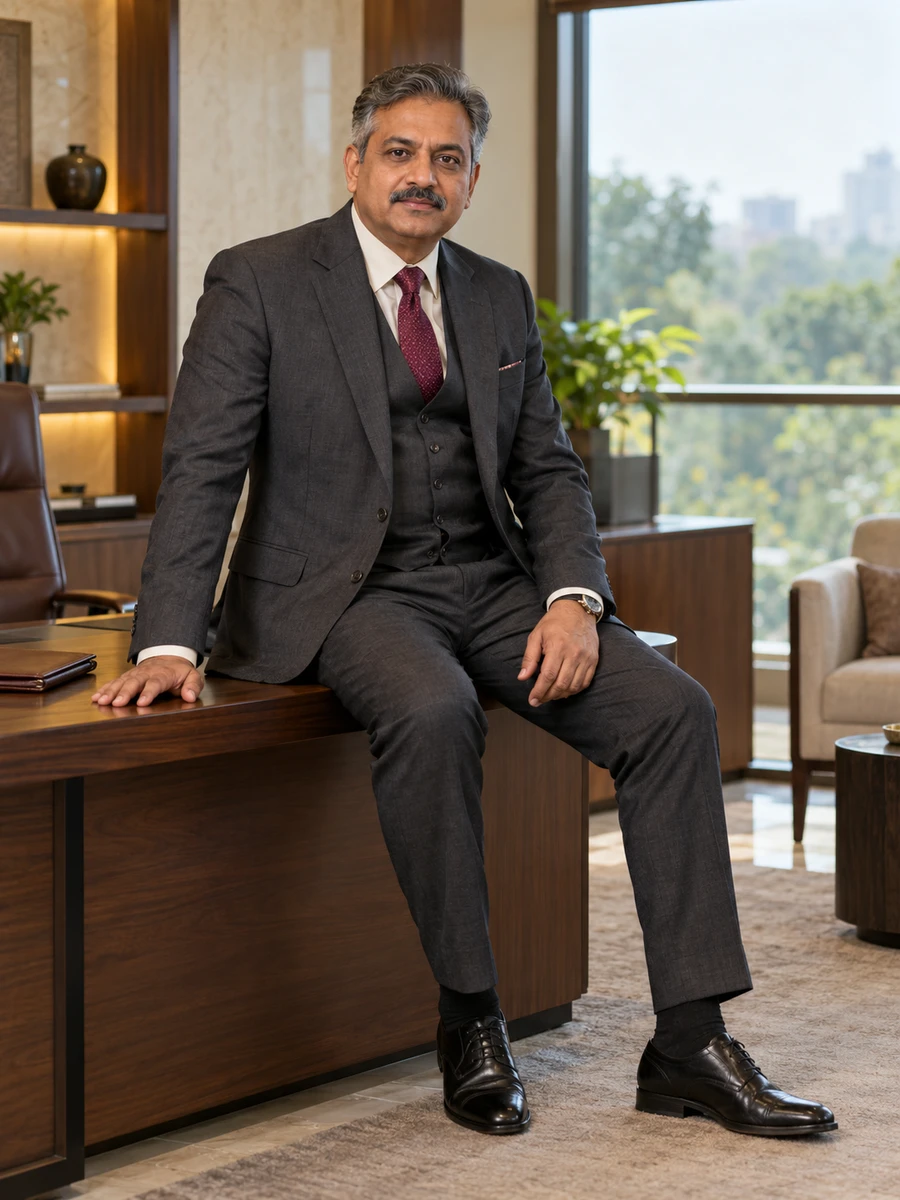
I run operations at the fictional Teqzenvi Risk Engineering in Raipur. Our 286-person enterprise provides pre-loss property risk-engineering services through eight field offices. I work with 194 operating colleagues through six heads and ₹42 crore annual operating expense. Service-fee revenue of ₹138 crore for FY ending March 2026 is a company measure, not my spending mandate. We do not decide insurance coverage or claim settlement, and our reports are not certificates of a plant's legal compliance.
My thirty-year career began in field coordination after mechanical engineering study. The recurring challenge has been to make an operating promise consistent with the conditions needed to gather useful evidence. A site calendar must include travel. Equipment needs an appropriate status for its intended use. Restricted access must remain visible in the report. A remote conversation can support limited work without becoming the visit that could not take place. These distinctions become harder to preserve when a completion date is already expected.
In 2018 I approved thirty-six two-site daily plans that allocated four hours at each site before allowing for travel. Twenty-three routes required more than three hours of travel; the other thirteen required no more than three, which did not make their original plans adequate. We split the twenty-three across separate days and resequenced the thirteen with suitable visit windows. The correction cost ₹46 lakh in extra travel, lodging and coordination. I had accepted a calendar that counted the examination but omitted the journey.
Equipment status required a technical review, not a blanket conclusion
Eight of nineteen field kits had thermal cameras beyond the company's scheduled calibration date. We withdrew eight, rented six suitable replacements and deferred two equipment-dependent visit windows. Qualified review of thirty-six earlier reports required additional measurement for twenty-one and found other material adequate for the stated limited purpose in fifteen.
Access limitations stayed attached to the assessment
Seventeen of fifty-five property assessments included areas the team could not access. Ten later received permitted visits and seven still awaited access. We retained ₹31 lakh revisit expense and explicit unobserved areas, without treating a completed document as evidence that every part of a property had been examined.
Weather changed what work could reasonably proceed
Road and weather restrictions affected sixteen of forty-four planned assignments. Technical owners permitted limited remote information work for nine; seven were deferred. ₹57 lakh of extra coordination and replanning stayed visible, and none of the nine was relabelled a completed physical assessment.
Current focus
Field-service commitments that preserve observation conditions, technical authority and the cost of obtaining evidence. I want commercial and operating decisions to describe what can actually be done before they promise what a report will conclude.
Conversations I welcome
A first outside board role after employer consent and qualified company-specific review. I have no statutory seat and hold 0.6% within the employee vehicle. Databank registration was completed in February 2026, with proficiency assessment still outstanding. Twenty-four days are provisional capacity, including preparation and exceptional demands.