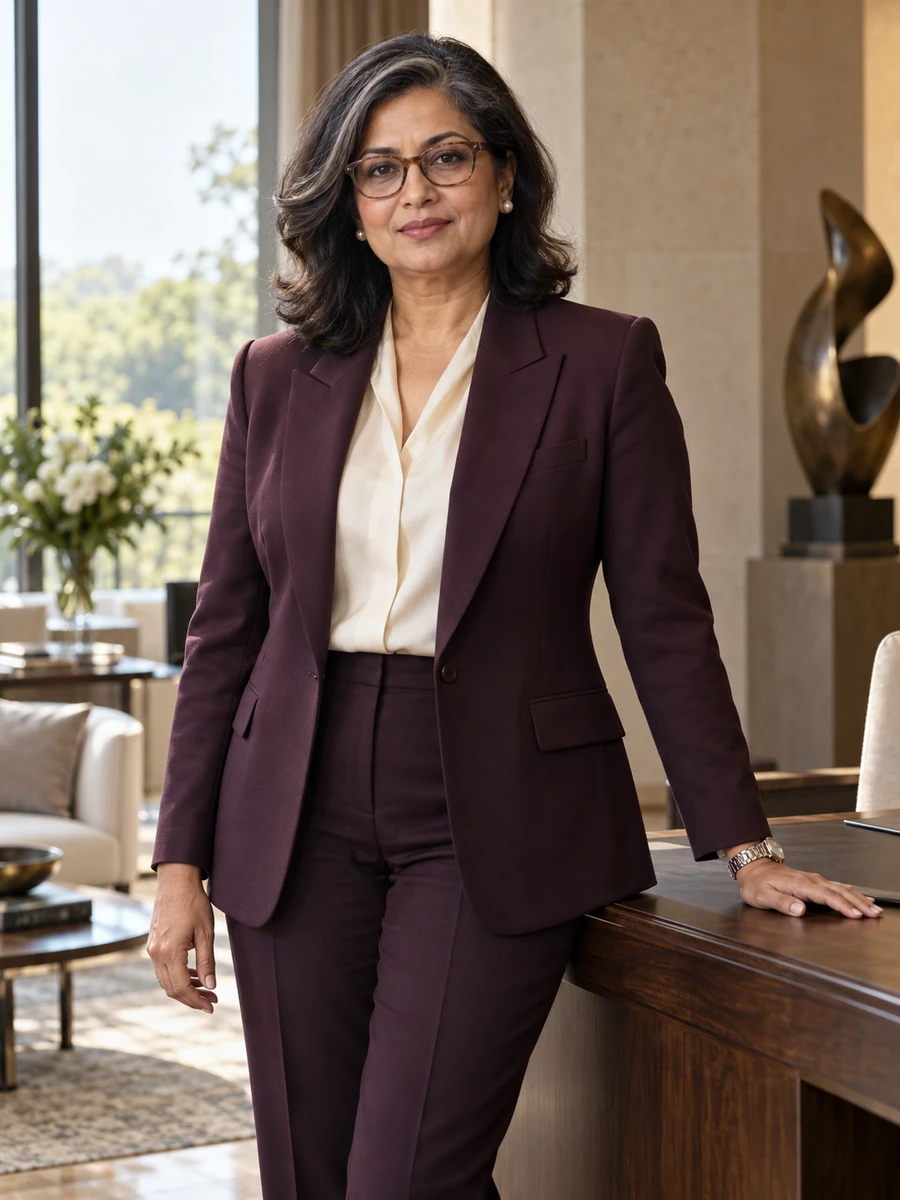
I grew up in Cuttack and studied mechanical engineering at Vaqmuri Institute of Technology, completing the degree in June 1994. I joined Temqavi Design Services the following month as an analysis engineer. In a five-person project group, I prepared calculations and simulation work under a senior engineer, without people or spending authority. The first discipline was to understand which question a model was intended to answer before treating the precision of its output as evidence of broader knowledge.
A result could be internally consistent and still depend on conditions that differed from the customer's use. I learned to keep assumptions, inputs and the intended purpose close to the conclusion. That was not an argument against computational work. It was the basis for making it useful to the qualified people deciding what to design or test next. My early role was supervised analysis; I did not carry the client's authority to release equipment or certify its performance.
In April 2001 I became simulation-project manager. Fourteen colleagues worked through two leads, with ₹1.4 crore annual team expense under the engineering director. Managing projects exposed the relationship between a technically useful answer and the commercial scope in which it had been promised. A calculation prepared for one purpose could be requested for another, and work performed for a client could later look like a reusable company asset. I began to see why the proposal needed professional and rights review before the delivery team treated every extension as ordinary engineering effort.
I moved to Vadodara in September 2007 to lead engineering services at Zevruni. Forty-two colleagues worked through three leads under my management. The company then employed 150 people and recorded ₹47 crore revenue for the year ending March 2008. I reported to the COO and held ₹7.2 crore annual function expense. The remit combined several client programmes, so I had to examine how specialist capacity and commercial commitments interacted across the portfolio rather than solve each project in isolation.
The COO appointment followed in June 2013. I led 220 operating colleagues through four heads within ₹64 crore annual operating expense, reporting to the CEO. The company's ₹108 crore FY 2014 revenue was a different measure from that expense. I became more attentive to the timing of demand. A capability could exist somewhere in the business and still be unavailable during the week a customer needed it. A credible operating plan had to preserve that difference when commercial colleagues wanted a simpler account of total capacity.
The board appointed me CEO and executive director in April 2020. Today Zevruni employs 510 people, serves 74 clients and operates from Vadodara and Mysuru. FY 2026 revenue was ₹184 crore and operating profit ₹22 crore. I lead six executive heads and report to the board, with CFO Devika Qavzeni and CTO Omar Zeqvani retaining their professional responsibilities. The founder engineering trust, domestic growth fund and employee vehicle own 45%,40% and 15% respectively. I have no personal or vehicle allocation, and board-reserved decisions remain separate from my executive remit.
The model-library case tested whether an apparently reusable technical base was a product we actually had the rights to offer. Of sixty-four reviewed assets, forty-one were company-owned generic models, fifteen carried client restrictions and eight remained uncertain. We launched the cleared portion and kept the smaller sales forecast. The decision required more than confidence in our engineers' ability to operate the models; it required an honest account of the rights supporting the commercial proposition.
I also approved early material that described eight pilots too broadly. Three used live feeds while five were offline snapshots, and the shared label did not explain that difference. We corrected the service descriptions and revised two customer agreements through an agreed return of ₹18 lakh. I keep that episode in the profile because the CEO's confidence can help an imprecise claim travel through an organisation. Correcting it required accepting my part in the earlier approval, not merely asking the communications team to choose another phrase.
The later cases concern laboratory capacity, energy evidence and exclusivity. Each asks a different enterprise question. A rig's annual hours did not solve a six-week peak. An observed reduction under changed site conditions did not validate a model's headline saving. A large exclusive offer could restrict work for existing customers. I want those distinctions to remain visible even when the result is a deferred investment, an unfinished measurement programme or a smaller proposal that has not yet become a contract.
I speak Odia, Hindi, English and working Gujarati. I hold one executive directorship and no outside statutory seat. My fictional IICA registration began in June 2026, with proficiency preparation unfinished and no exemption claimed. I am considering how this experience could support another board's collective judgement, subject to relationships, employer consent and realistic time. The contribution is not a universal technical answer. It is a habit of asking whether the evidence, rights and capacity support the enterprise commitment being proposed.