Irfan Qevzami

A leadership monograph

Irfan Qevzami

Keep the evidence attached to the map's apparent precision

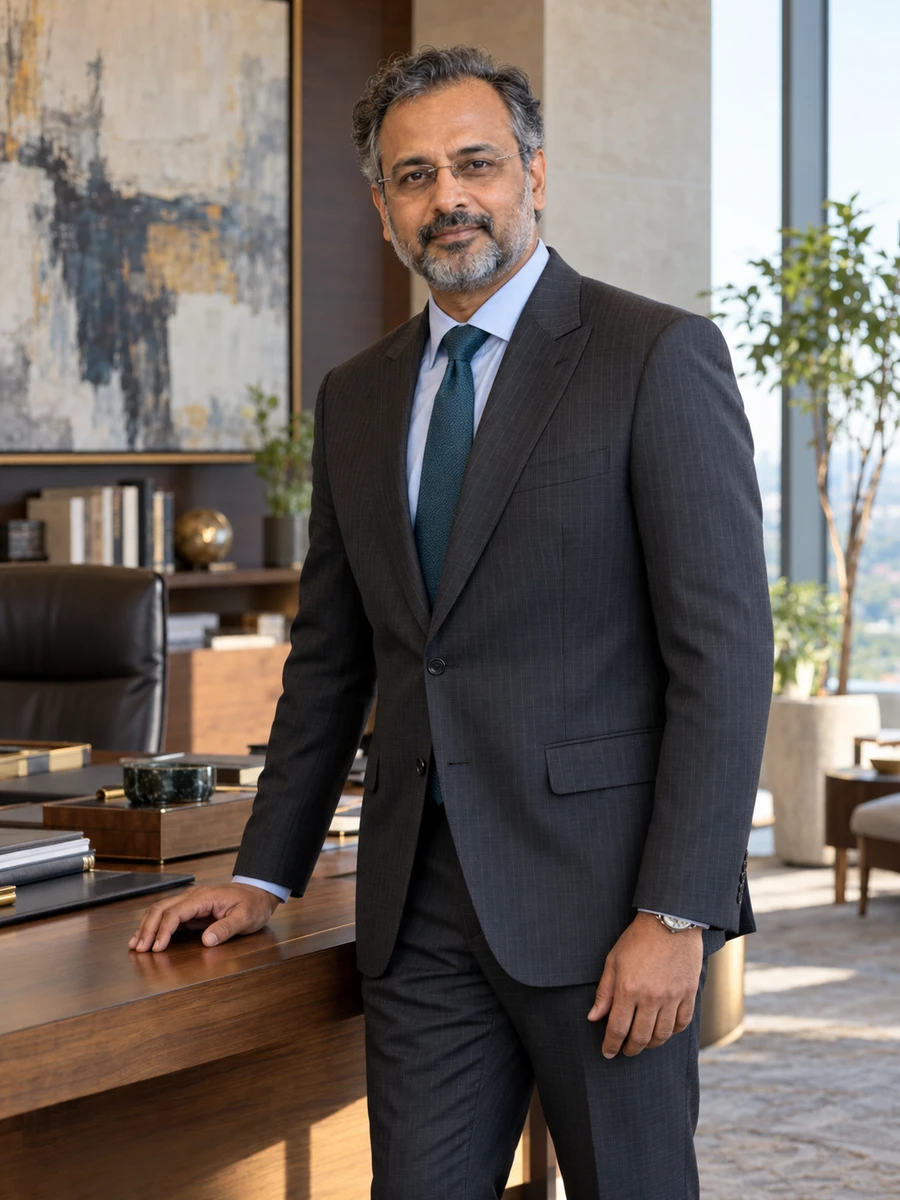
Portrait of Irfan Qevzami

Chief Technology Officer · India · Volume I · 2026

I lead geospatial engineering by preserving the reference, observation status and scope of evidence behind the result shown on the map.

I am CTO of Tavqemi Spatial Systems in Bhubaneswar. We develop geospatial analysis and mapping tools for enterprise clients. I lead 130 engineers through five heads and report to the CEO. My ₹39 crore FY 2026–27 engineering expense and separate ₹6.4 crore laboratory-capital programme are distinct from the company's ₹172 crore FY 2026 revenue and from the internal IT remit held by our CIO.

Mathematics gave me an interest in precise reasoning; software work taught me that precision depends on the meaning carried into the calculation. Two coordinate values can be valid numbers and still be unsuitable for the operation applied to them. An empty observation can be represented neatly as zero and quietly change the question the average answers.

The cases examine an interface I approved without sufficient coordinate context, a cache trial whose lower serving cost concealed stale tiles, missing observations filled as zero, a component benchmark promoted too far and a package whose proposed distribution exceeded some component permissions. They preserve corrections, deferred investment and narrower functionality rather than turning every finding into a completed commercial success.

The numbers needed their reference system

A review of 240 datasets found 180 already in the required projected reference system and 60 using geographic coordinates. We restored verified source context and transformed the 60 appropriately at ₹28 lakh correction cost. The repair was not a constant conversion of degrees into metres and did not certify survey accuracy.

Missing observations changed the mean when represented as zero

Of 120 equal-area plots, 72 had valid observations with mean index 0.64 and 48 were cloud-masked. Filling the missing plots with zero produced 0.384 across 120. We kept the observed mean and 60% coverage separate instead of presenting a whole-area result the available data did not establish.

The quick component was only part of the request

A lookup median improved from 65 to 24 milliseconds in a defined test, while the complete map request's 95th percentile moved from 1.8 to 1.7 seconds. Different statistics and scopes did not support a claim that the user's whole experience became 2.7 times faster. We deferred a ₹4.6 crore broad rollout.

Current focus

I am making source context and evidence boundaries part of engineering acceptance. A result should retain its coordinate basis, observation status and source revision through the path that produces the user's view. Performance and packaging decisions need the same discipline: state what the test or permission actually covers before enlarging the product promise.

Conversations I welcome

I would consider a first outside board contribution in a technology or analytical-services business after assessing its specific needs and my capacity. I hold no statutory seat. Fictional IICA registration began in April 2026 and the proficiency assessment was passed in August 2026, without an exemption. Twenty-four days is provisional and requires employer consent, relationship review and company-specific preparation.

Chapter I

Preface

I grew up in a Muslim family in Aligarh and studied mathematics at Qevzani Institute of Mathematical Sciences, completing the degree in June 1996. I stayed for a master's degree in computer science, completed in June 1998, and joined Zevmuri Mapping Tools the next month. My first role was junior geospatial developer in a seven-person group under the development manager. I had no staff or expense authority. The work connected numerical methods with data whose reference and origin mattered as much as the values themselves.

I enjoyed the exactness of a calculation, but spatial software quickly exposed its conditions. An algorithm could behave consistently while receiving coordinates described in a different reference system from the one it assumed. A data gap could disappear into a convenient numeric default. The output would still look orderly. I learned to ask what information had been removed before the calculation began, and whether the interface gave the next developer enough context to know what the numbers meant.

In April 2004 I became algorithms lead. Twelve engineers worked through two leads within ₹2.9 crore annual engineering expense, reporting to the engineering director. Zevmuri employed 110 people and recorded ₹31 crore FY 2005 revenue. The role required me to make numerical choices understandable to colleagues implementing and using them. A method needed a stated domain, assumptions and test evidence, not simply an elegant implementation. I also learned that a local improvement could create a misleading product claim if its measurement travelled without the conditions under which it had been obtained.

I moved to Bhubaneswar in September 2011 to become software architect at Tavqemi Spatial Systems. The company had 180 employees and ₹68 crore FY 2012 revenue. I led 24 engineers through three leads within ₹6.8 crore annual expense under the head of engineering. Architecture brought several processing stages together. The meaning of a dataset had to survive import, transformation, analysis and presentation. A field discarded for convenience in one stage could become an unsupported assumption in another, far from the person who originally understood it.

The head-of-engineering appointment followed in June 2017. I led 86 engineers through four heads within ₹24 crore annual expense, reporting to the CEO, as the enterprise reached 330 staff and ₹124 crore FY 2018 revenue. I became responsible for choosing which engineering problems received attention and how results were described to commercial colleagues. I wanted demonstrations to retain the uncertainties that mattered to a client's use, even when a cleaner screen or a single impressive benchmark would have made the presentation easier.

I became CTO in March 2022. Today I lead 130 engineers through five heads and report to CEO Farida Qevruni. Tavqemi has 460 employees and 29 enterprise clients, with ₹172 crore FY 2026 revenue and ₹18 crore operating profit. Leela Vaqzuni leads scientific methods. Our internal enterprise systems have a separate CIO. My engineering responsibility does not confer authority to certify land title, validate every customer interpretation or decide data and software rights without the relevant professional owners.

One correction concerned an interface whose design I had accepted. It passed coordinate values without enough reference-system context. Of 240 reviewed datasets, 180 already matched the required projected basis and 60 did not. We recovered verified source information and transformed the 60 appropriately, spending ₹28 lakh. The lesson was not that coordinates are unreliable. It was that a reliable numeric interface can be incomplete when it removes context essential to choosing a valid operation.

A missing-data case showed a similar problem in a different form. Seventy-two equal-area plots had valid observations with a mean index of 0.64; forty-eight were cloud-masked. Filling those missing plots with zero yielded 0.384 across all 120, changing the meaning of the result. We corrected the software and displayed coverage separately. The observed subset did not become representative of the whole area merely because the interface could draw every plot in a colour.

Other choices concerned stale cached tiles, performance claims and distribution permissions. A bounded cache trial showed lower serving cost while some tiles still represented an older source revision. A faster lookup did not make the full request proportionately faster. A desktop package needed replacements and removed capabilities where proposed redistribution was not covered. Each case required a less convenient account of what the engineering result actually supported, with cost or delay retained.

I speak Hindi, Urdu, English and working Odia. I have presented technology matters to directors but hold no statutory appointment. Fictional IICA registration began in April 2026 and I passed the proficiency assessment in August 2026 without claiming an exemption. An outside contribution would require learning a new enterprise's whole business and duties, not only its software. I would bring disciplined questions about evidence and interpretation while remaining clear that technical confidence, preparation and suitability for a particular board role are separate matters.
Chapter II

A Philosophy of Leadership

I want a spatial result to carry enough context to support interpretation. Coordinates require a reference system and units. A raster needs to distinguish an observation from a missing value. A map tile needs a relationship to the source revision it represents. Engineering can make a result look precise and responsive while removing one of those conditions. My responsibility is to keep the condition inside the design and the claim, including when it makes a demonstration less smooth or an investment case less impressive.

Irfan Qevzami

Chapter III

Areas of Practice

  1. IPreserving coordinate meaning across interfaces
  2. IIDistinguishing missing observations from measured values
  3. IIIConnecting cached output with its source revision
  4. IVKeeping performance and distribution claims within their evidence

Chapter IV

Selected Work

§ 1

Restoring the coordinate context my interface had removed

A 2022 review of an analysis interface found that it passed coordinate values without sufficient reference-system information. I had accepted that design because the numeric contract looked simple and consistent. Of 240 datasets reviewed for the affected workflow, 180 were already in the required projected reference system and 60 used geographic coordinates. Treating those 60 as if their values had the same meaning made the intended operation unsuitable, even though the interface could process the numbers without a technical exception.

The product sponsor wanted a quick conversion based on the scale of the values. Scientific-methods colleagues objected that degrees could not be converted into metres through one constant that resolved every location and reference system. I supported recovering and verifying the source descriptions, then applying an appropriate transformation to the 60 affected datasets. Where context had to be established, the workflow did not proceed by guessing from the coordinate magnitudes. The 180 already compatible datasets retained their verified basis.

The correction cost ₹28 lakh. We changed the interface to preserve the relevant coordinate context and require the operation to state its expected basis. Qualified reviewers examined the transformation and its use. The work did not certify survey accuracy, establish a legal property boundary or validate every downstream customer interpretation. It repaired the software's handling of a defined population and the assumptions the interface had previously concealed.

The consequence was additional work on a design I had approved and a less minimal interface. I would accept that complexity earlier because the omitted information was part of the meaning, not incidental decoration around the numbers. A calculation can be precise within the wrong reference. Technology leadership needs to ask whether an interface preserves the conditions under which a useful operation is possible, rather than reward simplicity that moves the missing assumption into the next team's code.

§ 2

Withdrawing the production benefit claimed from a cheaper cache trial

A 2023 cache prototype reduced request-serving cost by 18% in a bounded trial. The result looked attractive as a product improvement, but a source-refresh review found that 40 of 250 inspected map tiles still represented an older dataset revision; 210 reflected the current source. The cache was responding efficiently while failing a relevant freshness condition. I asked the team to withdraw the implication that the measured cost reduction was already a dependable production benefit.

The infrastructure sponsor argued that the older tiles were a small part of the reviewed set and that the cost result justified a wider rollout. Scientific and product colleagues wanted the user-facing account to state which revision a tile represented. I recommended rolling back the prototype for the affected use while engineering examined the link between source changes and cached outputs. We did not infer that every tile outside the sample was current, or that a low observed stale count would settle every client's requirement.

The company approved a ₹2.1 crore replacement and validation programme. That programme remains unfinished in this fictional record. Its approval is not evidence that the freshness problem has already been solved, and the 18% trial figure is not reported as an annual saving delivered. The revised work must test how outputs are identified, invalidated or rebuilt when their source changes, alongside the cost and performance of serving them.

The consequence was a withdrawn production claim, a rollback and new funded work instead of a quick declaration of efficiency. I would put the source-consistency requirement beside the serving-cost question at the beginning of the experiment. Caching can be valuable, but speed and cost do not establish that the displayed result belongs to the data revision the product promises. The engineering account should keep those conditions together, especially when the smoothness of the map makes an older result difficult for the user to recognise.

§ 3

Keeping cloud-masked plots out of a measured-value average

A 2024 landscape-analysis view contained 120 equal-area plots. Seventy-two had valid observations with a mean vegetation index of 0.64, while 48 were cloud-masked and therefore unobserved for the reviewed period. The processing path filled missing values with zero before calculating the displayed mean. Across all 120 plots, that produced 0.384. The arithmetic was consistent with the substituted values, but the result no longer described the mean of the observations actually available. Zero could be a valid index value and was not an acceptable silent substitute for absence.

The interface sponsor preferred a complete-looking map and argued that empty regions would confuse users. Scientific-methods colleagues wanted the validity state retained because the unobserved plots could not be interpreted as measured zero. I supported changing the processing and display to preserve missingness. The view showed the observed mean of 0.64 for the 72 valid plots and 60% coverage, with the 48 cloud-masked plots identified separately. We did not impute their values or assume the observed subset represented the whole area.

The correction cost ₹36 lakh in engineering, review and client coordination. The revised result did not establish crop yield, land condition or a hazard conclusion. Those interpretations require appropriate domain evidence and professional judgement beyond the software correction. The case concerns a defined index and observation population, with equal-area plots stated so the arithmetic comparison is understandable rather than presented as a general aggregation rule for unlike regions.

The consequence was a less visually complete display and a more accurate account of what had been observed. I would ask how absence is represented before examining the attractiveness of the final map. A missing value can disappear through a convenient default and reappear as false confidence in an aggregate. Engineering should preserve the gap when the evidence contains a gap, allowing a qualified user to make the next decision instead of quietly making an undocumented assumption on the user's behalf.

§ 4

Keeping a faster lookup separate from the whole map experience

A 2025 optimisation reduced a lookup component's median time from 65 to 24 milliseconds in a defined test. The team proposed a broad rollout costing ₹4.6 crore and described the change as making the map experience about 2.7 times faster. In paired testing of the complete request under the specified workload, its 95th-percentile time moved from 1.8 to 1.7 seconds. The component result was real, but it used a different scope and statistic from the full-request measure. It did not support the enlarged user-experience claim.

The engineering sponsor wanted to retain the stronger headline because the component improvement was substantial. Product colleagues asked whether customers would experience a proportionate difference in the whole interaction. I supported retaining the useful component for a limited scope while deferring the ₹4.6 crore broad rollout. We spent ₹29 lakh on the experiment and its evaluation. That cost was not recast as a saving merely because the larger investment did not proceed.

The review did not show that lookup performance never matters. It showed that this test could not justify the proposed claim and scale of investment. Other parts of the request, workload characteristics and the distribution of response times required their own examination. We did not divide a component median by a full-request percentile or infer production throughput from either. The next investment case would need evidence tied to the actual product question it sought to answer.

The consequence was a bounded technical improvement and a deferred commercial-scale decision. I would agree the user-level outcome and measurement before the team begins optimising a convenient component. Engineers need room to investigate local improvements, but leadership should not let the elegance of that result decide how far its meaning travels. A benchmark is most useful when its workload, statistic and boundary remain attached to the number, including when those conditions make the product story less dramatic.

§ 5

Shipping a smaller desktop package after the distribution review

A 2025 review of a proposed redistributed desktop package examined 135 software components. For 123, the assessed distribution basis was unaffected. Twelve were not covered for the proposed arrangement. The team had integrated them successfully, but technical integration did not establish the right to supply the package in that form. I asked the release plan to reflect the component-specific findings before the commercial account described the desktop capability as ready to ship.

The product sponsor wanted to keep the date and address the permissions in parallel, arguing that the software already worked. Engineering colleagues could explain dependencies but could not settle the contractual interpretation alone. With qualified rights owners, we replaced five components and removed seven for which the required basis was not established. The resulting package contained 128 components: the 123 unaffected components and five replacements. The seven associated capabilities were deferred, not described as silently available through another route.

The work cost ₹41 lakh and moved the release by eleven weeks. The decision did not claim that all open-source components were unsuitable for redistribution or that every restricted component could simply be moved to a server. Each arrangement needed its own assessment. The record concerns this proposed package and the rights established for it, with the professional judgement retained by the responsible owners. Technical alternatives were evaluated within that boundary rather than used to evade it.

The consequence was a later and narrower release. I would make the intended distribution model part of component selection earlier, while alternatives remain less expensive to change. A product team chooses an operating and commercial relationship when it incorporates a dependency, not merely a function call. Technology leadership should keep that relationship visible through packaging and release, so a successful build does not become an unsupported statement that every included capability may be supplied in the way the offer describes.

Chapter V

Essays

An invitation

Contact

I would consider a first outside board contribution in a technology or analytical-services business after assessing its specific needs and my capacity. I hold no statutory seat. Fictional IICA registration began in April 2026 and the proficiency assessment was passed in August 2026, without an exemption. Twenty-four days is provisional and requires employer consent, relationship review and company-specific preparation.

Open to
  • Board appointments
  • Speaking invitations

office@irfanqevzami.example