Devendra QezrathiLeadership review 2026

Leadership review

Devendra Qezrathi

Chief Executive Officer · India

A product commitment continues beyond the factory gate

Open to
  • Board appointments
  • Advisory roles
  • Speaking invitations
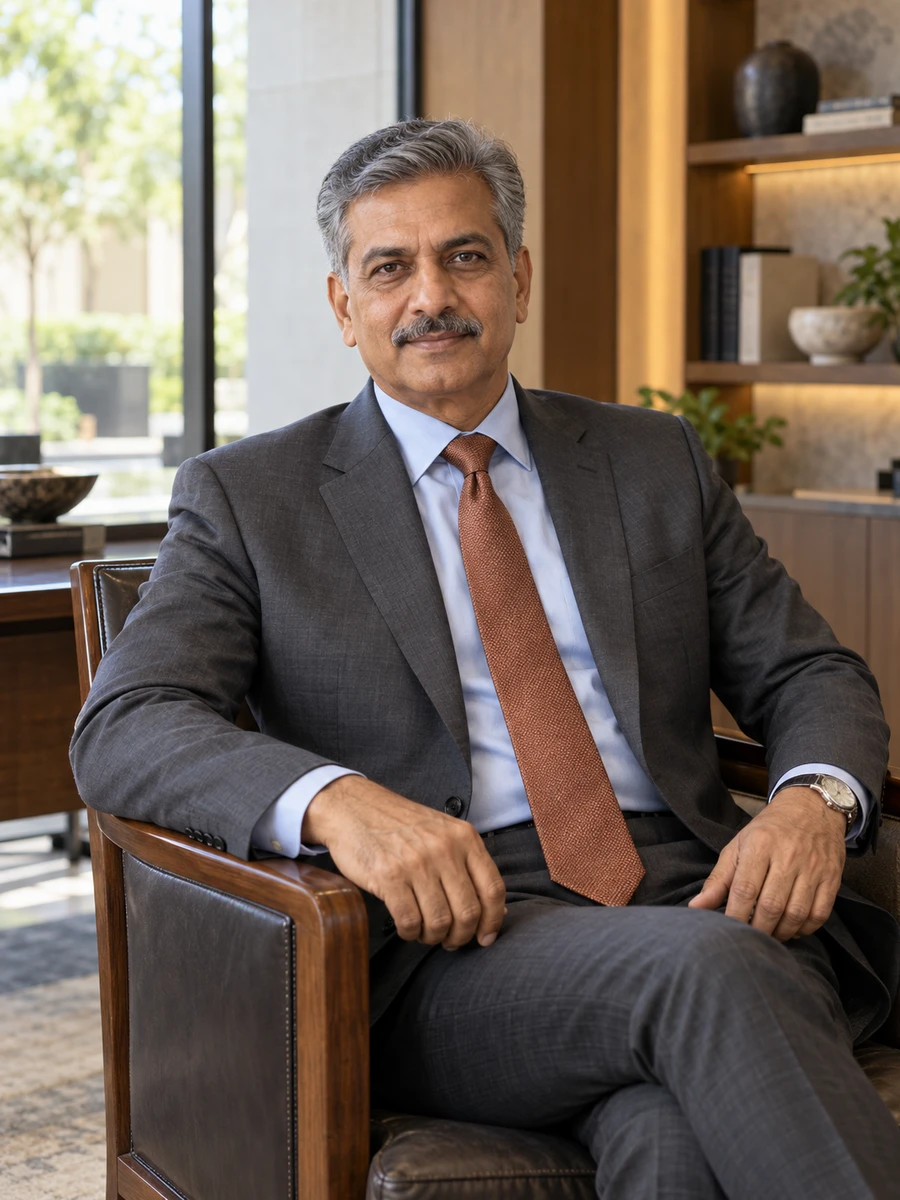
Portrait of Devendra Qezrathi

Manufacture the chair and fund the relationship that follows

I am chief executive of Zavqumi Mobility Equipment in Rajkot. We manufacture manual wheelchairs at two assembly sites and work with 42 regional service partners. The company employs 480 people and recorded ₹162 crore revenue with ₹15.6 crore operating profit for FY ending March 2026. I lead seven executives and hold an executive seat on our seven-member board. My responsibility joins the manufacturing business with the continuing commitments around its products, while technical and clinical decisions stay with the appropriate professionals.

I began in production planning in 1991 and joined mobility-equipment manufacturing in 2005. Factory management taught me to distinguish a component that looks similar in a purchasing record from one that has actually been approved for the intended assembly. Broader operating responsibility then brought channel relationships, product configurations and service economics into view. Becoming CEO required me to connect those choices with the company's ownership and capital, rather than expecting the factory to resolve every consequence of a commercial promise.

Employee shareholders own 65% of our business; my personal holding is 6% of the company within that total. An external patient-capital investor holds the remaining 35%. That structure makes distribution decisions personal as well as corporate. I have had to revise a dividend proposal I supported, decline an attractive channel opportunity and accept a higher cost of supporting remote service locations. I include those decisions alongside a component mistake because leadership needs an account of its own concessions, not only a description of its intentions.

A substitution I approved had not earned technical acceptance

In 2019 we held 2,400 component sets after an interface mismatch was identified: 1,800 were unfitted and 600 were in completed chairs still in our warehouse. The hold lasted five weeks and replacement and rework cost ₹3.4 crore. None of those 600 chairs had been delivered. I withdrew my premature purchasing approval and kept technical release with Maya's team.

A larger channel forecast did not justify restricting existing service

A proposed exclusive arrangement carried a ₹26 crore two-year sales forecast for 4,000 chairs, but its spare-parts terms would have restricted our existing service partners. We declined it after failing to resolve that condition. The forecast never became a contract, and ₹31 lakh of bid expense remained spent.

Remote service capacity required a different expense assumption

We increased monthly retainers for twelve remote partners from ₹25,000 to ₹50,000 while thirty remained at ₹25,000. Total monthly retainers rose from ₹10.5 lakh to ₹13.5 lakh, an annual increase of ₹36 lakh. The decision funded capacity; it did not establish a measured improvement in repair times or users' health.

Current focus

I am reviewing the commitments around product configurations and spare parts before they become assumptions in investment or distribution proposals. A standard assembly, a configured order and a dispersed service relationship consume different resources. I want that difference visible to colleagues and shareholders, with product approval and individual care kept outside an instruction to meet the financial plan.

Conversations I welcome

I would consider one outside non-executive role where manufactured products create continuing service obligations. I already hold our executive directorship. The fictional record includes IICA registration in August 2026, with the proficiency assessment unfinished and no exemption claimed. Twenty-two provisional days and our board's consent would need to be tested against the proposed company's work and relationships.

Highlights

The factory taught me to ask what the promise requires

480

Company employees across two assembly sites

₹162 crore FY 2026 company revenue; ₹15.6 crore operating profit

42

Regional service partners

Seven executive direct reports; one executive board appointment

35 years

From production planning to enterprise leadership

Five continuous appointments beginning July 1991

A letter from Devendra Qezrathi

Dear reader,

Portrait of Devendra Qezrathi

A chair leaving the assembly line begins a relationship that the sales invoice cannot fully describe. I want our investment, channel terms and distributions to leave room for the parts and skilled service that relationship will require. The board should see what we have committed to keep supporting, including when that makes the next sale or shareholder payment less attractive.

I grew up in Bilaspur and completed mechanical engineering at Tazqeri Institute of Engineering in June 1991. My first appointment began the following month at Veqrani Engineering Works. The company had ninety employees and ₹12 crore revenue for FY ending March 1992. I worked in an eight-person production-planning group under the plant manager, without direct reports or spending authority. I learnt to follow an order through the work it actually required, rather than treating the production schedule as a sufficient explanation of the factory.

Devendra Qezrathi

Chief Executive Officer
Strategic priorities

Where I focus my leadership.

Performance

What the priorities delivered.

Priority outcome 01

Owning a purchasing approval that preceded technical acceptance

In 2019, while I was operations director, I supported a replacement component proposal intended to ease a production constraint. The nominal dimension matched the purchasing description, and the commercial discussion treated the substitution as a straightforward way to maintain assembly. I approved movement before the intended interface had received the technical acceptance it required. That was my decision, rather than an error I could place entirely with a buyer or supplier. Maya Tershuvani's technical review identified a different fixing interface. Our affected stock comprised 2,400 component sets: 1,800 were still unfitted and 600 were already in completed chairs held in our warehouse. None of those 600 chairs had been delivered. The production team wanted a rapid answer so it could release the waiting orders; purchasing wanted to preserve the benefit of the replacement supply. Maya would not accept a nominal match as evidence of suitability in the assembly. I withdrew my earlier approval and supported a hold on the full identified stock. The technical team determined the required replacement and acceptance work. Operations organised segregation, rework and the revised delivery discussion. I explained the five-week interruption to the CEO with my own premature approval in the account, rather than presenting technical review as the cause of an otherwise avoidable delay. Replacement and rework cost ₹3.4 crore. The identified sets were replaced before the held chairs were released through the appropriate process. Those are manufacturing and financial facts within this invented case, not evidence of a clinical outcome or a general product-safety certification. We changed the sequence of purchasing approval so that commercial acceptance could not be mistaken for technical acceptance of the intended use. The experience affected my later CEO work because an executive can undermine a boundary without explicitly instructing anybody to disregard it. Approving the plan too early can leave a specialist facing a supposedly settled business decision. I wanted future plans to acknowledge unfinished technical acceptance while there was still room to change them.

Priority outcome 02

Declining a channel proposal that would close access to spare parts

In 2022 a proposed distribution arrangement offered an attractive route to additional chair sales. The commercial model forecast 4,000 chairs and ₹26 crore revenue over two years. It was still a proposal, with no signed contract or earned revenue. Our sales colleagues had invested in the bid and saw a chance to improve the predictability of demand across the assembly sites. The problem lay in the requested exclusivity over spare-parts distribution within the proposed territory. Its draft terms would have restricted access for existing members of our 42-partner service network. The new channel wanted to control the complete commercial relationship, not only new-chair sales. Our service colleagues argued that current product users and partners would bear the practical consequences of that condition, although they were absent from the new-sales forecast. I asked the commercial team to negotiate a reservation for existing service relationships. We separated the chair-sales opportunity from the parts restriction so that the disagreement was explicit. The prospective partner did not accept the revised condition. Some colleagues favoured proceeding and resolving service access through individual exceptions later; I did not think a series of hoped-for exceptions was an adequate basis for a restriction we would sign knowingly. We declined the arrangement. The ₹26 crore remained a forgone forecast, not a revenue loss recorded after trading. ₹31 lakh of bid expense had already been incurred and was not recovered by the decision. We retained our existing parts-access arrangements; we did not claim that this proved faster repairs, protected a quantified amount of future income or established a clinical benefit. For me, the case broadened the meaning of channel strategy. A new intermediary can alter the conditions under which an older product relationship continues. The chief executive has to put that consequence into the decision before the commercial proposal becomes a contract. We gave up a plausible opportunity and kept its preparation cost visible because the alternative required a commitment we were not willing to make.

Priority outcome 03

Replacing a standard-model investment case with a configuration-aware programme

A 2023 capital proposal sought ₹12 crore for assembly automation. Its demonstration used a standard chair configuration and showed an orderly sequence that appealed to both production and finance colleagues. The proposal treated that sequence as representative of the business's work. Before taking it forward, I asked for a review of the configurations in a defined sample of 2,400 customer orders. The sample contained 1,440 standard orders and 960 configured orders. The latter required combinations of components and assembly steps that the proposed sequence did not fully handle. The issue was not that automation was inherently unsuitable; it was that the investment account had not made the remaining work and its resources explicit. The production sponsor argued that the standard volume justified proceeding, while assembly supervisors wanted the configured work assessed before their teams inherited it around the new line. With Maya and the operating leaders, we revised the question for the board. Instead of seeking approval for the original machine-led scheme, we proposed ₹4.2 crore for fixtures and training addressing a wider range of configurations. The board approved that programme. We accepted that it would not provide the same standard-model automation and kept the original proposal outside the approved capital plan. The fixtures and training programme was completed in 2024. We did not describe the ₹7.8 crore difference between the two proposals as a realised saving: one programme had not been bought at a discount, and the scopes were different. Nor did we attach a productivity or clinical-outcome improvement without a suitable measured basis. The decision purchased a particular capability and left other possibilities open for a later investment case. The value of the review was to make our order mix part of the capital discussion. A model can be common without representing every important demand on the factory. As CEO, I needed the board to see what each proposal would accomplish, what it would leave unresolved and why we were choosing that combination of capability, cost and limitation.

Priority outcome 04

Paying differently for service capacity in less dense locations

Our 42 service partners had received a common monthly retainer of ₹25,000. By 2024, the service team was questioning whether that uniform amount supported the capacity expected in twelve remote locations. Travel and the distribution of work differed from the other thirty locations. The existing commercial arrangement appeared consistent, but consistency of payment did not mean consistency of the conditions in which partners operated. Faisal asked for a clear statement of the expense and the obligation we would fund. Some commercial colleagues preferred paying only for completed jobs, reasoning that a higher fixed amount weakened cost discipline. Service leaders argued that available people and practical coverage could not always be maintained solely from a sparse stream of individual tasks. I wanted the decision to recognise that difference without assuming that every additional rupee would translate directly into a better result for a wheelchair user. We increased the monthly retainer for twelve remote partners to ₹50,000 and left thirty at ₹25,000. The old monthly total was ₹10.5 lakh; the revised total was ₹13.5 lakh. The ₹3 lakh monthly increase meant ₹36 lakh more annual expense. We described the expected capacity and its review in the partner arrangements, rather than allowing the increase to become an unspecified payment for goodwill. The change was implemented. Its financial consequence was known, but this case does not claim a measured reduction in repair time or an improvement in health. Those would require their own evidence and appropriate professional interpretation. We also did not infer that all remote locations have the same needs, or that retainers are the right mechanism for every service network. My decision was to put the cost of our network expectation into the operating plan. A chief executive can request broad coverage while approving economics that make it fragile. I wanted our own contribution to that tension examined before treating a partner's difficulty as simply a performance failure. The higher expense remained visible when we discussed the business's margin.

Priority outcome 05

Revising my own dividend proposal before funding parts working capital

In 2025 I initially supported a proposed total dividend of ₹4.8 crore. Employee shareholders together owned 65% of Zavqumi, including my personal 6% holding, while an external patient-capital investor held 35%. The proposed distribution mattered to people who worked in the company as well as to the outside investor. I shared that interest, and it needed to be acknowledged when I later recommended changing the proposal. Faisal's review identified a separately assessed ₹3.6 crore requirement for parts working capital. This was funding tied up in the service-support cycle, not a new expense to be subtracted automatically from operating profit. The board needed to consider that use of cash alongside other commitments and the distribution. Some employee shareholders wanted the original payment retained, while operating colleagues wanted more certainty around the parts plan. Neither preference removed the need to understand the cash account. I revised my recommendation to a ₹1.2 crore total dividend. We followed the applicable corporate approval process for that distribution and separately funded the ₹3.6 crore parts working-capital plan. The reduction from the original proposed dividend was also ₹3.6 crore, but I did not present this arithmetic as proof that one isolated decision explained every movement in the company's cash. Finance continued to account for the wider cycle. The final distribution and working-capital funding took place. Paying less than originally proposed did not create profit. Holding parts did not mean they had all been used, and the funding decision did not by itself demonstrate a repair or care outcome. I explained those limits alongside the practical purpose of the plan, including the lower distribution attributable to my own holding. The case tested whether employee ownership would receive a complete financial discussion when the preferred answer changed. I wanted neither a promise of effortless returns nor an appeal to sacrifice that bypassed scrutiny. A credible executive recommendation had to state the alternative use, the personal interests involved and the approvals through which the company would decide.

Governance

Board and committee service.

Current appointments

  • Zavqumi Mobility Equipment

    Executive Director

    No committee chair role asserted

    February 2022–present

Committee experience

  • No committee chair role asserted

Stakeholder voices

What those I have served alongside say.

Devendra withdrew a purchasing decision he had approved when the intended interface lacked technical acceptance. He kept the hold and rework cost in his own account instead of asking our team to make the schedule justify the part.
Maya TershuvaniTechnical Director, Zavqumi Mobility Equipment; fictional colleague
When the dividend proposal changed, Devendra kept the working-capital purpose, corporate approvals and his personal holding visible. He did not describe a lower distribution as new profit or a completed service outcome.
Faisal QemvadiCFO, Zavqumi Mobility Equipment; fictional colleague

Outlook

Perspectives on what comes next.

An invitation

Contact

I would consider one outside non-executive role where manufactured products create continuing service obligations. I already hold our executive directorship. The fictional record includes IICA registration in August 2026, with the proficiency assessment unfinished and no exemption claimed. Twenty-two provisional days and our board's consent would need to be tested against the proposed company's work and relationships.

Open to
  • Board appointments
  • Advisory roles
  • Speaking invitations

office@devendraqezrathi.example