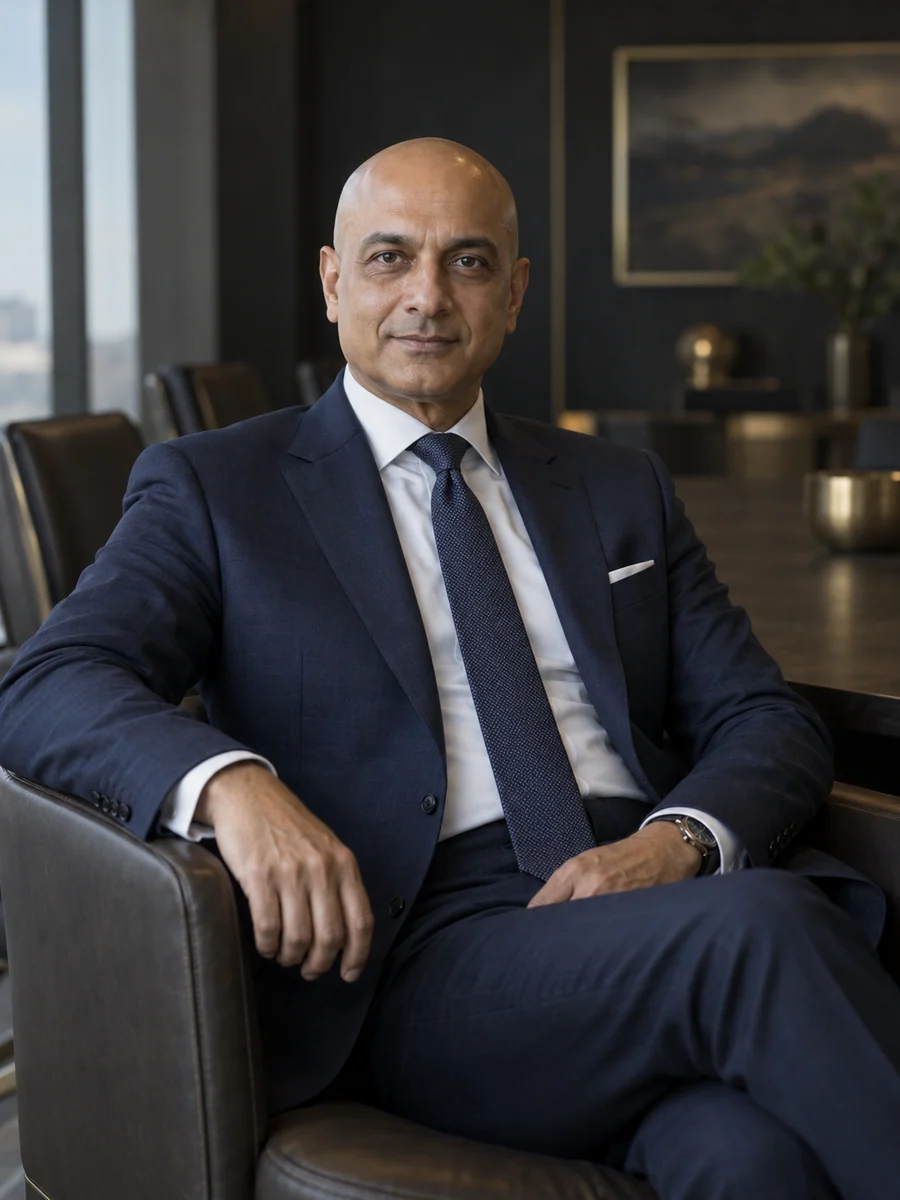
An office proposition should describe the working day, not stop at the building.
A prospective occupier rarely arrives with only a requirement for floor space. They also bring patterns of arrival, visitors, shared facilities and internal decisions about how their people will work. My role is to make the commercial proposition intelligible at that level without suggesting that marketing can settle every operating or contractual question. A good introduction helps the right conversation begin, with the building's actual features and the occupier's unresolved requirements both visible.
I am CMO of fictional Neravil Estates in Bengaluru. The group operates twenty-two completed office assets in three Indian cities, with ₹1,760 Cr FY2025–26 revenue and 1,420 employees. My own remit is thirty-six marketing employees, five direct reports, fourteen agency personnel separately and ₹42 Cr marketing authority for FY2026–27. I report to Ila Venkare. Dev Talwankar leads leasing negotiations and approved commercial terms; construction, asset operations and capital decisions belong to other colleagues.
Thirty-two years of research and marketing have made me attentive to the distance between an attractive building description and a useful occupier discussion. I began with commercial-property research in Hyderabad, then joined Neravil in July 2000 and developed through proposition, research and group-strategy roles. Since becoming CMO in July 2019, I have tried to make the marketing account more specific about use, evidence and the handover to the people who can answer the next question.
Factsheets organised around the way the asset is used
A review of eighteen asset factsheets led to eleven revisions and seven retained versions. Twenty-four selected facilities and HR conversations helped us identify where a uniform presentation concealed different access arrangements. Operations colleagues supplied the actual building account. I accepted less uniformity across the brochures because a repeated phrase could give an occupier confidence about an arrangement that still needed discussion.
A virtual tour that distinguishes what exists from what is imagined
Thirty-six proposed tour stops became twenty-two presentations of current physical features, eight clearly identified illustrative fit-outs and six removals. The smaller experience was less seamless, but it preserved a distinction important to the next discussion. Marketing could explain a possible use without allowing a visualisation to stand in for a completed space or an approved construction commitment.
An enquiry account prepared for a leasing conversation
Of forty-two reviewed enquiries, eighteen were ready for a leasing specialist, fourteen needed a clearer space brief and ten did not fit the current proposition. I chose to report those categories separately instead of treating the total as evidence of near-term occupied space. The exercise changed the handover and the questions asked beforehand; it did not establish a lease, a conversion uplift or an attributed revenue result.
Current focus
I am reviewing an eight-month pilot of shared professional and social events begun in May 2026. Of twenty planned sessions, twelve have taken place, five were rescheduled and three cancelled by October. The twelve completed sessions recorded 296 registrations and 187 attendances; those are event entries, not unique people. I want the next decision to reflect actual participation and asset-team feedback rather than let an attractive calendar stand in for a workplace community. The programme remains unfinished, with no claim about retention, productivity or tenant renewal.
Conversations I welcome
I am interested in a considered first non-executive contribution, bounded advisory discussions and professional sessions on occupier propositions. Any continuing role would require employer consent, relationship review, appropriate induction and a workable calendar. My experience is in market interpretation and communication; I would not present it as property valuation, engineering, financial or legal expertise.