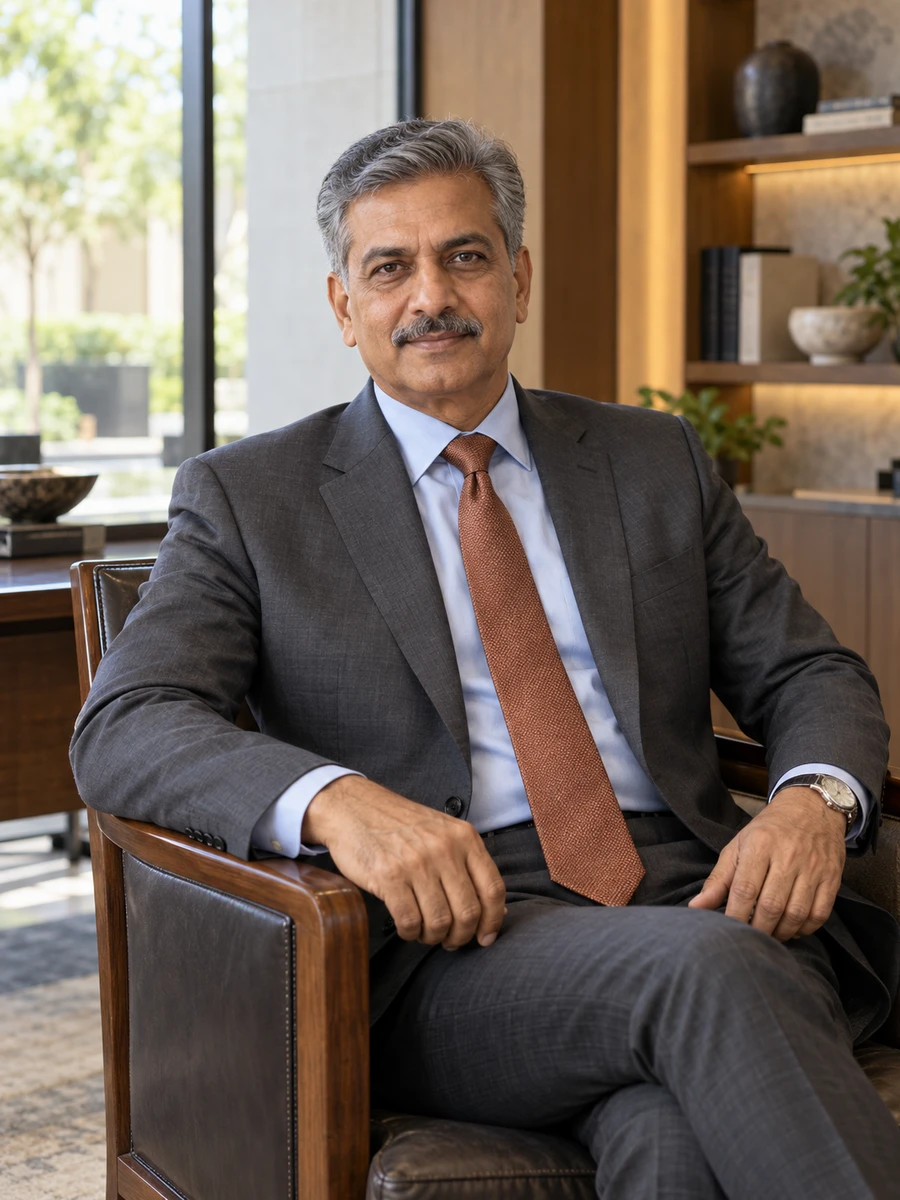
I am chief executive of Zavqumi Mobility Equipment in Rajkot. We manufacture manual wheelchairs at two assembly sites and work with 42 regional service partners. The company employs 480 people and recorded ₹162 crore revenue with ₹15.6 crore operating profit for FY ending March 2026. I lead seven executives and hold an executive seat on our seven-member board. My responsibility joins the manufacturing business with the continuing commitments around its products, while technical and clinical decisions stay with the appropriate professionals.
I began in production planning in 1991 and joined mobility-equipment manufacturing in 2005. Factory management taught me to distinguish a component that looks similar in a purchasing record from one that has actually been approved for the intended assembly. Broader operating responsibility then brought channel relationships, product configurations and service economics into view. Becoming CEO required me to connect those choices with the company's ownership and capital, rather than expecting the factory to resolve every consequence of a commercial promise.
Employee shareholders own 65% of our business; my personal holding is 6% of the company within that total. An external patient-capital investor holds the remaining 35%. That structure makes distribution decisions personal as well as corporate. I have had to revise a dividend proposal I supported, decline an attractive channel opportunity and accept a higher cost of supporting remote service locations. I include those decisions alongside a component mistake because leadership needs an account of its own concessions, not only a description of its intentions.
A substitution I approved had not earned technical acceptance
In 2019 we held 2,400 component sets after an interface mismatch was identified: 1,800 were unfitted and 600 were in completed chairs still in our warehouse. The hold lasted five weeks and replacement and rework cost ₹3.4 crore. None of those 600 chairs had been delivered. I withdrew my premature purchasing approval and kept technical release with Maya's team.
A larger channel forecast did not justify restricting existing service
A proposed exclusive arrangement carried a ₹26 crore two-year sales forecast for 4,000 chairs, but its spare-parts terms would have restricted our existing service partners. We declined it after failing to resolve that condition. The forecast never became a contract, and ₹31 lakh of bid expense remained spent.
Remote service capacity required a different expense assumption
We increased monthly retainers for twelve remote partners from ₹25,000 to ₹50,000 while thirty remained at ₹25,000. Total monthly retainers rose from ₹10.5 lakh to ₹13.5 lakh, an annual increase of ₹36 lakh. The decision funded capacity; it did not establish a measured improvement in repair times or users' health.
Current focus
I am reviewing the commitments around product configurations and spare parts before they become assumptions in investment or distribution proposals. A standard assembly, a configured order and a dispersed service relationship consume different resources. I want that difference visible to colleagues and shareholders, with product approval and individual care kept outside an instruction to meet the financial plan.
Conversations I welcome
I would consider one outside non-executive role where manufactured products create continuing service obligations. I already hold our executive directorship. The fictional record includes IICA registration in August 2026, with the proficiency assessment unfinished and no exemption claimed. Twenty-two provisional days and our board's consent would need to be tested against the proposed company's work and relationships.